

A Book Review by John Talbird.
Instead of throwing a heaping helping of film titles at us, substituting lists and anecdote for real analysis, each chapter takes a deep dive into one specific movie, contextualizing the film with the real-world effects of white flight, government abandonment of urban locales, urban renewal destruction, and the vanishing career options for young people and families—mostly of color—in the new environment.”
One of the classic 20th century American narratives is white flight. Most Americans know some version of this story. Through the first half of the 20th century, white people who lived in the urban centers of the country with the means to do so fled to the suburbs away from the encroachment of all those nonwhite people who had either moved north and west because they were tired of living in the post-slavery world of Jim Crow or others who had come to the US from other countries because they believed certain stories about dreams and were willing to take jobs that (mostly white) native-born people no longer wanted to do. The reasons for the flight are complicated and up to debate. There’s racism, of course, fear of the other, often couched in practical terms concerning falling property values and cultural differences (read: fear of miscegenation). Some of this racism has been systemic and supported by the (mostly white) power structure (see under: redlining, urban renewal, segregated education, and so on) and so deeply ingrained that it’s almost subconscious. Part of this subconsciousness has been developed and reinforced by images and narratives coming from mainstream Hollywood. We have the dangerous, harmless, and ineffectual images of Black Americans (The Birth of a Nation (1915), Gone with the Wind (1939), Stepin Fetchit); the binary stoic-savage American Indian (fill in any number of American Westerns from the first half of the 20th century); the criminal or violent or sexy/sexualized Mexican (Touch of Evil (1958), The Treasure of the Sierra Madre (1948), Duel in the Sun (1946); the scheming, exotic, comical Asian (The Maltese Falcon (1941), Breakfast at Tiffany’s (1961), any Charlie Chan film). The biggest blow to racial complexity, though, is not in stereotype, but relative ethnic invisibility in much of film history’s first half-century. Many of Hollywood’s most famous actors have appeared in black-, brown-, red- and yellow-face: Charlton Heston, Mickey Rooney, Eli Wallach, Orson Welles, Burt Lancaster, Julie Garland, Myrna Loy, Katharine Hepburn. And there were so many others whose names have fallen into obscurity or were obscure to begin with as if to say ‘These people’ are so flawed and undependable that we can’t even trust them to play themselves.
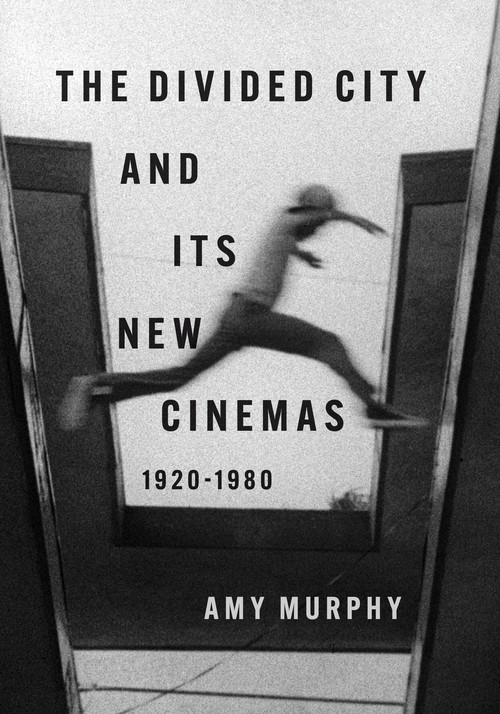
The only answer to the instant-read icons of the corporate movie cliché is the independent film generated by the imperfectly depicted, the Blacks, the hyphenated Americans—the Latino/as, Asians, and the original and dispossessed Americans. In Amy Murphy’s new book, The Divided City and Its New Cinemas, 1920-1980 (University of Illinois Press, 2026), she examines six of these movies, independent films that complicated simplistic narratives about the urban landscape and gave voice to those left behind by fleeing white people. Unlike a lot of books that explore film in a specific national-historical milieu and group them based on a specific theme, Murphy doesn’t just throw a heaping helping of film titles at us, substituting lists and anecdote for real analysis. Instead, each chapter takes a deep dive into one specific movie, contextualizing the film with the real-world effects of white flight, government abandonment of urban locales, urban renewal destruction, and the vanishing career options for young people and families—mostly of color—in the new environment. A professor of architecture, the book is a kind of hybrid thing, combining film history, criticism, and urban studies. There is even an appendix with six historical maps, one for each film’s urban locale, a key for each pinpointing scenes from that location’s respective film along with select historical sites.
The first chapter analyzes Manhatta (1921), the first of the city symphony films, those characterless avant-garde fusions of documentary and fiction that sprouted up during film’s last silent decade with Soviet filmmaker Dziga Vertov’s Man with a Movie Camera (1929) the apotheosis. Charles Sheeler and Paul Strand’s 12-minute silent, set in New York, opens with the sun’s rising, taking us to lower Manhattan via the Staten Island Ferry, pouring its workers into the financial district, leading us through the city over the course of a day, the film’s 65 shots intertitled with lines from Walt Whitman’s poem of the same name. Sheeler and Strand, still photographers who had never made a film before nor worked with each other, were brought together by Alfred Stieglitz, art photographer, impresario, and future husband of Georgia O’Keeffe. According to Murphy, Manhatta disappeared soon after its premier, not reappearing for more than twenty years, and so we shouldn’t put too much stock in its influence on future titles in the city symphony genre (42). But New York City was a burgeoning art center in the early twenties with a vibrant transatlantic community comprising some of the most famous and rising names in the art world at the time: Man Ray, Marcel Duchamp, Willem de Kooning, all of whom had strong connections to Europe where the vast majority of these films were made. Though, of course, many, many artists, writers, critics, and filmmakers of that time ventured back and forth between NYC and Europe which is probably one of several reasons that this genre appeared there in the twenties. But you see films like this—where the mass of people become a collective character, a lifeforce or machine—throughout this time period and beyond: Battleship Potemkin (1925), Metropolis (1927) up through the human clockwork frills and fascism of Busby Berkeley and Leni Riefenstahl, and then later onto the sophisticated provincialism of Woody Allen’s Manhattan (1979), the pseudo-mystical Koyaanisqatsi (1982), and the free-floating signifiers of nearly any zombie horde.
Manhatta and the city symphony genre in general were also a clear influence on The City (1939), the subject of Murphy’s second chapter. Although not a Hollywood feature, the 43-minute film by New Deal directors Ralph Steiner and Willard Van Dyke will not be most people’s idea of an “independent film” as it was produced to be shown at the 1939-1940 New York World’s Fair under the theme “The World of Tomorrow” and screened several times daily making it, according to Murphy, one of the most-watched documentaries produced to that date (47). The film is both allegorical and didactic and, despite its makers’ good intentions, hasn’t aged well.
The City opens with a shot of a bucolic old New England landscape. A stream provides power to a local mill near a farm built in 1792. The title card reads: “Year by year our cities grow more complex and less fit for living. The age of rebuilding is here. We must remould (sic) our old cities and build new communities to our needs.”
We see a horse-drawn carriage, men working together, hear church bells ringing.
With the sudden roar of a foundry fire, the music and imagery dramatically shift to steel smelting in the city of Pittsburgh. The voice-over exclaims, ‘Machines, invention, power, block out the past! Forget the quiet city…Open the throttle! All aboard!…Pillars of progress! Machines to make machines! Production to expand production!…Faster and faster! Better and better!’” (48).
This text is written by historian and sociologist Lewis Mumford and, despite the overwrought delivery, it is hard not to think of our own AI-threatened civilization in juxtaposition. And the images of industrial Pittsburgh truly are dystopic with its long shots of polluted cityscape, life leached from blackened filthy hills, the unsupervised tow-headed boy playing in the gutter. We are taken down the highway in a frenzy of traffic, a fragmented and chaotic counterpart to the smooth flow of people streaming off the ferry at the beginning of Manhatta. There is a car wreck acting like punctuation and we are introduced to the final section of the film, the conclusion of the argument. We are taken to idyllic Greenbelt, Washington DC with its spacious lawns, its big, modernist school building, its wide, clean streets with steadily moving traffic, its white people. The narrator grandly tells us “that these are not suburbs but a place where ‘each house is grouped with other houses’ and public land will be preserved” (51). This community will be the blueprint for the Levittowns which pop up all across the country after the War, places known by the colloquial term “suburbs.”
The last four chapters are all about the kinds of people who were left behind in the crumbling inner cities after white flight. Chapter 3 analyzes Kent Mackenzie’s The Exiles (1961) about American Indians living in the Bunker Hill neighborhood of Los Angeles. Chapter 4 focuses on Charles Burnett’s classic Killer of Sheep (1977) about a Black family living in South Los Angeles. Chapter 5 is a reading of Efrain Gutierrez’s Please, Don’t Bury Me Alive! (1976), about Chicano/as living in the Westside neighborhood of San Antonio. And Chapter 6 analyzes Wayne Wang’s Chan Is Missing (1982), an anti-mystery about two Chinese-American cab drivers in Chinatown, San Francisco.
Murphy sometimes takes us deep into the weeds regarding housing acts, urban development, and the distribution of public monies in city government making reading sometimes, at least for this reader, slow-going. Still, every chapter gives important background information concerning the historical conditions which undergird the plots of these movies. A case in point: We know that The Exiles is about American Indians living in Los Angeles just by watching. But we learn by reading Murphy’s book that the untrained actors who play the Indians in the film have been lured from their reservations by a government urban relocation and assimilation program (79). We learn that Kent Mackenzie’s innovative use of sound—a combination of voice-over and live recording—which helps blur the line between fiction and documentary was necessary due to budget issues regarding equipment and shooting times (100).
Murphy quotes this story from Charles Burnett, director of Killer of Sheep, in an interview with filmmaker David Lowery:
I was working on this story about this guy who had problems sleeping and had these nightmares…I was going to college at the time, and I always saw this one guy on the bus. One day he happened to sit by me, and I had the opportunity to ask him what he did. He told me he worked at the slaughterhouse, and what he did was kill sheep.” Burnett recalls the man telling him that they would kill the sheep with sledgehammers, and adds, “I just couldn’t imagine someone doing that every day, day in and day out, without it creating some nightmarish effect. I never looked at him the same after that. So that’s where I got the idea that this was what Stan ought to do. Something as horrible as that” (132).
Here, as elsewhere in the book, Murphy offers a generous selection of stills to illustrate her almost always incisive comments on the films. Though as with any two readers of art, we don’t always agree. She rejects the connections many other critics have made between Killer of Sheep and classic post-war Italian neorealist films, likening it more to a film like Alain Resnais and Robbe-Grillet’s Last Year at Marienbad (1961). It’s true that Killer of Sheep doesn’t have the same modernist approach to film that the neorealists had and I think that Murphy is onto something when she says that a film like Marienbad “actively dismantle(s) Western narrative time.” But despite this dismantling of time, I think Marienbad, like the neorealist narratives, is essentially a modernist film, a closed system. Whereas neorealist films use plot to set the parameters of a world, Marienbad uses place to set those boundaries. On the surface Killer of Sheep looks like neorealist films, but its plot is postmodern fragmentation with almost Godardian transitions between scenes. And the peppy pop playing over bleak storyline is a technique that Scorsese would later use in films like Goodfellas (1990).
Unlike the other three films in the final chapters—all available for streaming on Kanopy—it is difficult to see a good version of Gutierrez’s Please, Don’t Bury Me Alive!, a crime since it is reportedly the first Chicano feature film. Involved in political theater, he is also the only one of the directors from the last four chapters who didn’t graduate from a film program. Kent Mackenzie, born in the UK to an English mother and American father went to film school at USC on the GI Bill (84) before he decided to make The Exiles with nonprofessional actors he met in the Bunker Hill neighborhood of L.A. Charles Burnett graduated from UCLA and Wayne Wang—the only director discussed in this book to work both within independent film (Chan Is Missing, Smoke (1995)) and the Hollywood studio system (The Joy Luck Club (1993), Maid in Manhattan (2002))—graduated from the California College of Arts and Crafts. As Murphy argues in her afterword, work by artists who chose to film outside the Hollywood system set examples for later filmmakers who ventured back and forth between independent cinema and the more official tracks laid by corporate Hollywood. Spike Lee’s Do the Right Thing (1989) is offered as a prime example of the independent film to reach a mass audience “through festival viewing, home video, and studio distribution, [achieving] an impact that many of the ‘first’ directors discussed in these chapters could only begin to imagine” (212). Of course, Spike Lee’s now-iconic third movie is also an urban film, charting a single heatwave-saturated day in a Brooklyn neighborhood, ending with a fatal act of police violence. Spike Lee, like most of these directors, also graduated from a film program, NYU’s Tisch School of Arts. This is another way that Gutierrez’s film is an outlier and says something about the limitations of the East Coast-West Coast film school-industry nexus. Whereas Gutierrez’s film introduces the fresh location of San Antonio, TX, all the other films—despite their unromantic and complicated takes on famous locales—are entrenched in the communities which produced them. And maybe that’s the point? The heroes of these narratives have been lured to, displaced, and abandoned in these hard, strange locales and the places they’ve come from—China, the American South, the reservation—are no more than a hazy flashback, the incidental words out of a character’s mouth.
John Talbird is the author of the novel The World Out There (Madville Publishing, 2020) and a chapbook, A Modicum of Mankind (Norte Maar, 2016). His fiction and essays have appeared in Ploughshares, Potomac Review, Ambit, Juked, The Literary Review, and Riddle Fence among many others. A professor at Queensborough Community College-CUNY, he lives with his wife and son in New York City.
Read also: