

By Jonathan Monovich.
Some paths are rocky, some paths are uphill, and some are downhill. Unique’s path is hopefully what makes this film special.”
– The RZA
To the RZA, the Abbot of the Wu-Tang Clan, “hip-hop is moviemaking.”1 This should come as no surprise. The iconic first Wu-Tang Clan album, Enter the Wu-Tang (36 Chambers), was moviemaking in musical form, opening with a sample from Shaolin and Wu Tang (1983). This practice became routine for the RZA, intertwining the dialogue of martial arts cinema and his own take on ancient eastern philosophies to the backdrop of a self-produced beat. While his signature looping and sampling earned the RZA recognition as one of hip-hop’s most influential producers, combining the sword-like styles of the Wu-Tang Clan’s distinct flows, he also became one of the rare few to equally be known as an MC. The RZA’s reverence for Asian cinema has sustained throughout his recording catalog, sampling or referring to films like Master of the Flying Guillotine (1976), Executioners from Shaolin (1977), The 36th Chamber of Shaolin (1978), Five Deadly Venoms (1978), The Mystery of Chess Boxing (1979), Ten Tigers of Kwangtung (1979), Shogun Assassin (1980), and The Eight Diagram Pole Fighter (1983). However, the RZA’s love for the moving image is eclectic and the Wu-Tang discography has also referenced horror, comedy, western, war, and blaxploitation films. Clearly, the RZA’s musical production and lyricism holds a cinematic quality; thus, it’s only fitting that he eventually turned to composing scores for films that shared similar ideology and iconography with his music. The framework of Jim Jarmusch’s Ghost Dog: The Way of the Samurai (1999) stems from Yamamoto Tsunetomo’s Hagakure: The Book of the Samurai. Forest Whitaker’s life by the sacred samurai code in Ghost Dog felt like a project tailormade for the RZA’s instrumentals. Quentin Tarantino’s Kill Bill Vol. 1 (2003) was equally as fitting for the RZA to score, allowing two master samplers of different artistic mediums to join forces in creating an epically proportioned martial arts “Revengeamatic” [a term coined by William Margold and repurposed by Tarantino].2 While on the set of Kill Bill, the RZA assumed the mindset of a student and looked to Tarantino as his teacher, soaking in the knowledge of one of cinema’s greatest auteurs. As noted in The Tao of Wu, even though the RZA is the Wu-Tang Clan’s teacher, “a real teacher is also a student, someone who never stops learning.”3 Channeling Gordon Liu in The 36th Chamber of Shaolin, the RZA absorbed the wisdom of his teachings and set out to make films of his own.
Consider it fate that the progression of the RZA’s career has mirrored the narrative of a kung fu film story arc. After enduring the struggle of a troubled upbringing, the RZA emerged triumphant. Transitioning from making beats off keyboards, samplers, and drum machines to arranging music for string orchestras, the RZA has exemplified vast artistry while teaching future generations Taoist/Buddhist principles and his personal learnings. After a slew of acting roles, the RZA made his first feature film, The Man with the Iron Fists (2012), which he wrote, directed, scored, and starred in. A take on The Kid with the Golden Arms (1979), The Man with the Iron Fists’ entertaining premiseplayfully brought viewers into the mind of its creator. The Man with the Iron Fists proved that like his music, the RZA’s films are built on a foundation of vibrant imagery. That imagery was spawned from memories of Forty-Second street moviegoing in New York City, during its grindhouse heyday. The Man with the Iron Fists and its sequel, The Man with the Iron Fists 2 (2015), are an extension of a recurring theme explored in the RZA’s records—a man’s journey to make a better life for himself and those around him. The RZA’s follow-up directorial efforts, Love Beats Rhymes (2017) and Cutthroat City (2020), explore protagonists fighting to follow their dreams of becoming an artist, a musician in the former and a graphic novelist in the latter, against all odds. The RZA’s latest feature film, One Spoon of Chocolate (2025), continues the meditative character exploration of his earlier work, while bringing new life to the Revengeamatic genre.
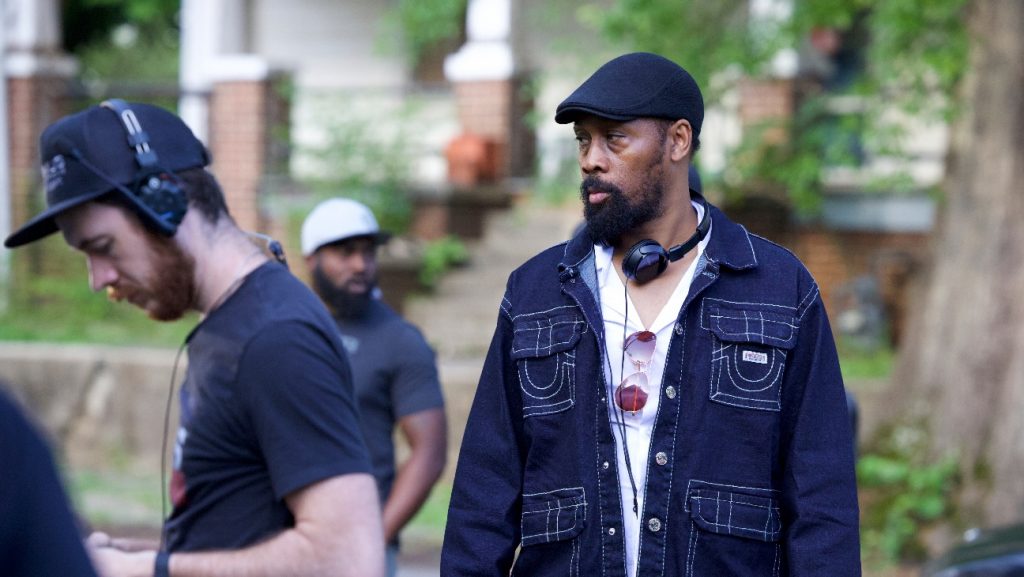
One Spoon of Chocolate opens with an animated kung fu logo for the RZA’s film distribution company—36 Cinema. Predictably, the film’s song selection is strong, including the Wu-Tang Clan, the Isley Brothers, the Notorious B.I.G., Ice Cube, Shuggie Otis, and new music from the RZA. The film follows the life of an overlooked Iraq War veteran, Unique (Shameik Moore). This name, Unique, comes with significance for the RZA; his late cousin, the Wu-Tang Clan member Ol’ Dirty Bastard, went by the name Ason Unique. In One Spoon of Chocolate, Unique is incarcerated for protecting a woman from drunken abuse. Unique’s attempt to do something noble, has left him caged up; he is seen reading kung fu literature, and Sun Tzu’s The Art of War can also be spotted in his cell. Obviously, these references are personal touches by the RZA. A newly freed man, Unique’s parole officer (Blair Underwood) sympathizes with Unique and allows him to stay with his cousin Ramsee (RJ Cyler). Before arriving in the midwestern town of “Karensville,” a play on the pejorative use of the name, Unique spends a night in a veterans’ shelter. Unique becomes frustrated when a miniscule spoon of chocolate powder is left for him to prepare his milk; an astute old man explains, “One spoon of chocolate will change a whole glass of milk… they’re scared of the changes you bring.” Embarking on his journey home, Unique travels via bus. On his bus ride, Unique befriends a “Complete Survivor’s Almanac” salesman (Jason Isbell). The two men make an agreement. In exchange for the almanac, Unique will spread the salesman’s business cards upon arrival. The two part ways recognizing, “This country would be a whole lot better if we all lived by that [a fair exchange].”
Upon arrival, Unique and Ramsee’s reunion seems idyllic. They reminisce, play video games, and shoot hoops. Unique is also introduced to Darla (Paris Jackson), by way of Ramsee’s girlfriend, Aretha (Emyri Crutchfield), and sparks fly. But, it quickly becomes evident that the harmony experienced on the bus and in the confines of their home does not extend to the rest of Karensville. Several young black men have gone missing, and something sinister plagues the town. When Unique and Ramsee are confronted by a prejudiced white gang, led by the merciless Jimmy (Harry Goodwins), Unique’s patience is tested and his safety is threatened. In search of peace, Unique battles his internalized demons, but eventually he fights back in self-defense and in the name of vengeance. True to the RZA’s energetic rhymes and their cinematic inspirations, One Spoon of Chocolate transforms into a violent Revengeamatic (emblematic of the grindhouse repertoire that he grew up watching). Given Tarantino’s passion for the genre, well-documented in Cinema Speculation4, it’s unsurprising that he is an executive producer on the film and has lent his name to a “Quentin Tarantino Presents” title. True to Revengeamatic thematic preoccupations, One Spoon of Chocolate leads to a ferocious climactic showdown. Overall, with One Spoon of Chocolate, the RZAshows that he continues to experiment and evolve as a filmmaker.
Just weeks after the film’s Beyond Fest Chicago screening and the announcement that the Wu-Tang Clan would soon be inducted into the Rock & Roll Hall of Fame, I had the opportunity to speak with the RZA over Zoom about One Spoon of Chocolate.
In A Wu Tang Experience: Live at Red Rocks Amphitheatre (2023), you open with that great Tommy Lasorda quote that “the difference between the impossible and the possible lies in a man’s determination.” This is what most kung fu films are about. This is also seen in your films The Man with the Iron Fists, Cutthroat City, and now One Spoon of Chocolate. But, I think One Spoon of Chocolate is most similar to The Man with the Iron Fists 2 because Unique, like Thaddeus, is on a quest for enlightenment but reluctantly has to fight. Would you agree?
First off, you’ve got a great Shogun Assassin poster in the background. I could agree with that, but they’re different paths. Some paths are rocky, some paths are uphill, and some are downhill. Unique’s path is hopefully what makes this film special. Not only is his name Unique, but he’s also going through a unique situation for a character that we don’t really see a lot. I hopefully gave it something new.
In The Wu-Tang Manual, you mention that the only religion you practice now is “universal love.”5 Even though One Spoon of Chocolate is an often uncomfortable Revengeamatic film with a lot of violence, I think this was what was trying to be conveyed in the scene where the survivor’s almanac salesman and Unique interact on the bus and in the lyrics of your new song “Eye to Eye.” Is that what you were going for with those aspects?
Yes, your aspects are correct. Love has been coined so many times as the most powerful force in the universe. I’ll go back to my days and how many miles I had to walk just to see my girlfriend. I had a girlfriend that lived in the most dangerous neighborhood and they were at war in my neighborhood, but I still walked all the way to her house and walked up the stairs just for one kiss [laughs]. That’s love. Our characters in One Spoon of Chocolate give a good example, too. When Unique grabs Darla’s hand, it’s representing what the future could be. She gives him a hug, and when she does, the camera goes around and you see her crying. This is not a passionate love. You see, love and passion get mixed up. This is a love of life, a love of humanity, a love of what’s right, and a love of friendship that feels the pain of loss. You know what I mean? Two girls who are best friends or two guys who are best friends might never kiss, but they love each other and they feel the loss of each other. That was part of the theme of the movie. While this love and this pain is brewing, our villains are in debauchery because they don’t care. When you don’t care, you don’t care. When you don’t have love, you don’t have love. Every actor builds a backstory for their character. Harry [Goodwins], the actor who plays Jimmy, built the backstory that his father doesn’t love him. Everything Jimmy thinks is wrong because his father taught him wrong. He doesn’t care if he finds a guy in dumpster because he’s been taught wrong.
Even when we finished the film, on the business side, I had a different aspiration. But, the reality was that wasn’t the reality of what we created and how we wanted to deliver it. The reality is what we’re doing now, and we’re happy we’re doing it this way, even though it took this much time.”
In your film Love Beats Rhymes (2017), it’s said that “reading a book will change what you know; reading a poem will change who you are.” I consider Bruce Lee’s philosophy to “be water”6 poetry. In One Spoon of Chocolate, Unique adapts to his surroundings, like water, due to his preparation, which is a big theme of the movie. I know there were some hurdles to make the film over the last thirteen years. How were you like water on this long journey to get One Spoon of Chocolate made?
Art has a life of its own. Art has a life of its own before and after you make it. In the conception of it, I tried to write One Spoon of Chocolate in 2011, but I got stuck. I couldn’t get past page forty of the screenplay. In 2022 and 2023, I was in the back of a tour bus, which is not the most comfortable place to write. Normally, I rent hotels or go to the beach or something. I write like a professional writer and get a nice atmosphere [laughs]. For this, I was in the back of a tour bus [imitates bus humming and bumping up and down in his seat]. But, bro, it came out like water. The art had its own inception, but then the conception of it had to exist. Now that it’s in the world, it’s its own thing. Bruce Lee’s water analogy says that water takes the shape of whatever vessel that it’s in. You’ve got to be able to adapt and understand that you can’t force it. Even when we finished the film, on the business side, I had a different aspiration. But, the reality was that wasn’t the reality of what we created and how we wanted to deliver it. The reality is what we’re doing now, and we’re happy we’re doing it this way, even though it took this much time. One Spoon of Chocolate played at the Tribeca Film Festival eleven months ago. It went through some changes. We had some color correction, and we changed some of the songs. After Tribeca, we thought it’d be in theaters in October. That was the aspiration, but the time wasn’t right. Now, it’s right.
You’ve collaborated with Quentin Tarantino multiple times, and he’s an executive producer on One Spoon of Chocolate. We even see his “Red Apple” cigarettes on display in the film. You are screening 35mm film prints of the movie, and it feels like the type of movie that would have been screened on Forty-Second street back in the day where you began watching kung fu, horror, and blaxploitation flicks that explored similar themes of “oppression and transformation.”7 Were you trying to channel that vibe, and what are some of films you referenced for One Spoon of Chocolate?
Yeah, of course. At the end of the day, I’m a student of Tarantino. It’s common knowledge now. Walking Tall (1973) and White Lightning (1973) with Burt Reynolds were two.
I can definitely see that influence.
Doctor Butcher M.D. [AKA Zombie Holocaust](1980)… Now, I bet you didn’t catch that one [laughs].
[Laughs] Nope, you got me there. I’m going to have check that one out.
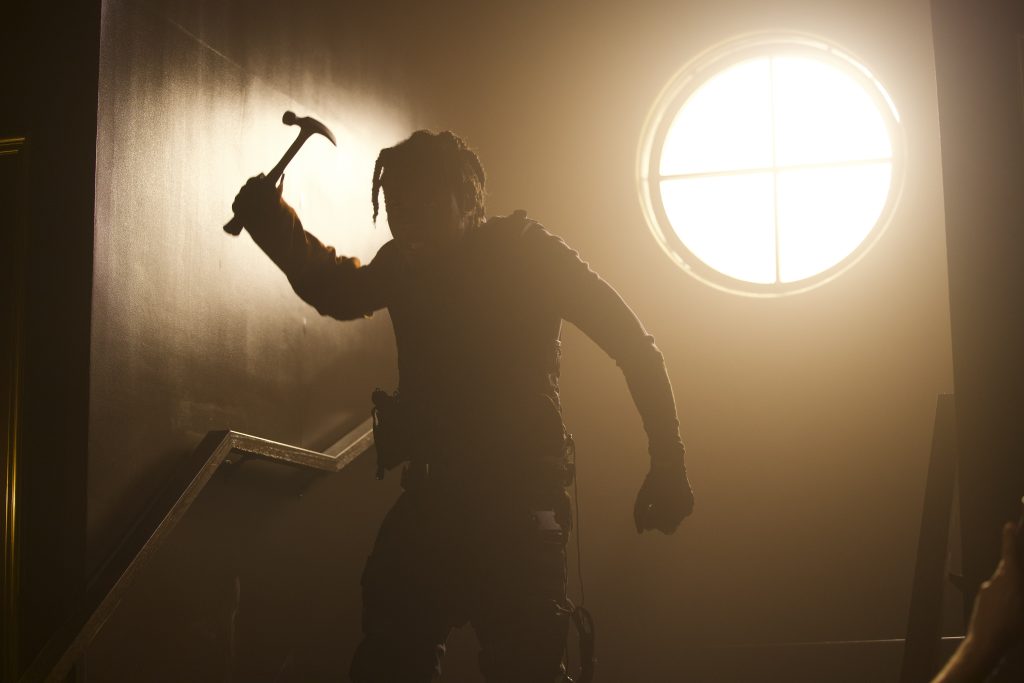
Christine (1983) was another one. For the truck… The story is the story, which came out of me like water, just like the lyrics did. Now, are these lyrics going to be accompanied by acoustic piano, electric guitar, or drum and bass? That’s the trick. What I’m able to do, and I learned this from Tarantino, is that after I’ve got the story I can use the styles and techniques of cinema to communicate my ideas to my DP, my gaffer, my grip, my editor, and my costume designer. My costume designer had all the dudes in Jimmy’s crew wearing swaggy velour sweatsuits [laughs]. You would think the hip-hop guys would be wearing that, but I reversed it. If you go back and think of Grease (1978) or Saturday Night Fever (1977), the white guys are cool, bro. I wanted them to look cool with their clothes and their hair but insidious at the same time. The past of film gives us all our templates. It’s like digging in your crates to find records for hip-hop. I advise anyone who wants to make cinema to dig in the crates of film, and find records. But, don’t just sample it, loop it, and go. Be inspired by it, build upon it, and make it better.
I just screened one of the first movies I ever saw in my life in my home theater three or four nights ago. It’s called Black Samurai (1976) with Jim Kelly. I remember the snakes at the end going through this guy’s mouth when they threw him in the snake cell. I also just rewatched The Man with the Iron Fists on 35mm at Vidiots the other day. There’s a scene where I had a snake go through a guy’s head and out his mouth. But, when I watched Black Samurai the other day, the snake never went through the guy’s mouth. It was just sitting on him. They didn’t have the budget to make it go through his mouth [laughs]. But, my imagination of what I thought I saw took it further. When you watched a movie in the old days, you didn’t see the wires. Now, you see the wires everywhere [laughs]. [Guillermo] Del Toro is a great example. He watched all those kaiju movies as a kid and then developed a way to make his own. Now, when we watch his films, they are immaculate. You don’t get Godzilla vs. King Kong (2021) unless he makes Pacific Rim (2013)for us, which is taking all those old movies and bringing them together. It’s the same thing with me. I’m taking all these different styles and giving us One Spoon of Chocolate. Like you said, it feels like it could’ve played on Forty-Second street back in the day, but it’s also timely now.
I had fun watching the 36 Cinema events online during the pandemic, including your commentary for films like Master of the Flying Guillotine, Five Deadly Venoms, The 36th Chamber of Shaolin, Heroes of the East, and Shogun Assassin. One Spoon of Chocolate is your first original release under the 36 Cinema banner. What’s next for 36 Cinema, and will there ever be any similar events in the future?
Wow, I’m glad you were one of the people that joined those events. It was a very unique time, and it was pretty special to be honest. I kept the company alive, up and down. We’re now able to be in this position and have the funding and economics to share an original feature. The plan is to continue. The plan is to have new movies for the cinema. We’re also developing something for TV. My technique is to keep the shorter content for TV and the long content for the cinema. I hate when everything just goes right to streaming. Something forty minutes long is fine for streaming, but if I’m going to sit down for ninety minutes and up, let me get my popcorn at the theater and enjoy my shit, yo. We’re also planning a podcast. We plan to be a force. Thinking back to those days where we did live broadcasting with commentary and had people from around the world sit down at one time and watch a movie, I would love to get that going again. It was the first thing we did, but it took about twenty apps to do it [laughs].
One Spoon of Chocolate is exclusively in theaters, starting May 1st, via 36 Cinema.
Notes
- RZA, The. The Wu-Tang Manual. Riverhead Books, 2005. pp. 107.
- Tarantino, Quentin. Cinema Speculation. HarperCollins, 2022. pp. 219.
- RZA, The. The Tao of Wu. Riverhead Books, 2009. pp. 7.
- Tarantino, Quentin. Cinema Speculation. HarperCollins, 2022. pp. 251.
- RZA, The. The Wu-Tang Manual. Riverhead Books, 2005. pp. 53.
- Longstreet, season 1, episode 1,“The Way of the Intercepting Fist,” directed by Don McDougall, aired September 16, 1971 on ABC.
- RZA, The. The Tao of Wu. Riverhead Books, 2009. pp. 53.
Jonathan Monovich is a Chicago-based writer and a regular contributor for Film International. His writing has also been featured in Film Matters, Bright Lights Film Journal, and PopMatters.