

A Book Review by Andrew Kolarik.
Throughout the collection, the authors make it clear that there was something special about Lewis’s ability to rise to the heights of trash cinema. The content of the films may be judged as irredeemable by some, but Lewis’s works are described by the authors as memorable and evocative, taking viewers far beyond the everyday….”
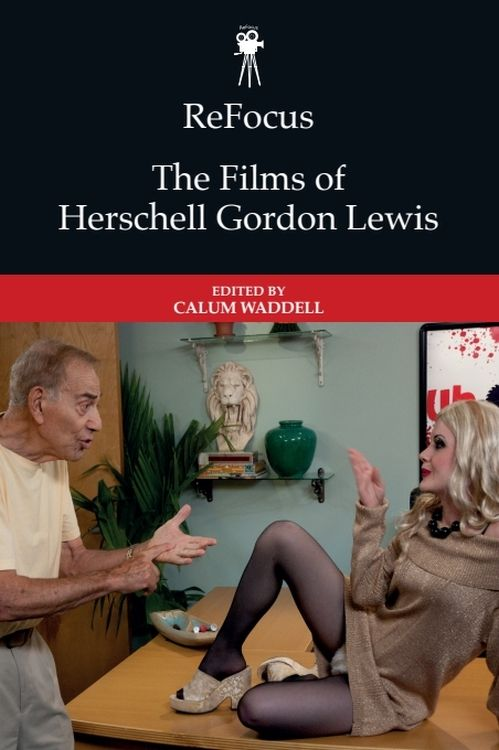
Herschell Gordon Lewis (1926-2016) was a trailblazer of exploitation cinema, a horror director blessed with the ability to create work that was truly, satisfyingly disgusting. Known as the Godfather of Gore, Lewis specialized in low-budget movies soaked in blood and viscera, such as Blood Feast (1963), generally considered the first splatter film, where an Egyptian caterer slices up local ladies for a horrific ritual. Another prominent work is Two Thousand Maniacs! (1964), in which tourists are tortured and murdered in a spectral Confederate town that only appears once every hundred years. Edited with clear affection for its subject by Calum Waddell, ReFocus: The Films of Herschell Gordon Lewis (Edinburgh University Press) is a collection of critical essays on Lewis-related subjects and films, that draws from 11 experts in the field who offer interpretations of Lewis’s films, influence, and oddly appealing content. The book is divided into three sections that cover a broad spectrum of subject matter: Early Provocations; Texts of Transgression: The Bloody Bombast of Herschell Gordon Lewis; and Rethinking “The Godfather of Gore”: Lewis Legacies and the “Art” of Schlock and Awe. Several authors in the collection, including Joseph M. Sirianni and Waddell, discuss Lewis’s work as paracinema (disruptive filmmaking that happily eschews mainstream Hollywood values), or just straight trash film, where the label is worn as a badge of honor for work with zero craftsmanship and no saving graces beyond shock value, created to disgust, thrill and entertain (and make plenty of cold hard cash). Throughout the collection, the authors make it clear that there was something special about Lewis’s ability to rise to the heights of trash cinema. The content of the films may be judged as irredeemable by some, but Lewis’s works are described by the authors as memorable and evocative, taking viewers far beyond the everyday. This is highlighted in a chapter where David Scott Diffrient discusses the olfactory sensations conjured up by Lewis’s inventive carnival of the grotesque, which is an unusual and vivid thing for a filmmaker to achieve. There is also status associated with pioneering the outrageous and reprehensible, showing the others that came after just how to get that tasteless content to work (when it has never been done before, how do you effectively convey images of people fondling guts, and gauging eyeballs?). The chapters describe how filmmakers with an eye for transgression that came after Lewis (top image: Wizard of Gore, 1970), such as George Romero (Night of the Living Dead, 1968) and John Waters (Pink Flamingos, 1972), get much deserved credit for subversive work using the power of exploitation cinema to critique societal norms. But it was Lewis who first opened the path, and showed them the way.
The opening chapter is a reminder that what we see onscreen has a lot to do with what we bring with us, and that cinema is often pre-loaded as a result of the audience being marinated in online content and advertising jargon. Early in his career, Lewis directed a wholesome guide to the correct way to cut meat (Carving Magic, 1959), an obscure industrial film presented courtesy of the US meat industry, featuring two happy middle-class couples. But as author Jack O’Dwyer points out, the viewer cannot avoid the influence of external factors, perhaps having viewed many hours of slicing and dicing in a lifetime of enjoying horror films, or maybe bringing with them prior knowledge of Lewis’s other works. Scenes of an overly friendly chap carving meat with a sharp knife will be associated with something other than mere culinary expertise, packing the film with undertones that make it resemble a handbook for a serial killer. O’Dwyer discusses how the familiar mundane expectations of our experience with the format of domestic cooking programs allows the film’s enjoyment to be widened by recontextualization in the popular Youtube pastime of playfully remixing film snippets and content, where familiar routine situations devolve into absurdity. With its Stepford Wives-esque characters so insanely focused on the joys of meat cutting, Carving Magic cannot help but carry tension and menace, that lends itself to expectations of an outbreak of violence and bloodletting.
Erika Tiburcio-Moreno discusses Two Thousand Maniacs! (1964) in a historical and social context, sifting through Lewis’s creation of a “monstrous Dixieland” where swanky Northerners get eviscerated in the Southern Confederate township of Pleasant Valley. Indeed, merry townsfolk sing ‘Dixie’s Land’ following the dismemberment of a Northern tourist by yanking his arms and legs off with horses. Moreno highlights that Maniacs kicked off the ongoing illustration on film of the South “as a space of horror, and a metaphor for turbulent times,” paving the way for Deliverance (1972) and The Texas Chain Saw Massacre (1974). Science fiction films portraying the fears of communism infiltrating the land in the fifties had given way to human monsters, reflecting the struggle for civil rights and the violent acts associated with Southern identity that wanted to uphold ideals of white superiority. Moreno’s chapter explores Maniacs as a vision of the fear of a backlash from people who believe their identity and social structures are under threat. The following chapter by Daniel Tilsley also discusses Maniacs in the context of sadism and existentialism, where human relationships are a struggle for dominance, and those with power render the individual down to nothing but meat. An intriguing take on Sartre’s idea that “Hell … is other people” is provided by Tilsley, where the notion that people are always the focus of an “Othering” gaze defining their social meaning is highlighted by Lewis’s use of the camera. Eyes are filmed as medusa-like,a petrifying gaze that denies the freedom of self-identification.
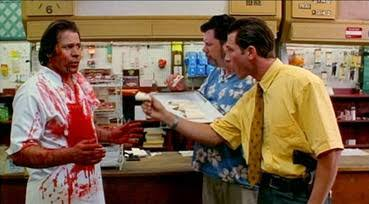
Diffrient shifts the focus on Lewis’s ‘carnographic’ distinctiveness from the visual modality (“glistening intestines, hacked limbs, and flayed skin”), to highlight just how effectively gruesome his skills were in conveying grossness through olfactory recall. This is an excellent chapter about how purulent, disgustingly outrageous, or simply well-chosen onscreen images including decaying fish, dog faeces, and foul cigars can trigger memories of smells in the viewer, which the author describes as a ‘hellish smell-scape.’ Diffrient contrasts the subjectively felt experience of scents evoked by Lewis’s work with the descriptions of reviewers who made it clear that in their view Lewis’s films stank to high heaven. The chapter looks at how prints of the films, with their scratches, splotches, dirt and grime acted to enhance the viewing experience, as if the film itself was physically infected with the stench of its content. An example is given from The Gore Gore Girls (1972), where a stripper’s bottom is tenderized and salted, which Diffrient argues evokes the tart, metallic taste of raw meat. The critical approach taken is unconventional and strangely refreshing given its subject matter, with regards to a focus on how taste and smell can be provoked by the lowliest of cheap productions when executed creatively, making the movies resonate and etch themselves in sensory memory. The text throughout the book is embellished with figures portraying characters or scenes from Lewis’s films, that illustrate the schlocky gore effects which look like Lewis went out of his way to make look unconvincing, but are, in their own way, rather brilliant. A still of the tenderized bottom is lacking, which is an unfortunate absence given the effectiveness of Diffrient’s descriptive prose.
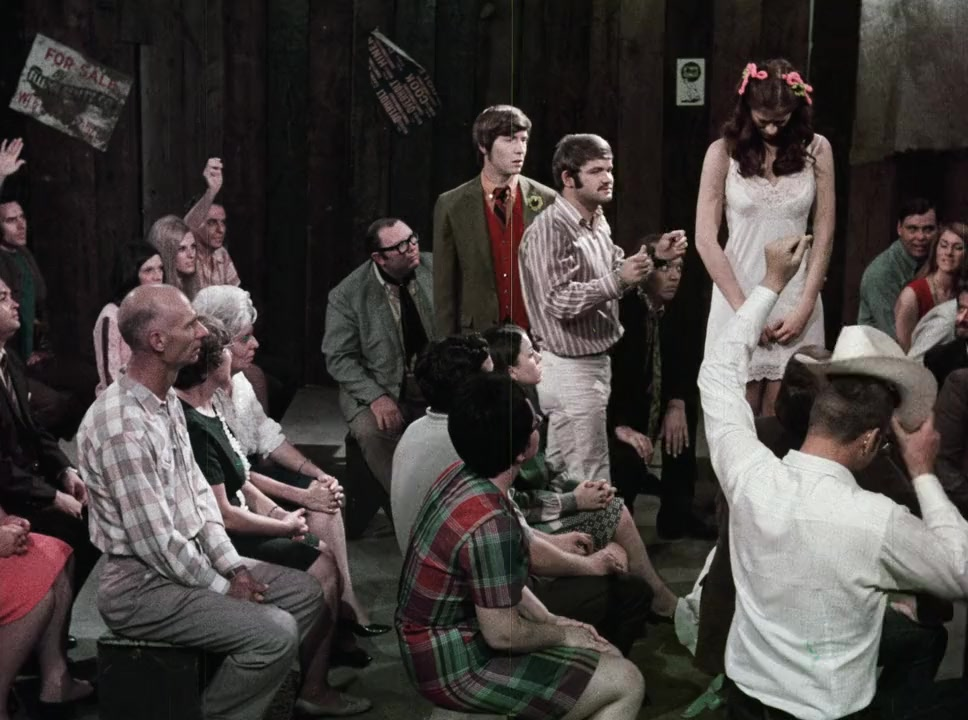
For a director who was unafraid of using cheap stereotyping and taboo subjects to make a fast buck, Lewis’s films did sometimes sidestep this to create something distinctive and unique. Gary D. Rhodes writes about how Lewis’s picture This Stuff’ll Kill Ya! (1971) managed to portray Oklahoma as unbound in time and space, eluding the typical cliches of oil wells, tornados and teepees. Rhodes credits Lewis with creating a weird combination of the Old West, Old South, modern-day and imagined Oklahoma, as a wonderful creation and an impressive feat. Kate J. Russell discusses how Lewis skillfully weaved humor into the fabric of his films, managing to portray comedic entanglements of the characters and the human body in sensual, violent, or daft situations, which may have contributed to the longevity of Lewis’s films while other exploitation films and directors have fallen by the roadside and been forgotten. Sirianni points out that the director John Waters may be the primary reason why Lewis avoided obscurity, thanks to his interviews and admiration promoting interest in Lewis’s pioneering efforts.
Nevertheless, the collection is even-handed in the way it approaches Lewis’s body of work, praising what is novel and bold, while highlighting the more tawdry elements and examining how they fit into the larger picture. While the text mentions that Lewis always denied accusations of prejudice and misogyny, and professed to view work such as The Gore Gore Girls (1972) as parody, problematic aspects are legion. Murray Leederdiscusses the strange fascination of work that recontextualizes stage magic’s misogynistic aspects in a way that professes to be outrageous, but is at the same time “fundamentally flat and affectless.” Jialu Zhu discusses issues with the characterization of Fuad Ramses (Mal Arnold) in Blood Feast (1963) and the depiction of various characters who are ignorant and blandly disrespectful of Egyptian culture throughout the film. Waddell’s piece on Black Love (1971 “attempts to try to find a way to defend what might be the lowest point of the Lewis oeuvre,” and is very straightforward and clear regarding just how offensive the film is. Shot in only 3 days, Black Love is an obscure work described as a cynical, crass film about African American sexuality, stripping away everything apart from nudity and sex and godawful narration. Waddell interprets the film as “pure” paracinema, so dreadful that it may ultimately transcend its own awfulness, and also starkly condemns it as asinine, unironically repulsive and legitimately disturbing. As such, Waddell argues that Lewis was capable of putting together cinematic degeneracy that could feed racist viewers their own prejudices if they were willing to stump up the money for it. But the boring, listless and repetitive nature of the work in comparison to his other films suggests that Lewis may have had a genuine dislike for this one.
The many topics and takes on the material that the book addresses are fascinating throughout, ranging from Lewis’s appeal beyond splatter and gore, to the importance of charming and memorable characters (Waddell makes a convincing case for the importance of the casting of Connie Masonin Blood Feast and Two Thousand Maniacs! as a critical ingredient of their success). But there is more bubbling under the surface that only gets hinted at. Waddell highlights in the Introduction the hardships associated with putting together an edited collection on Lewis, with a scarcity of scholarly work and authors dropping out at short notice, and due to this we are denied a chapter about Lewis’s other life working in direct advertising. The Introduction also casually drops in a mention that Lewis served a prison sentence for marketing fraud. Expanding on these subjects might help get to the root of something that is touched on in the book but never really delved into, which are Lewis’s reasons for creating the artistic dross and splattery goodness of such novelty that he spewed out. Was the motivation purely financial, seeing a gap in the market he could leap on and turn a tidy profit? Was it a streak of carny-esque desire for memorable performance and consummate showmanship, which is alluded to in Richard J. Hand’s chapter on Theaters of Horror? Did Lewis get off on it? Why did he drop out of making movies for thirty years between The Gore Gore Girls (1972) before returning with Blood Feast 2: All U Can Eat (2002)? The collection stands up well as the first scholarly study of Lewis’s legacy, enduring influence and strange appeal, and there is undoubtably a deeper seam to burrow into in further works that could build on the insights provided here.
There are notable themes that recur across the essays in the collection. One is the idiosyncratic nature of Lewis’s work. There is general agreement among the authors that Lewis’s films are zed-grade works concerned primarily with spectacle and displaying little or no craft at all, a sentiment that appears to have been shared with the director himself (Leeder mentions that Lewis regularly described his own technical incompetence). But there is also agreement that Lewis stands out for his daring, and that the films are unmistakably his, with a signature style and way about them. As Waddell states, Lewis did not just follow trends, he also created them. Siriannihighlights Mikita Brottman’s view that films such as those created by Lewis or Waters can be positive and liberating, because viewers can enjoy a celebratory theatre of arousal where social boundaries are not an issue. The collection persuasively argues that whenever a director cranks up the violence and gore to ridiculous levels, a debt is owed to Lewis, whether the result is good or bad, artful or tripe. So many later horror directors would no doubt love to attain that prestigious honor of making the trashiest, most offensive movie ever put to screen, be it Rob Zombie (House of 1000 Corpses, 2003), Tom Six (The Human Centipede (First Sequence), 2009), or Damien Leone (Terrifier, 2016), the list goes on. But Herschell Gordon Lewis had the vision and will to do it first, and this book collection of critical essays does his achievements justice. Both for the glittering heights of depravity he climbed to and will be remembered for, and the rodent-infested gutters of the lows as well.
Andrew Kolarik is a Lecturer at University of East Anglia and has previously worked at Cambridge University, University of London, and Anglia Ruskin University. His criticism, poetry, and fiction have appeared in Pulp Metal Magazine, Supernatural Tales, Carillon, Eunoia Review, Horla, Yellow Mama, and Between These Shores Literary and Arts Annual.