

By Gary D. Rhodes.
Gaston was well aware of the rising popularity of narrative films in the US and Europe, as he’d become friendly with other prominent film producers, especially those at Vitagraph. He saw that sales of his brother’s fantasy films were falling sharply. Given a license by Edison’s Patent Trust to release one-reel of film per week, Gaston in Fall 1909 experimented with a variety of narrative themes, then noted the popularity of westerns with producers and audiences and decided to specialize in that genre.”
–Kathryn Fuller-Seeley
Of all filmmakers from the early cinema period, Georges Méliès remains by far the most popular and influential. His moving pictures of the fin de siècle and the first years of the twentieth century thrilled audiences with their magical, special effects and their fictional storylines, which ranged from devils and ghosts to astronauts and alien creatures. Even before the year 1900, more than one critic dubbed him a film artist, one whose ideas were regularly plagiarized and whose film prints were illegally duplicated.
Though his film career ended in 1912 and he languished in obscurity until being rediscovered in his later years, Méliès’ fame grew after his death in 1938, with the twenty-first century being particularly good to him. Rediscoveries and restorations of his films have abounded, including a 2011 restoration of a hand-tinted print of A Trip to the Moon (1902), a moving picture featuring the man-in-the-moon turned unhappy when a lunar spaceship flies into his eye. That image remains one of the great icons of the cinema, having been turned into modern posters, coloring books, and wall sculptures.
As of 2026, Méliès’ story has become better known globally than at any point in history. Along with boxed sets of his films, numerous biographies and studies of his work have been published, including Pauline Méliès’ Georges Méliès et sa famille se racontent (2022), Matthew Solomon’s Méliès Boots: Footwear and Film Manufacturing in Second Industrial Revolution Paris (2022), and Paul Fischer’s The Man Who Invented Motion Pictures (2023). Most famous of all, of course, is Martin Scorsese’s film Hugo (2011), based on Brian Selznick’s book The Invention of Hugo Cabret (2007) and starring Sir Ben Kingsley as Méliès, cinema’s greatest magician.
Far less known is Gaston Méliès, Georges’ brother, who traveled to the United States in 1902 to protect Georges’ film copyrights. By the following year, Gaston was making his own moving pictures in America, their profitability leading him to search for a location where he could shoot films year-round thanks to warm weather, and where he could shoot westerns at authentic locations. That did not mean California or Florida: instead, in 1910, Gaston settled in San Antonio, building Texas’ first film studio.
Here is a crucial story of international cinema and Texas history, one largely forgotten until Kathryn Fuller-Seeley and Frank Thompson began rigorous research that led to their new book, The First Movie Studio in Texas: Gaston Méliès’s Star Film Ranch, published this year by the University of Texas Press. Kathryn Fuller-Seeley kindly agreed to do an interview about their work for Film International.
How did the two of you decide to pursue this particular historical tale, and to research it together as coauthors”?
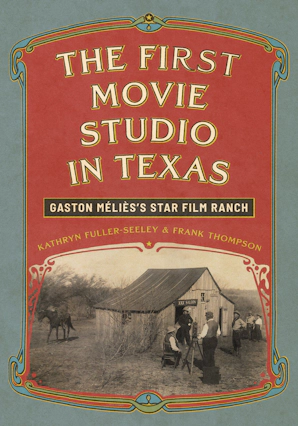
Kathryn Fuller-Seeley (KFS): While researching a book I co-authored with Q. David Bowers, One Thousand Nights at the Movies: An Illustrated History of Motion Pictures 1895-1915 (2012), I became acquainted with Frank Thompson’s pioneering book, The Star Film Ranch: Texas’ First Picture Show (1996). I was so impressed with Frank’s 30-plus years of historical research exploring Gaston Méliès’ films and the fascinating characters he worked with, and Frank’s publications on the history of the Alamo in popular culture, and other film productions shot in Texas. After moving to Austin, I contacted Frank about the chance to expand his original San Antonio film production research in light of new film finds from archives around the world, and the significant new information we could gather from previously unavailable historical resources. He’s a wonderful collaborator. Our book project is the product of nearly ten years of further archival research, aided by insights and generously shared primary source materials from documentary filmmaker Raphael Millet and Méliès family historian Jacques Malthête.
What reasons do you believe Gaston Méliès had for specifically choosing San Antonio?
San Antonio made sense as a winter filmmaking location not just as a whim but for reasons of geography, climate, history and economics. The city was a vibrant transportation and communication center, in 1910 the largest city between New Orleans and Los Angeles. Its historic mission ruins, the famous Alamo, the rolling open spaces of Central Texas Hill country, and its international flavor made it popular with tourists and Northern visitors seeking to escape cold winter weather.
Unlike what film companies would eventually encounter in Jacksonville, Florida, where business leaders eventually created backlash against the upstart film industry’s appearances in the city, San Antonio’s business leaders welcomed Méliès. German American real estate investor and brewer Otto Koehler particularly pointed Gaston to property available south of town near his posh Hot Wells Hotel and sulphur springs resort. Koehler also suggested product placement – the troupe’s saloon sets would be festooned with advertising signs for San Antonio’s Pearl Beer. In exchange, the actors got a steady supply of free beverages.
Shooting on location was rare in the days of early cinema. What drove Gaston to be so interested in authenticity, particularly when his brother was famed for the inauthentic, the world of magic and fantasy?
We believe that Gaston was well aware of the rising popularity of narrative films in the US and Europe, as he’d become friendly with other prominent film producers, especially those at Vitagraph. He saw that sales of his brother’s fantasy films were falling sharply. Given a license by Edison’s Patent Trust to release one-reel of film per week, Gaston in Fall 1909 experimented with a variety of narrative themes, then noted the popularity of westerns with producers and audiences and decided to specialize in that genre. As producing films indoors in winter in New York was difficult without expensive and unwieldy lighting rigs, for both cost efficiency and a sense of realistic settings, Gaston sent his troupe to shoot outdoors in Texas. His quest for authenticity was significantly aided by his choice of cameraman. William “Daddy” Paley had been shooting films since 1895, and while he was conservative in filming scenes in static takes, Paley’s attention to photographic technique and carefully chosen lighting on location resulted in critically acclaimed, crystal clear images on screen that accentuated the details of Texas landscapes and the subtleties of the troupe’s facial expressions.
Tell us about the kinds of films Gaston made in San Antonio. And who did he cast for onscreen talent?

Nearly all of the approximately 70 one-reel films that the Méliès Star troupe produced during their San Antonio period were western-themed. Gaston purchased most of his scenarios from professional writers. Many of the films were comedies and melodramas set in the contemporary Texas world of ranch lands. They often revolved around romance; rival suitors vied for the hands of the ranch owner’s daughter. Eastern snobs get their comeuppance from the down-to-earth cowboys. The Star films emphasized action, so nearly every film features a daring race to the rescue or desperate escape from the villains. The bad guys were rogue bandits or stereotyped banditos. Indians made only rare appearances. Historical-themed films featured mission priests interceding in lovers’ quarrels. The open plains and shaded oak groves, winding San Antonio River, the Star Ranch house and arid Hill country scenery all appeared prominently.
Gaston Méliès assembled a talented cast of performers in their teens, twenties and early thirties, many with significant theatrical experience. Actresses Dolly Larkin in the Spring 1910, then Edith Storey from Summer 1910 through May 1911 were both expert horse riders who fearlessly performed their own physical stunts. Storey in particular was a sensitive emotional actress and deft comedienne, and critics took especial notice of her excellent work. Brought from New York to play the leading male roles were Francis Ford, William Clifford, William Carroll and William Stanley, all of whom were equally effective in lead, villain and character roles. The cowboys (like Otto Mayer and the Cooper brothers) were recruited from central Texas ranches; many like Joe Flores had experience in rodeos and wild west shows. Added to them was the experienced crew of cameraman Paley, director William Haddock and scene painter Horace “Scotty” Young.
While working at his Texas studio, did Gaston work with any particularly notable filmmakers, or future filmmakers?
I delight in telling stories about Edith Storey and Francis Ford. Edith at seventeen years old had been on stage and in the movies since childhood. In the films we have recovered, she lights up the screen with her fresh, unmannered acting. Critics, film exhibitors and audiences of the day commended her work. Leaving the company when Gaston took the troupe to California, Edith returned to New York and the Vitagraph Company. She was a top dramatic and comedic star until her early retirement at the end of World War I. She lived the rest of her life quietly in Northport, Long Island, and she donated a career scrapbook to the New York Public Library that we are most anxious to have restored so that we can view it.
I’d previously known so little about Francis Ford, until we dove into the research. He was a true movie pioneer, having been in films since 1908. He innovated the duties of assistant director working for Gaston Méliès and avidly learned everything he could about film production. After parting from Gaston’s troupe in California, he worked with Thomas Ince to create the spectacular Bison 101 western military features of 1912. Then at Universal he and Grace Cunard became the king and queen of the cliffhanger serial. He brought out his 12-years younger kid brother John from Portland, Maine for a three-year apprenticeship. When Francis’s high-flying career collapsed, John’s ascended. Francis nevertheless continued working in Hollywood; he made cameo appearances in 30 John Ford films. Gaston Méliès’s legacy of mentorship lived on for decades.
At the time Frank Thompson published his book, none of Gaston Méliès’ Texas films were known to exist; in subsequent years several have been discovered, and we are always on the lookout for more.”
–Kathryn Fuller-Seeley
What were some of the notable films Gaston made in Texas? Do any of them survive?
At the time Frank Thompson published his book, none of Gaston Méliès’ Texas films were known to exist; in subsequent years several have been discovered, and we are always on the lookout for more. Starting with Billy and His Pal (1911) a melodrama in which Edith plays a 15-year-old boy who helps to rescue his cowboy idol Francis Ford from bad guys, was found in New Zealand. Frank has made it possible for us to view this rare film on the internet here.
When the Tables Turned (1911), a delightful comedy in which actress Edith gets revenge on a group of ranch hands who have mistakenly kidnapped her as a prank, was located at the Library of Congress. The melodrama In the Tall Grass Country (1911) which features dramatic rescues from a real prairie fire, was found by a collector. Recently, Sir Percy and the Punchers (1911) in which Edith and the cowboys outwit obnoxious visitor Francis Ford, was located in the British film archives.
Which particular film do you believe was the most important Gaston produced in Texas?
I am certain that The Immortal Alamo (1911) would be Frank Thompson’s choice, and I agree. From the moment of their arrival in San Antonio in January 1910, Gaston’s troupe managers had planned that their crowning achievement would be an ambitious dramatic epic of the siege of the Alamo and the event’s importance to Texas history. Alas, we do not have a copy of the film they ultimately released in May 1911, but we have a plot synopsis, a fan magazine novelization, and numerous photo stills from the production. In my opinion, the film exemplifies the challenges and limitations of the American style of filmmaking in 1911, as well as its accomplishments. The city would not allow the film crew access to the actual Alamo, located in the downtown business section, so Scotty Young had to paint scenery for filming outdoors at the Star Ranch. The small acting troupe was stretched so thin that Francis Ford recalled having to play multiple characters. Students from the Peacock military academy stood in as the Mexican army. A romantic subplot in which Susanna Dickinson being menaced by an evil Mexican officer was inserted (to the dismay of critics). Despite the hefty production expense and plethora of action stuffed into this 1000-foot-long, fifteen-minute movie, it was difficult to create a successful epic in such a brief undertaking. Adding to Gaston’s challenges in marketing the special film, The Immortal Alamo was released as a regular weekly Méliès offering, provided with little additional publicity or advertising, belying its attempt to be promoted as a feature attraction. American filmmakers learned that epics in the future would require longer length and more intense attention to marketing.
How do you see Gaston’s Texas moving pictures in relation to those he produced in other cities and countries?

While we only have a small group of extant films to compare with other productions of 1910-1911, I think am argument can be made that Gaston Méliès’ westerns acquit themselves well against other western subjects and the average American-produced films of the period. The camerawork is conservative but captures a commendable visual clarity. The scenery is well-captured. The acting in many cases is fresh and natural. Action scenes are in the forefront of each film but are usually integrated logically into the fairly standard one-reel-length narratives. Local newspaper ads from nickel theaters regularly promoted the weekly Méliès western releases as ones their fans looked forward to. Prints of Méliès westerns produced in 1911 apparently sold well, providing Gaston a handsome profit. The Méliès films seem the equal to those produced by the Selig, Essanay and American studios at this time, if not reaching the polish of the much better-known Biograph westerns. Méliès’s releases have seldom been addressed in histories of silent western films. We believe that they deserve a place at the table.
What kinds of responses did national and international critics and audiences give to Gaston’s films?
It’s been fascinating to read the intelligent reviews that Frank E. Woods, as “the Spectator,” wrote for the Méliès releases of 1910- 1911 in the weekly theater-vaudeville-film publication New York Dramatic Mirror. Woods had ambitious goals for raising the quality of American film productions through pointed criticism of narrative, acting and cinematography. He reviewed nearly every new film release (thousands of films) between 1909 until he left the publication in late 1912 to work as a screenwriter at Biograph. Woods called out plot cliches and illogic, hammy acting, and poorly framed scenes. He argued that one-reel films that rambled listlessly should have been more tightly edited. Especially starting in Summer 1910, after Haddock joined the Méliès company as director and Edith Storey was added to the troupe, Méliès films gained Wood’s frequent acclaim, for their scenery and acting. Méliès films held up well in his opinion compared to some other productions.
Did industry personnel or audiences tend to confuse Gaston with his brother, given their shared, famous last name?
Occasionally! In France, George Méliès was concerned with his own issues, and Gaston started the new production company without his younger brother’s input. Gaston kept the details deliberately vague by naming his company “G. Méliès Star Films.” Most people in the US industry simply accepted the genre shift. Georges apparently did not peruse the film industry trade press and only learned about Gaston’s operations years afterwards.
Your book is extremely well-researched. What kinds of sources did you rely upon?
Thank you! Frank did an enormous amount of research in the exhibitor’s trade press (Moving Picture World, Film Index, Variety, New York Dramatic Mirror) and the San Antonio newspapers, when the issues had to be pored through, page by page, on muddy microfilm. He scoured antique shops for promotional postcards and connected with cowboy Otto Mayer’s family to access his career scrapbook. We have benefitted tremendously from the digitization of historical movie industry publications and fan magazines. A dozen or more Gaston Méliès films were novelized in the first years of Motion Picture Story Magazine and contain numerous photo illustrations. Performers Storey, Ford, Haddock, Carroll, Paley and other Méliès troupe members reminisced over the years in fan magazine interviews about what they all called the happiest working experience of their careers. Francis Ford’s unpublished autobiography manuscript was unearthed at the Margaret Herrick Library; his vivid recollections add so much to our story. Ads for Méliès films at nickelodeons across the US, found in digitized newspapers, give a sense of their wide popularity in 1911. I unexpectedly learned about actress Anna Nichols’ 1911 experiences with the Méliès Texas troupe when I encountered months of gossip reported in the Arkansas City, Kansas, newspaper. She fled the town when the acting bug compelled her to quit her job playing piano accompaniment for the movies and leave her nickelodeon-manager husband.
What were the most challenging aspects of your research process?
Well, of course the lack of existing films is a huge disadvantage to fully analyzing the aesthetic and historical value of the productions of Gaston Méliès’ Star Film Company. That should not stop us, however, from utilizing the fragments of evidence that we do have, to understand their production practices and experiences of the troupe. Published film reviews give a sense of their value. No archival investigation can totally recreate films of the past, or how they were produced and exhibited and understood by their audiences. Our knowledge is always going to be partial. I think it’s important to learn what we can, not only from the rare outstanding productions of a time period, but what average movies were like in the period. We have more information about what it was like to visit the Star Films troupe during their stay in San Antonio from local newspaper stories, and reminiscences of the actors, then we do about many other film companies of the period. That’s valuable too.
What do you hope readers should take away from your book about the studio, as well as Gaston’s importance to film history?
Drawing from my answer above, I think there is value in researching small case studies of interesting people and everyday moviemaking practices in the past, to help put the work of the greatest auteur directors and most famous films into richer historical context. I ask my students to think about how the Méliès Star Ranch Films troupe operated any differently from what they and their friends do when shooting cellphone projects with their friends. What production practices are similar today, what are their goals as creators, what part does camaraderie play in their efforts, in doing the job they’ve set out to do, and in the ephemerality and pleasures of creativity they experience in everyday life.
Gary D. Rhodes, Ph.D., filmmaker, poet and Full Professor of Media Production at Oklahoma Baptist University, is the author of Weirdumentary: Ancient Aliens, Fallacious Prophecies, and Mysterious Monsters from 1970s Documentaries (Boswell Books, forthcoming), Vampires in Silent Cinema (Edinburgh University Press, 2024), Becoming Dracula – Vols. 1 and 2 (with William M. [Bill] Kaffenberger, BearManor Media), Consuming Images: Film Art and the American Television Commercial (co-authored with Robert Singer, Edinburgh University Press, 2020), Emerald Illusions: The Irish in Early American Cinema (IAP, 2012), The Perils of Moviegoing in America (Bloomsbury, 2012) and The Birth of the American Horror Film (Edinburgh University Press, 2018), as well as the editor of such anthologies as Becoming Nosferatu: Stories Inspired by Silent German Horror (BearManor Media, forthcoming), Film by Design: The Art of the Movie Poster (University of Mississippi Press, 2024), The Films of Wallace Fox (Edinburgh University Press, 2024), The Films of Joseph H. Lewis (Wayne State University Press, 2012) and The Films of Budd Boetticher (Edinburgh University Press, 2017). Rhodes is also the writer-director of such documentary films as Lugosi: Hollywood’s Dracula (1997) and Banned in Oklahoma (2004).