

By Thomas M. Puhr.
By turns funny, subversive, and formally playful, they are lovely paeans to female friendship.”
A few years ago, I reconnected with a college friend on social media. Our online conversations were pleasant enough, but I felt a pang of anxiety when we set a date to meet in person. Sure, I reasoned, we were close as undergrad freshmen, but that had been more than a decade ago. What if the old spark just wasn’t there anymore? Such doubts evaporated, however, the moment we saw each other. We instantly—and I mean instantly—resumed our old dynamic. And though we had plenty of updates to share (we were both freshly divorced, weirdly), our reunion felt less like a new conversation than a continuation of one paused just hours before.
Judging by her body of work, writer-director Anja Breien understood this aspect of friendship—that is, its near-magical ability to erase time—better than most. Although the Norwegian filmmaker’s half century–spanning career saw her tackling a number of genres (from comedies to family dramas, period pieces, and documentaries), her most enduring work is the so-called Wives trilogy: a chronicle of three friends whose periodic reunions see them through all manner of life events. Featured prominently in “Breaking Free,” the Metrograph theater’s retrospective of Breien’s career (she died this past May), these films speak to a feminist auteur ripe for rediscovery. By turns funny, subversive, and formally playful, they are lovely paeans to female friendship.
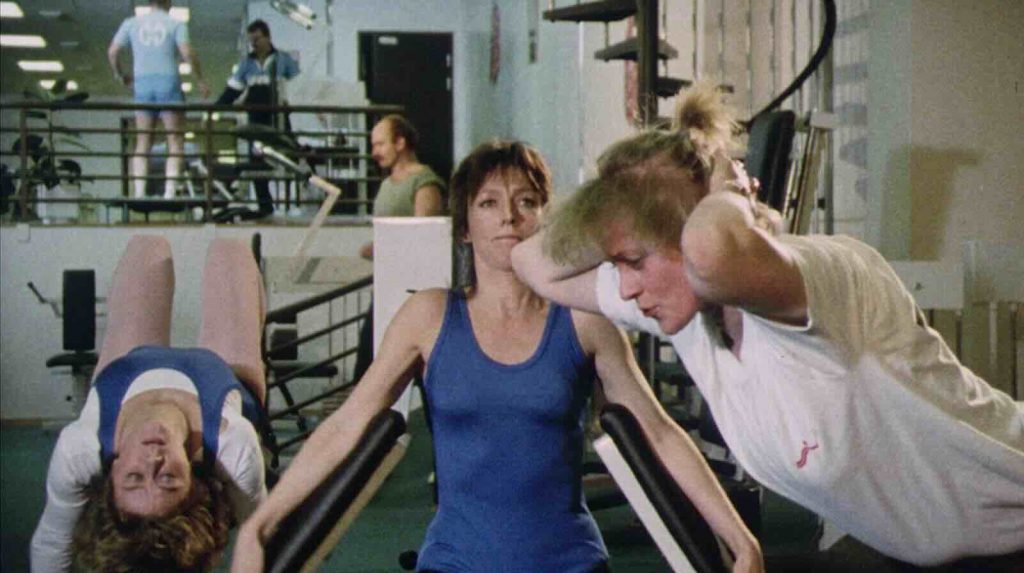
The first entry, Wives (Hustruer, 1973; see top image), opens with Mie (Anne Marie Ottersen), Kaja (Katja Medbøe), and Heidrun (Frøydis Armand) meeting at a school reunion in a former classmate’s apartment. Depressed by the prospect of returning to their dull routines, the three decide to spend the rest of the day gallivanting around Oslo. As the old friends visit a sauna, flirt with bewildered men on the street, and even buy tickets to a party cruise, we learn about the lives they’ve momentarily fled: Mie, frustrated with her philandering husband, has taken a lover (“I have a right to feel good, too!” she insists); Kaja, weeks away from giving birth, lives under her lawyer husband’s thumb; and Heidrun, barely clinging to her job at a chocolate factory, hides a deep depression under her sunny veneer. With the help of a near-constant stream of alcohol, the group’s innocent play at hooky turns into a multiday bender.
Throughout, Breien deftly juxtaposes piercing drama (in one scene, Heidrun’s “joke” about killing herself in front of her friends turns deadly serious) with bawdy comedy (in another, a scandalized elderly woman storms out of a washroom while the women casually recite obscene graffiti written on the stalls). Sometimes, the director pulls off both modes simultaneously: I laughed aloud when Kaja turns away from a very serious, very loud argument with her friends to pleasantly ask a waiter for some more beers. And while certain scenes haven’t aged well—contemporary viewers will cringe at the sight of a visibly pregnant Kaja getting drunk—the filmfeels astonishingly fresh and perceptive. Heidrun’s complaint, for example, about the emotional remoteness of many men (“That’s what they’ve been raised to do,” she laments. “To work and shut up.”) could have been written today. The same goes for Mie’s frustration toward people who conveniently omit her husband when they refer to “herchildren.” Aren’t they his kids, too?
Wives ends on a triumphant note, with Mie, Kaja, and Heidrun refusing to go home. “The movie ends here,” a playful title card informs us, but the adventure doesn’t. It’s a sweet gesture on Breien’s part, as if the director wanted to spare everyone the disappointment of witnessing her characters’ inevitable return to reality. A party may not last forever, but who says it can’t go on for just a bit longer?
Although Wives enjoyed some success overseas (its U.S. one-sheet includes glowing blurbs from Variety and the Boston Globe), Breien’s Wives: Ten Years After (Hustruer: ti år etter, 1985) remains mostly unknown outside her native Norway; today, the belated sequel’s IMDb page features just one user review. I hope the Metrograph’s screenings begin to change this meager coverage, especially since Ten Years After offers—despite a patchy first act and some pacing issues—much more than a simple retread of its predecessor. The film opens with Mie, Kaja, and Heidrun commiserating at another reunion: this time a Christmas costume party. Once again, the three go on an impromptu girls trip instead of returning straight home.
The filmfinds its footing once the girlfriends start their second adventure in earnest; rather than having them wander through Oslo again, Breien whisks the trio to Malmö, Sweden, where they spend Christmas in an otherwise deserted hotel. Through this isolated setting, Ten Years After becomes something altogether different from its predecessor. Sure, Breien peppers in some of her trademark humor (the hotel’s single worker becomes a jack-of-all-trades for his guests, cooking for them and even providing musical entertainment on New Year’s Eve), but the mood here is surprisingly ruminative: slower, quieter, sadder. Fans of the original’s freewheeling, vérité style may bristle at this aesthetic shift—the finale even dips its toes into magical realism—but I appreciated the director’s refusal to simply retrace her footsteps.
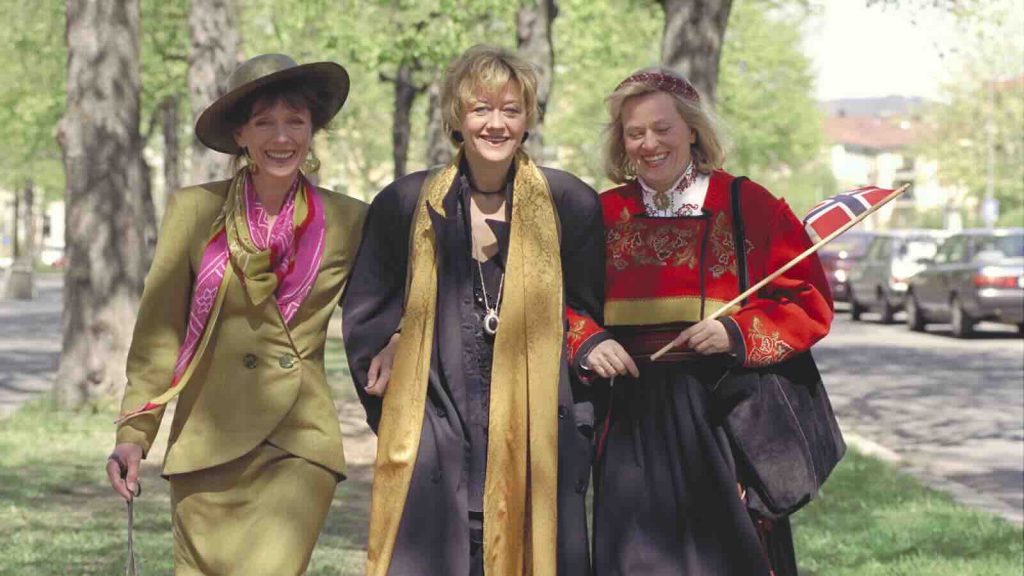
Breien reunited the gang one last time for 1996’s Wives III (Hustruer III). A bit slight in terms of both length (its 75-minute runtime includes a fair share of clips from the first two entries) and narrative (it’s something of a race-against-the-clock adventure, with the women attempting to return a stolen bust of Norwegian poet Henrik Wergeland that turned up—for reasons not really worth explaining—in Kaja’s antique shop), the film still lands thanks to Ottersen, Medbøe, and Armand’s charm. A few scenes pack an emotional punch (an argument between Kaja and her twentysomething daughter echoes a confrontation between Kaja and her mother in the first film), but Breienspends a fair amount of time allowing audiences to have some low-stakes fun with her beloved characters. Ending with a hot air balloon ride over Oslo, Wives III is often quite literally light on its feet.
Yes, the trilogy is about womanhood and friendship, but it is also about time: Surely it’s no coincidence that Kaja lugs around an ornate clock—an ill-timed gift from her mother—for much of the original Wives. Indeed, watching the films back-to-back-to-back affords today’s audiences the almost surreal opportunity to witness two decades of life within some four hours (I wonder if Richard Linklater knew of them when mapping out Boyhood or the Before series). This temporal compression lends an extra poignancy to the narratives’ emotional beats. Mie’s revelation that she has cancer in the third film hits even harder if one remembers this monologue she delivers in the first: “I have a plate that I’ve had since I was a child, with a picture of a woman feeding some chickens. The picture has faded a lot. When it’s completely gone, I’ll be dead.” Naturally, this compression makes the jokes funnier, too; note how Breien finds a way to make Heidrun fall through the same open manhole in every entry.
Like the three protagonists, each film has its strengths and quirks. But the Wives series becomes something even more special when considered as a whole. It embodies friendship’s ability to transcend time by doing so itself.
Thomas M. Puhr lives in Chicago, where he teaches English and language arts. A regular contributor to Bright Lights Film Journal, he has published Fate in Film: A Deterministic Approach to Cinema with Wallflower Press. His study of Robert Siodmak’s The Killers is forthcoming from Channel Academic Publishing.