

By Jenny Paola Ortega Castillo.
At the heart of changing relationships may be changing environments. I wanted to portray the moment when people’s desires begin to diverge. I hoped audiences would not overlook the real struggles faced by young people on the threshold of independence.”
–Jeong Jae-eun
There are films that transcend historical moments and thrive because they make us understand something deeply about the fundamentals of being human. Take Care of My Cat definitely fits into that description even after 25 years after its original release. Strongly embraced by critics and loyal audiences, it truly became an anchor across generations and cultural backgrounds.
Take Care of My Cat welcomes us with the sight of twenty-year-old women who graduate from high school in the city of Incheon and gradually drift apart as adulthood presents them with diverse and difficult realities. Ji-young struggles with everyday family duties and the well-known troubles related to poverty; Hae-joo gets into the corporate world in Seoul; Tae-hee goes against what everybody considers to be traditional success and desperately tries to keep the whole group’s bond strong and the half Chinese twins go through the reality of an unstable employment and social marginalization in general. Little by little, as an audience, we discover the subtle changes that deeply transform friendship bonds over time.
The film stays true to itself avoiding well-known clichés that have defined most of youth-oriented dramas in the last few years: sex, drugs, betrayal, romantic complications. It favors instead something much quieter, the very unnoticeable shifts in relationships. Rather than presenting conflict around problematics such as competition, jealousy, rivalry or resentment, Take Care of My Cat explores the very complex scenario in which love, disappointment, loyalty and distance live together.
The highly built-in emotional complexity does not appear in dramatic declarations but through subtle but important gestures of presence such as a short visit, a comfortable shared silence and understanding that is without explanation. The landscape choice is, as well, a fundamental decision. Setting the story in Incheon over the city of Seoul was not just an aesthetic decision, the city itself represents openness, connection to the wider world and a great deal of movement. Incheon itself is not romanticized as a space, it’s a geography painted with uncertainty and unrealized dreams.
Reliving Take Care of My Cat today makes it clear that the film wasn’t really about cats even though the adorable stray feline provides sense to the story. It is also about care itself and how easily it can be left out, how hard it is to really keep it and appreciate it.
A quarter of a century later, the films keep being as observant and compassionate as ever. I spoke with Jeong Jae-eun about Take Care of My Cat as the film returns to theaters in its beautifully restored 25th-anniversary release.
Twenty-five years after Take Care of My Cat premiered, it is returning to theaters through a restored release. What does it feel like to see a film you made finding a new generation of viewers?
I’m truly delighted that the film is being released again in North America after 25 years. I remember that when it first opened, it was immediately after 9/11, so it was released under a rather somber atmosphere. Now, I think the passage of time has given the film a certain value simply by virtue of being an older work, allowing audiences to approach it more comfortably.
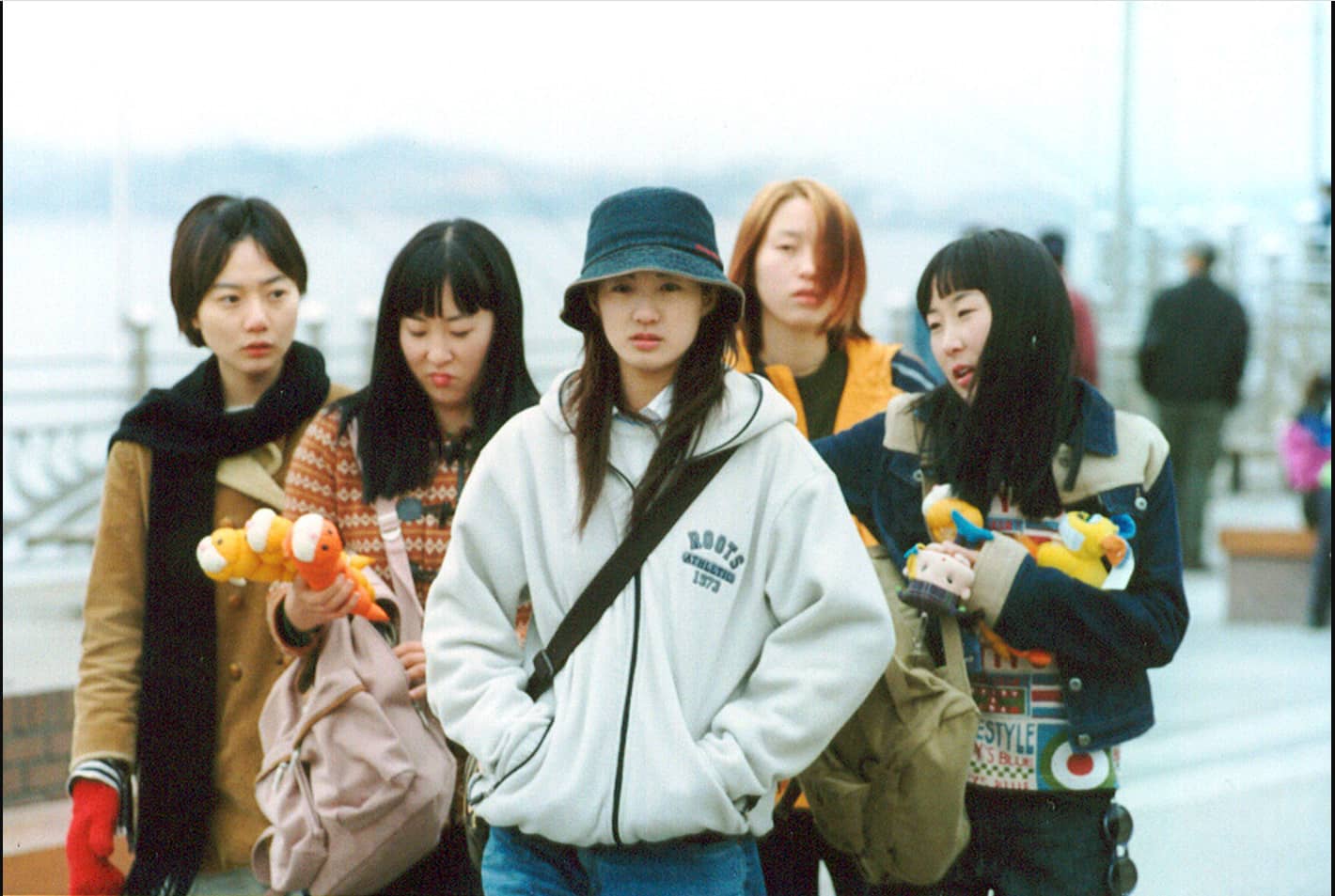
It feels as though this film has been given new life thanks to strangers from far away. I would like to express my deepest gratitude to everyone who worked so hard to make this re-release possible. Because of their choices, dedication, and affection, Take Care of My Cat is able to meet a new generation of audiences.
The digital remastering also made this re-release possible. Images that felt somewhat rough in the original film have become more delicate and refined. I was also very happy to change the order of two shots that had always bothered me whenever I watched the original print. Of course, it’s such a subtle change that no one will probably notice.
Many coming-of-age films are driven by romance, but Take Care of My Cat argues that friendships can be just as transformative—and just as heartbreaking. Why did you want friendship to occupy that central emotional space?
The male-centered stories in the films I watched often revolved around friendship. Yet the women in those films were usually portrayed as having superficial relationships built on jealousy or hatred toward one another.
I wanted to portray the dynamics of friendship, where sensitive emotions constantly intersect. I also wanted to show how those relationships change through the lives of women in their twenties. From the perspective of traditional heroic narratives, it may seem like a very small story. After all, it isn’t about great heroes.
Even twenty-five years later, audiences continue to connect deeply with these characters. What do you think makes these friendships feel so timeless?
I believed that the everyday lives of women in their twenties—with all their uncertainty and constant change—are ultimately no different from the lives we all experience.
Throughout our lives, we continue to question the meaning of friendship. Recently, I found myself deeply questioning a friendship that had lasted more than forty years. My friend had done nothing wrong; perhaps everything happened only within my own heart. Changes within myself, questions about the value of friendship, my sense of self, and my pride.
Perhaps friendship is precisely what allows us to turn all of these things upside down and examine them anew. Friendship is like a mirror in which we endlessly test ourselves. Through it, we compare ourselves with others, discover who we are, and ultimately learn to respect the vast world that exists beyond ourselves. I believe friendship is the gateway to all of that.
You were one of relatively few women directing feature films in South Korea at the time. Did that position influence either the stories you wanted to tell or the way the industry responded to your work?
I remember that even the title, Take Care of My Cat, along with its five twenty-year-old female protagonists and its cat, felt unfamiliar to many people. But there was also a small group of passionate supporters. The box office performance wasn’t strong, but those devoted audiences stayed with the film, and I think it’s because of them that it has endured until today.
Another major change is the status of the actors, who have grown alongside the film. The performers who were twenty years old back then are now accomplished actors who confidently carry both themselves and their projects. I’m incredibly proud of them.
I want to preserve those moments when they sit on buses and trains, quietly watching the scenery pass outside the window. I want to preserve the openness of their gaze—toward one another, toward life, and toward the landscapes of the city.”
Do you think Take Care of My Cat helped create space for more stories centered on young women’s everyday lives, or do you feel those stories are still underrepresented?
We need more stories about women. The important question is how we choose to look at their everyday lives. If we see those lives as meaningful and observe them with depth and sincerity, I believe many more diverse stories will emerge. Of course, compared to the past, we are already seeing a much wider variety of female protagonists today.
The five women begin the story as equals in high school, but adulthood quickly reveals differences in opportunity and privilege. Was that widening gap one of the central ideas you hoped audiences would notice?
Absolutely. At the heart of changing relationships may be changing environments. I wanted to portray the moment when people’s desires begin to diverge. I hoped audiences would not overlook the real struggles faced by young people on the threshold of independence. Ironically, the moments when people become most vulnerable because of life’s practical difficulties are often the moments when new friendships begin.
The friendships in this film do not exist in isolation, sealed away in some pure white castle. Last year, a young viewer told me that they had never once visited a friend’s house without calling first, and that they were surprised by the scene where Tae-hee simply shows up at Ji-young’s home unannounced. Hearing that made me think about something I had never considered before. Was that scene actually a cinematic device? Or was it simply the result of habits and experiences that had once felt completely natural to me? Twenty-five years ago, no one had ever asked me that question.
You chose to tell this story in Incheon instead of Seoul. How did that city shape the emotional landscape of the film?
Around the year 2000, we all felt like nomads, endlessly longing to wander toward another world. It was around the time when the idea of the “digital nomad” was just beginning to take shape. I suppose this became possible because of the spread of the internet and the birth of mobile phones.
I wanted to capture that spirit by portraying Incheon as an open city connected to the wider world—a place people could leave whenever they wished and always return to. That was how I hoped audiences would see the city.
How did you encourage the cast to create such a believable sense of shared history and friendship?
I love everything about cats: the songs they sing, their graceful movements, their soft fur, the way they focus completely on their prey, and the heart with which they sense human emotions. Perhaps I’m actually the one being controlled by cats.
But if there really is a planet where cats go after they die, maybe they’ll have a medal waiting for me. I’ve tried to broaden people’s understanding of the world of cats, to take an interest in the conditions of their lives, and to help others appreciate their beauty. Of course, there are so many devoted cat lovers that the competition for such an honor would probably be fierce.
The stray cat passes from one friend to another throughout the story. Beyond the title, what emotional or symbolic meaning did the cat come to represent for you?
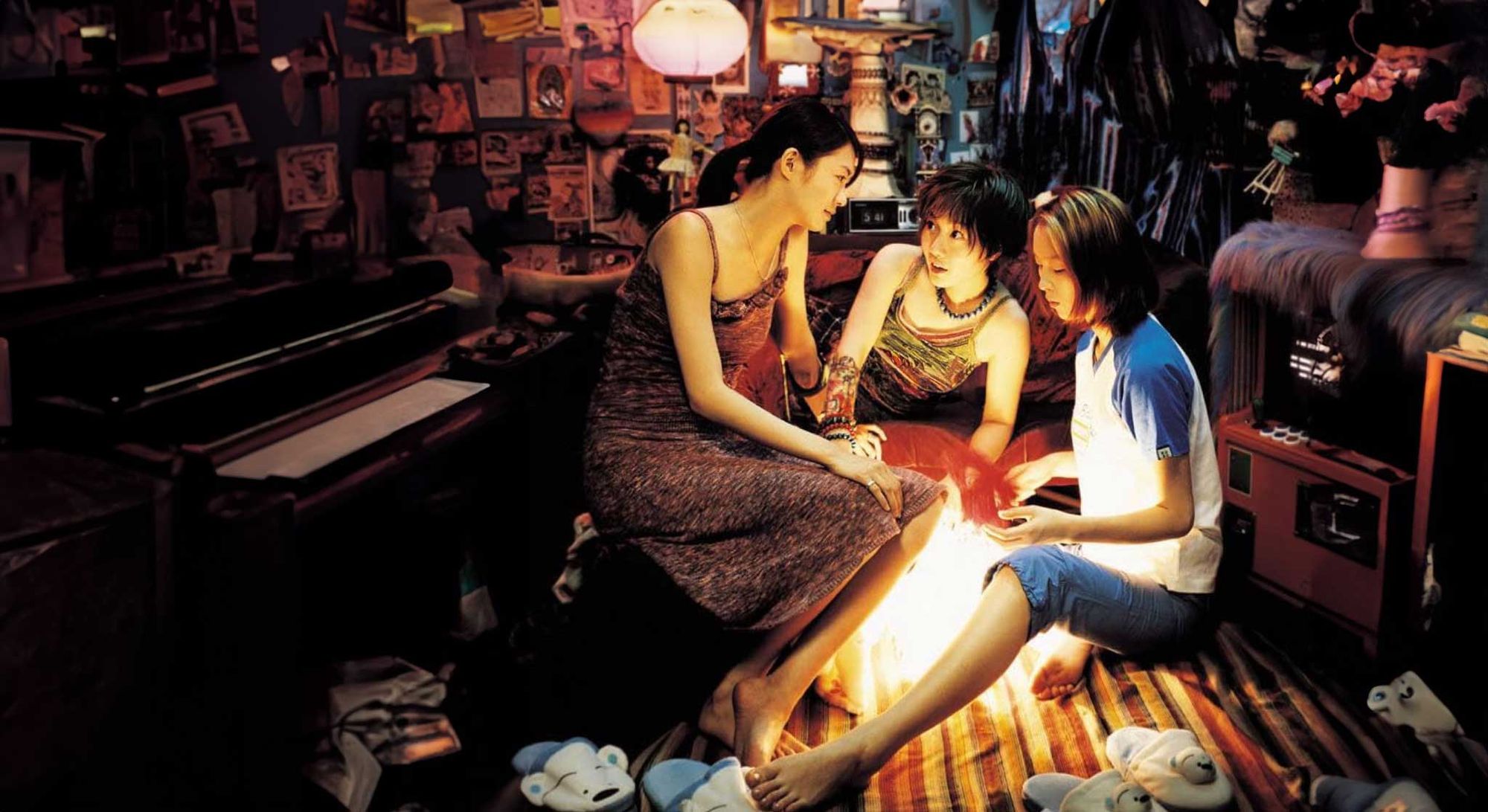
Twenty-five years ago, mobile phones had only just appeared, so there wasn’t very much the characters could actually do with them. Because of that, I think there was still time to simply gaze. They look out the window from their rooms. They watch their mother’s back. They focus on the road as they walk to a friend’s house.
More than anything, I want to preserve those moments when they sit on buses and trains, quietly watching the scenery pass outside the window. I want to preserve the openness of their gaze—toward one another, toward life, and toward the landscapes of the city. Only then can audiences watch these young women as they themselves watch the world.
After twenty-five years, what do you hope audiences—especially young women seeing the film for the first time—take away from it?
I don’t think I have the right to decide what audiences should feel or what they should take away from the film. Just yesterday, someone who had seen the film at Metrograph in New York sent me a message. The fact that, twenty-five years after it was made, this film can still reach someone makes me incredibly happy.
Jenny Paola Ortega Castillo is an English philologist and has a master’s degree in cultural studies from the National University of Colombia. She is a literature, writing and reading teacher from Minuto de Dios University in Bogotá, Colombia. Her main research interests are in literature, visual research, television studies and cultural studies.