

By Andrew Kolarik.
Danny Stewart’s Saluting the Blood of Heroes: Behind the Apocalyptic Film could not be more timely. The opening sections of the book, which dive into the background of the apocalyptic film, are rather alarming in the way that they highlight the many colourful ways in which humanity may croak….”
The Apocalypse has long been a source of dark fascination for film makers, and apocalyptic films often have a canny way of reflecting the concerns and attitudes of the times. With the constant barrage of news items forecasting our imminent demise (climate change-induced devastation, nuclear holocaust, or AI rebellion being among the more popular choices), Danny Stewart’s latest book, Saluting the Blood of Heroes: Behind the Apocalyptic Film (BearManor Media) could not be more timely. The opening sections of the book, which dive into the background of the apocalyptic film, are rather alarming in the way that they highlight the many colourful ways in which humanity may croak. The dizzying number of options include the rise of artificial intelligence (The Terminator, 1984), alien absorption (The Thing, 1982), slow death through exhaustion of resources (Mad Max, 1979), avian attack (The Birds, 1963), or zombie annihilation (Day of the Dead, 1985), to name but a few. Covering the various possibilities that may herald the apocalypse makes it amazing that humankind has not yet snuffed it, and it also highlights the scale of the challenge that Stewart has set himself in trying to cover such a broad and slippery subject.

The book provides an overview of the apocalyptic and post-apocalyptic film genres, with loving descriptions of a number of prominent films. Added flavour is provided by a wide range of well-sourced material including reviews, notes from interviews, and directors comments, with a very likeable approach that is erudite and positive throughout. Well-chosen illustrations support the text, including the stunning vintage covers from Amazing Stories that published work by Harlan Ellison, an author whose work inspired (or was ripped off) to produce elements of The Terminator. Intriguing sources for apocalyptic films and subgenres receive attention, such as the visions of the End Times in the Book of Daniel, and Mary Shelley’s novel The Last Man. Concerning the travails of a survivor immune to a plague ravaging the earth, Shelley’s work influenced Richard Matheson’s novel I am Legend, which in turn had an instrumental role in inspiring a wide range of apocalypse-based vampiric and zombie films including The Omega Man (1971) and George Romero’s Night of the Living Dead (1968). At the centre of the book, and grounding the proceedings, is a thorough treatment of The Blood of Heroes (1989), also released under the title of The Salute of the Jugger.
#
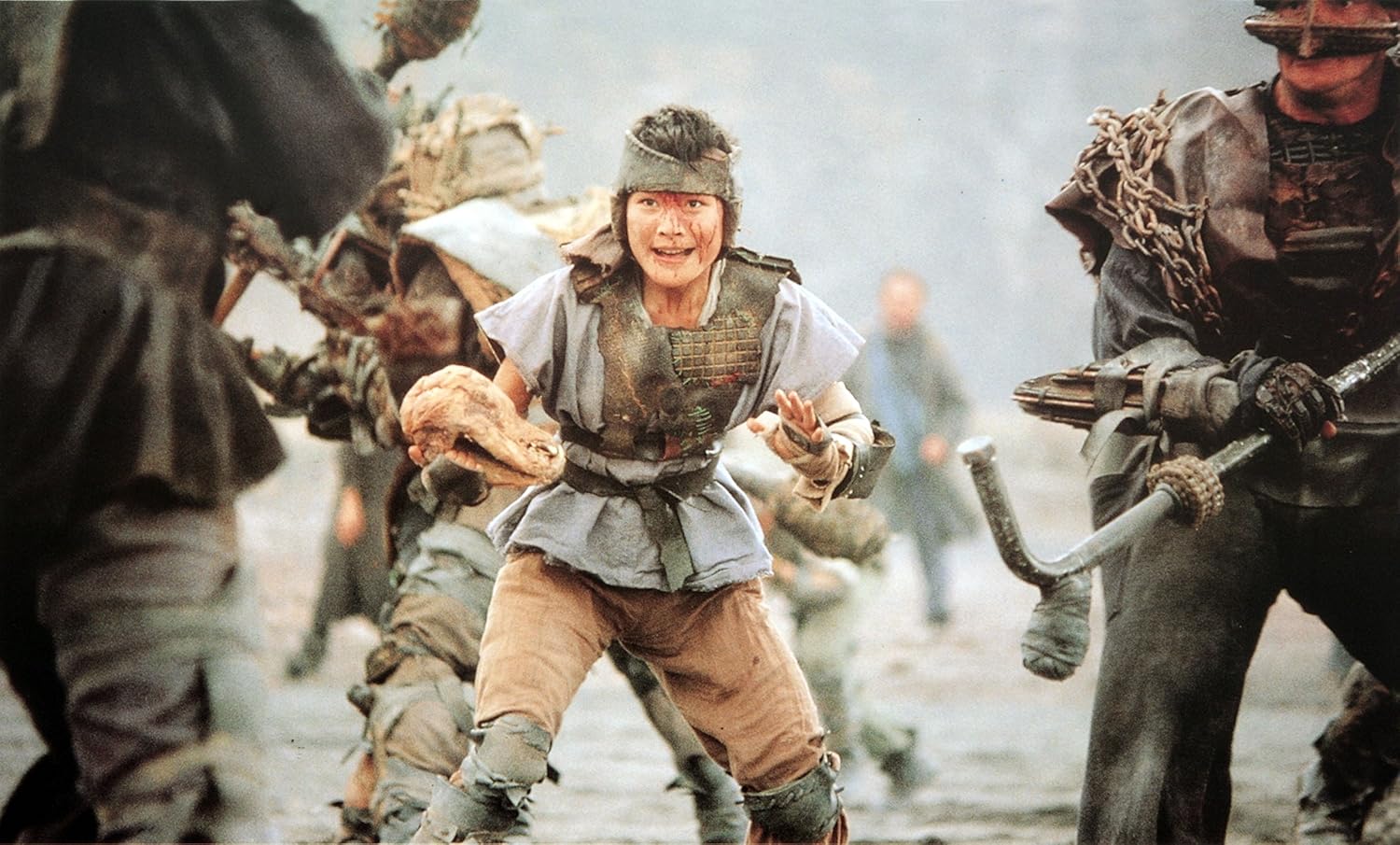
The Blood of Heroes has the distinction of being directed by David Webb Peoples, who is probably best known for his screenplay work on Blade Runner (1982) and Unforgiven (1992). Blood of Heroes is less well known, though it has garnered a devoted following, and is championed here as an example of visceral storytelling in a post-apocalyptic setting. Starring Rutgar Hauer, the film takes place after wars have destroyed civilization, and people eke out an existence by scrounging through the ruins. They are entertained by a brutal sport played by squads of juggers, who resemble dystopian gladiators, entertaining the holocaust survivors and a wealthy, aristocratic overclass with fights reminiscent of ancient Rome. As guest essayist John Kenneth Muir mentions, the film can be taken as the Rocky (1976) of dystopia, where the underdog athletes get their heads kicked in but still claim bloody victory. With the game played using a dog’s skull, the film happily literalizes the idea of picking over the bones of a dead world.
The Blood of Heroes was not a success upon its release, and David Webb Peoples did not go on to direct further films. He is charmingly disarming in his honesty in the interviews, discussing how he doesn’t think like a director and that a certain mindset is needed for the job. He admits feeling overwhelmed by the ideas churned out by his stars, and unable on the spot to distinguish the brilliant suggestions from the not so great ideas they came up with. He has high praise for the cast, makeup team, and the composer for the music score (Todd Boekelheide), and talks about the experience of filming in Coober Pedy in Australia, living in a motel that was partially underground.
The various stars of the film, including among others Rutger Hauer, Joan Chen, and Vincent D’Onofrio, all get individual chapters nicely “saluting” them, with an overview of their professional careers, and snapshots of critical reviews of their films. Detailed reviews of various dystopian cult movies are presented, such as Quintet (1979), and Mad Max (1979), and chapters break down the themes of The Blood of Heroes and the role of sport in dystopian films as a metaphor for fighting for existence in a tough and merciless world.
#

As well as Stewart’s overviews and critical analyses, the book features a number of excellent and well-chosen essays by John Kenneth Muir, John Hansen, and Eion Friel. Muir offers absorbing critiques of films including The Terminator, Mad Max, The Running Man (1987) as well as The Blood of Heroes. The Terminator essay highlights the strange, dreamlike aspects to the film, with its squalid, neon-drenched nightworld of eighties Los Angeles, peopled by roving thugs, the homeless and anonymous strangers, where the two warriors from the future can easily fit in among the forgotten people. As Muir states, what is evoked is a strange, parallel world that is already disregarded and dead, that segues into the nightmare vision of the future where skulls are littered underfoot and machines hunt the remains of humanity. The Mad Max essay discusses the idea of threshold moments in life, when there is no going back after a moral or physical boundary gets crossed, until all that matters is getting what you want. The impact of watching Max (Mel Gibson) following this path is heightened by the setting in the context of the “No Future” punk aesthetic following the 1973 Oil Crisis, and Australian muscle car culture. The featured essays, with their different writers who have their own take on apocalyptic filmmaking, add a lot of depth and character to the book.
#
One thing that characterises Stewart’s writing is the interviews from individuals involved in the film making process, be they the stars, writers, or makeup artists. The author has a knack for getting the best out of those he interviews, and the enthusiasm and pride in what they helped create comes through. At the heart of Saluting the Blood of Heroes are the interviews with Dennis Maguire, First Assistant Director on The Postman, and with David Webb Peoples and his wife Janet Peoples about their experience co-writing 12 Monkeys (1995). These are highlights of the book, where David and Janet Peoples recount the strange avenues by which decisions in film making get made, and discuss how the ideas in 12 Monkeys took shape from a unique creative soup that blended Chris Marker’s time-travelling short film La Jetée (1962) with their experiences within a state mental institution. Janet Peoples speaks about a patient who told her a fantastic story, then proceeded to tell her the same story every day, word for word, convinced he had never seen her before, laying the basis for the creation of one of the distinctive characters in the film.
Would it make sense to put a better known (or more highly regarded) film than The Blood of Heroes at the centre of a book about apocalyptic films, such as The Terminator? Not in this case, as it would eclipse the exuberance and energy that Stewart has for The Blood of Heroes….”
Enjoyable and well-written, the text makes the reader yearn for an extended edition, or several volumes that could possibly cover such a wide-ranging topic as the apocalyptic film genre. Part of this has to do with Stewart diverging somewhat from his previous format in books such as Soldier: From Script to Screen, where the focus was very much on a single film, examined and loved with machine-tooled precision. In Saluting the Blood of Heroes, the net is occasionally spread so wide that a number of interesting topics get touched upon, but then wriggle their way free. For example, it is to the books credit that apocalypse-themed computer games get mentioned, having been themselves influenced by films with similar themes, and given that the games and film industries are becoming more entangled especially when it comes to apocalyptic themes. Certain games such as Resident Evil have developed sufficient heft and texture to warrant film adaptation, and the games industry is now gaining in stature to the point where it could start to potentially influence the film industry itself. Saluting the Blood of Heroes includes a quote from Tim Cain, producer of the computer game Fallout, about the role of The Omega Man in instigating the feeling of isolation in the game when leaving the secure home of the Vault to enter the Wasteland beyond. Hideo Kojima gets a mention as designer of the Metal Gear games, fuelled by his admiration for Mad Max 2 (1981). This highlights that there is a world of tantalizing possibilities to explore in weaving the role of apocalyptic films with influential games, but these teasing lines are quickly reigned in. Kojima’s eerie Death Stranding games (which themselves are slated for upcoming film production) might have provided rich pickings. Set in an a devasted USA with Norman Reedus portraying a post-apocalyptic postman, the games have similarities to films such as (no surprises) The Postman (1997, which is covered in detail in Saluting the Blood of Heroes), and involve prominent directors such as Nicolas Winding Refn and Guillermo del Toro. The intersection between films and gaming, which is becoming more prevalent, would have been nice to explore a bit further.
The emphasis tends to be on apocalyptic films from the seventies and eighties, and the role of these films in shaping more recent popular dystopian film series such as the Hunger Games, Maze Runner and the Divergent films could have been picked apart. There could have been scope for more focus on theological apocalypse films, with their diversity ranging from the splattery action of Legion (2010) to something more nuanced such as The Rapture (1991), with their portrayals of the descent of angels come to judge mankind. What Saluting the Blood of Heroes does is generate a greedy desire for more text, and for the reader to be able to continue to bathe in the sincere pleasure and enthusiasm that the author has for the subject.
#
Would it make sense to put a better known (or more highly regarded) film than The Blood of Heroes at the centre of a book about apocalyptic films, such as The Terminator? Not in this case, as it would eclipse the exuberance and energy that Stewart has for The Blood of Heroes, and around which the rest of the text organically grows. In many ways, the choice of an underdog film to ground the work (mirroring the underdog Heroes whose Blood gets saluted) is what makes it so effective, a trait shared in similar treatments of Soldier (1998) and Silent Trigger (1996) in Stewart’s previous books. Many who read it will likely wish that Stewart’s next book will be about their own personal favourite film that failed commercially and critically, which only serves to make them love it more. Stewart’s passionate, unfussy writing style continues to gain in strength and nuance with each further work. With bated breath, we await to see what he does with a different sort of film, the more well regarded and commercially successful venture The Mask (1994) in his upcoming writing project.
Andrew Kolarik is a Lecturer at University of East Anglia and has previously worked at Cambridge University, University of London, and Anglia Ruskin University. His criticism, poetry, and fiction have appeared in Pulp Metal Magazine, Supernatural Tales, Carillon, Eunoia Review, Horla, Yellow Mama, and Between These Shores Literary and Arts Annual.