

By Gary D. Rhodes.
2026 is the watershed year of the bloodshed film. The sleep of reason has produced monsters, worlds of gods and monsters, new and old, now lauded by all except the most unreasonable amongst us.”
To face evil and survive, or, for that matter, to face evil and die: so many a horror film hero faces that lot (inside and out of Salem, Mass). Wooden acting, plastic, even synthetic. Or perhaps truly soulful, luminous, and dynamic. Valor inspires all of them. (God bless each and every Final Girl.)
But valorization is not what the horror film genre has historically received. Not until recent years, nowhere more visible than at the 98th Annual Academy Awards, held in March 2026. Some of the vampiric honorees crunched necks. Let us now crunch numbers.
Ryan Coogler’s Sinners (see top image), sixteen nominations and four wins (Best Actor, Cinematography, Original Score, Original Screenplay); Guillermo del Toro’s Frankenstein, nine nominations and three wins (Best Costume Design, Production Design, Makeup and Hairstyling); Maggie Kang and Chris Appelhans’ KPop Demon Hunters, two wins (Best Animated Feature, Original Song); Zach Creggers’ Weapons, one award (Best Supporting Actress).
Their name is Legion, for they are many. But such acclaim is a recent development, certainly in these numbers.
True, there is a list to be remembered of prior horror films that met Oscar: Best Actors for Fredric March (Dr. Jekyll and Mr. Hyde, 1931) and Anthony Hopkins (The Silence of the Lambs, 1991); Best Actress for Kathy Bates (Misery, 1990), Jodie Foster (The Silence of the Lambs), Natalie Portman (Black Swan, 2010); and Best Supporting Actress for Ruth Gordon (Rosemary’s Baby, 1968). Numerous other examples could be given, some perhaps expected, for the likes of special effects and makeup, but the tally is low compared to most other genres.
For that matter – unless we classify del Toro’s 2018 film The Shape of Water as horror – only one horror movie has ever received Best Picture, Jonathan Demme’s The Silence of the Lambs. (Break open a nice Chianti, serve fava beans, and, well… perhaps we best stop with the vegetarian option).
When it comes to horror, most vegetables have been tomatoes, of course, hurled by critics, time and again, despite – or perhaps because of – the genre’s popularity. Many genres come and go, from Musicals to Westerns, from Martial Arts to Superheroes, but horror has proved to be one of the two most consistently, enduringly popular since the origin of cinema, comedy being the other.

There is nothing funny about horror’s importance across the ages, from folklore and mythology to the likes of Fuseli’s painting The Nightmare (1781) and William Blake’s The Number of the Beast is 666 (1805). On stage and in print were Shakespeare’s Titus Andronicus (ca. 1591-1592), Mary Shelley’s Frankenstein (1818), and Henry James The Turn of the Screw (1898). Few American writers have been as lauded critically as Edgar Allan Poe.
And horror has proven extremely important throughout film history. In 1895, Edison released a trio of moving pictures advertised as the “Chamber of Horrors,” film adaptaions of popular waxworks. Only one of the trio still exists – The Execution of Mary, Queen of Scots, sometimes screened with titles like Execution Scene – which emphasized a grisly beheading (thanks to a very early substitution splice) over the history of British royalty and religion.
Soon thereafter, Georges Méliès created his own legion of demons, devils, and imps, not only trailblazing special effects, but also popularizing the fictional film. In the 1890s, it might have been a good bet to believe cinema’s future would be in nonfiction images, documentaries and “actualities,” as they were called at the time.
But Méliès helped forever alter the trajectory of film narrative. From The Devil’s Castle (1896) until the late nickelodeon era, he changed cinema by use of horrifying imagery, often combining the same with comedy. (Memento mori and viscera gory combined with funny story.)
Sound film owes much to horror, from the lost “Theatrephone” version of Dr. Jekyll and Mr. Hyde (1908) to Roy del Ruth’s The Terror (1928), the second “all-talkie” feature ever to be released. It featured the first film scream (yelped by Louise Fazenda), as well as what was known at the time as the “May McAvoy Scream,” so-named for the lead actress who repeatedly shrieked during the movie.
Let’s think about film color. While some of the best horror films were wonderfully black-and-white, mysteriously panchromatic, horror played an important role in the rise of color, dating from so many of Méliès’ hand-tinted nightmares to the infamous Red Death scene in Rupert Julian’s The Phantom of the Opera (1925), followed by such early Technicolor films as Michael Curtiz’s Doctor X (1932) and The Mystery of the Wax Museum (1933). By the second half of the twentieth-century, blood flowed Hammer bright and Savini dark.
And then there was the advent of film makeup (“The Man of a 1000 Faces”) and special effects (The Beast with a Million Eyes). Great or stellar, meager or bottom-dweller, horror has always helped drive the magic of cinema.
Some of the greatest of auteurs understood well the possibilities of horror. F.W. Murnau, with Nosferatu (1922). Stanley Kubrick, with The Shining (1980). And the Master of Suspense himself, Alfred Hitchcock. Hitch never won an Oscar for Best Director, of course, in part because horror was beneath contempt for many critics, in spite of its august narrative and artistic history. And its cinematic popularity and prominence, even if prominence largely came from its special effects, the “prestige” of prestidigation, the silver screen version of the magic Christopher Nolan explored in his eponymous 2006 film.
The dam has burst, flooding away the damned, those who wrongly sought to deny horror its earned place in the narrative and artistic firmament. The Overlook Hotel is no longer overlooked. Ominous apotheosis.”
When and how did things go wrong for the horror film? It happened in 1932. On the heels of three movies from the prior year (Dracula, Frankenstein, and Dr. Jekyll and Mr. Hyde), the genre went from being something of a big-budget, talkie-era novelty to an ongoing cycle, thanks to a series of 1932 releases that ranged from studio-fare like Murders in the Rue Morgue and The Old Dark House to indie efforts like the The Monster Walks and White Zombie.
Critics quickly went from being somewhat praiseworthy of the first trio – including the aforementioned Best Actor award for Jekyll and Hyde – to contemptible. They disparaged horror at the same time that many parents, teachers and others called for the heads of studio heads (remember well Mary, Queen of Scots). There was backlash, a crisis. Their name was also Legion, the Legion of Decency versus the Legion of Doom.
By that time, critics professional and amateur could easily disparage the genre because it finally had a name. Before 1931, such films were labeled differently, whether as “mysteries” or “thrillers.” But audiences and critics forged the new name “horror film” (and, by extension, “horror movie). Such was the power of Dracula. He bid critics welcome to his old, dark house. Some critics accepted. By the time of The Old Dark House, they had bidden monsters goodbye.
Horror entered the realm of the bottom of double bills (B-Movies), of the post-war, drive-in theater youth (Teenage Werewolves), and of late-night TV Movies (Shock Theater). It helped lead the way to sex and violence in the New Hollywood period and beyond. Chainsaw Massacres were never limited to Texas.
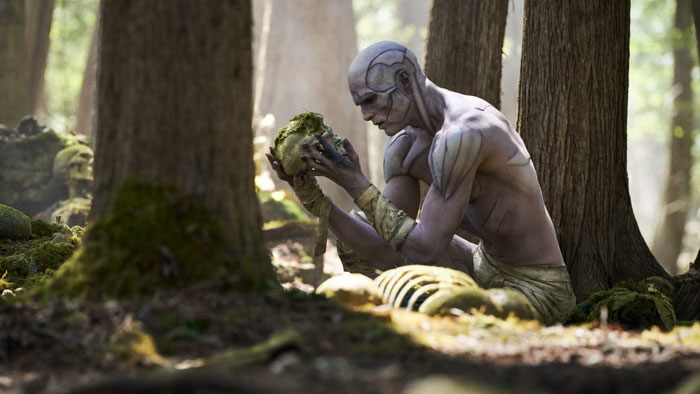
With rare exceptions, meaning scholars like Carlos Clarens and Robin Wood, academia viewed horror with perhaps greater disdain than the New York Times.
Fortunately, during my teen years, I got to know a few members of the early, pro-horror crowd, particularly William K. Everson. He believed the day would come when horror would be better appreciated. To be honest, I didn’t believe him. I wanted to, but couldn’t.
In the late nineties, my Master’s thesis was on White Zombie, and it was obvious that a couple of my professors looked down on the subject. And on me, due to my interests. One dismissed the genre intensely, before pleading with me to help him find a publisher. Another delighted in mispronouncing the word “horror,” mangling it into something that sounded like “whore.”
I published much of my early scholarship in fan magazines like Monsters from the Vault, which allowed me to use endnotes and all the trappings of academia for an audience that was, at least at the time, more receptive than most academics. Much of my work was on horror film history. To this day, some of the best horror film history has been done not by academics, but by writers like Gregory William Mank and Tom Weaver.
By the year 2003, I edited a book of scholarly essays entitled Horror at the Drive-In, contributions ranging from such luminaries Tony Williams and Steven Jay Schneider to several graduate students. It was hard to find enough established scholars to write about those awful “whore” films.
But the conqueror worm finally began to turn. In the year 2010, Michael E. Lee, Reynold Humphries, and I launched Horror Studies, the first peer-reviewed academic journal devoted to the subject. It continues to be published by Intellect Books of Bristol, England.
In the ensuing years, I have heard the Chimes at Midnight, but no longer from Master (or Professor) Shallow. And the chimes, those tubular bells, ring out loudly. Horror Studies is now an enormously vibrant area within the arts and humanities, with several university presses establishing peer-reviewed book series, as geographically varied as the University of Wales Press and the University Press of Mississippi.
Subsequent peer-reviewed journals commenced as well, notably Monstrum and Revenant. The field of study is assured, at least for another generation.
Academia is but one front in the ongoing war for horror movies to achieve respectability. Noah Cross told us that “whores, politicians and ugly buildings all get respectable if they last long enough.” That includes “whore” movies, to quote one “scholar” who deserves not to be quoted.
The main front of course is the film production industry and mainstream critics responding to it. No longer “Killjoy was here.” It’s now the Boogie Woogie Boogie Man from Company B (Movie). Johnny has finally come marching home with some one – or some thing – following him. (God Bless the Final Girl, and Devil Bless the Monsters and Madmen.)
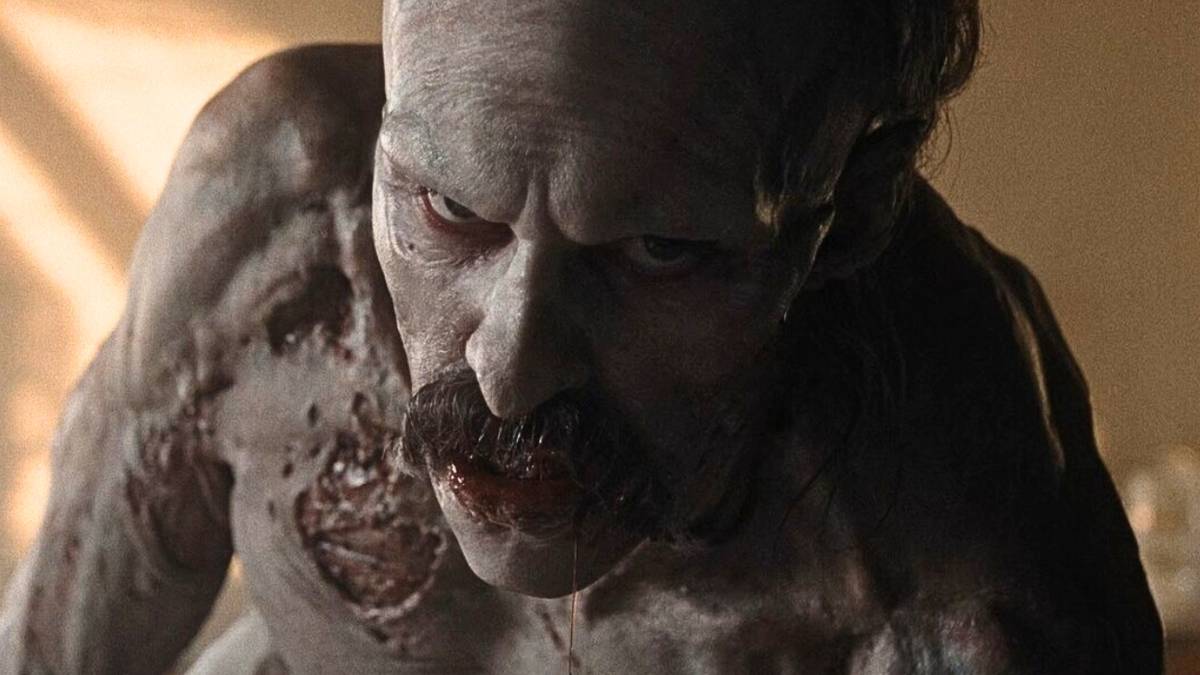
Major directors and actors now appear in horror by choice, not because they are either at the beginning or end of a film career. Some of the most exciting filmmakers today – Robert Eggers, Ari Aster, Jordan Peale, and others – have opted for horror specifically as the way to express their art and to reach their appreciative audiences. (That Boogie Woogie Boogie Man is now is Company A and B.)
Critics have noticed, whether in newspapers, online, or at the Academy of Motion Picture Arts and Sciences.
The dam has burst, flooding away the damned, those who wrongly sought to deny horror its earned place in the narrative and artistic firmament. The Overlook Hotel is no longer overlooked. Ominous apotheosis.
To be sure, 2026 is the watershed year of the bloodshed film. The sleep of reason has produced monsters, worlds of gods and monsters, new and old, now lauded by all except the most unreasonable amongst us.
Big-budget or low, live action or animated, the one-time “whore” of Hollywood Babylon brightens under the hottest of spotlights. Its old detractors are left to do nothing more than babble-on to an audience that no longer hears them, the silence of the lambs being thunderously louder than the barking of critical shams.
Gary D. Rhodes, Ph.D., filmmaker, poet and Full Professor of Media Production at Oklahoma Baptist University, is the author of Weirdumentary: Ancient Aliens, Fallacious Prophecies, and Mysterious Monsters from 1970s Documentaries (Boswell Books, forthcoming), Vampires in Silent Cinema (Edinburgh University Press, 2024), Becoming Dracula – Vols. 1 and 2 (with William M. [Bill] Kaffenberger, BearManor Media), Consuming Images: Film Art and the American Television Commercial (co-authored with Robert Singer, Edinburgh University Press, 2020), Emerald Illusions: The Irish in Early American Cinema (IAP, 2012), The Perils of Moviegoing in America (Bloomsbury, 2012) and The Birth of the American Horror Film (Edinburgh University Press, 2018), as well as the editor of such anthologies as Becoming Nosferatu: Stories Inspired by Silent German Horror (BearManor Media, forthcoming), Film by Design: The Art of the Movie Poster (University of Mississippi Press, 2024), The Films of Wallace Fox (Edinburgh University Press, 2024), The Films of Joseph H. Lewis (Wayne State University Press, 2012) and The Films of Budd Boetticher (Edinburgh University Press, 2017). Rhodes is also the writer-director of such documentary films as Lugosi: Hollywood’s Dracula (1997) and Banned in Oklahoma (2004).