

By Ali Moosavi.
I design the concepts and then within those concepts I leave the actors free…. As Béla Tarr has said, with interesting people and interesting locations you can make a good movie. I like to frame interesting people.”
—Mohammad Shirvani
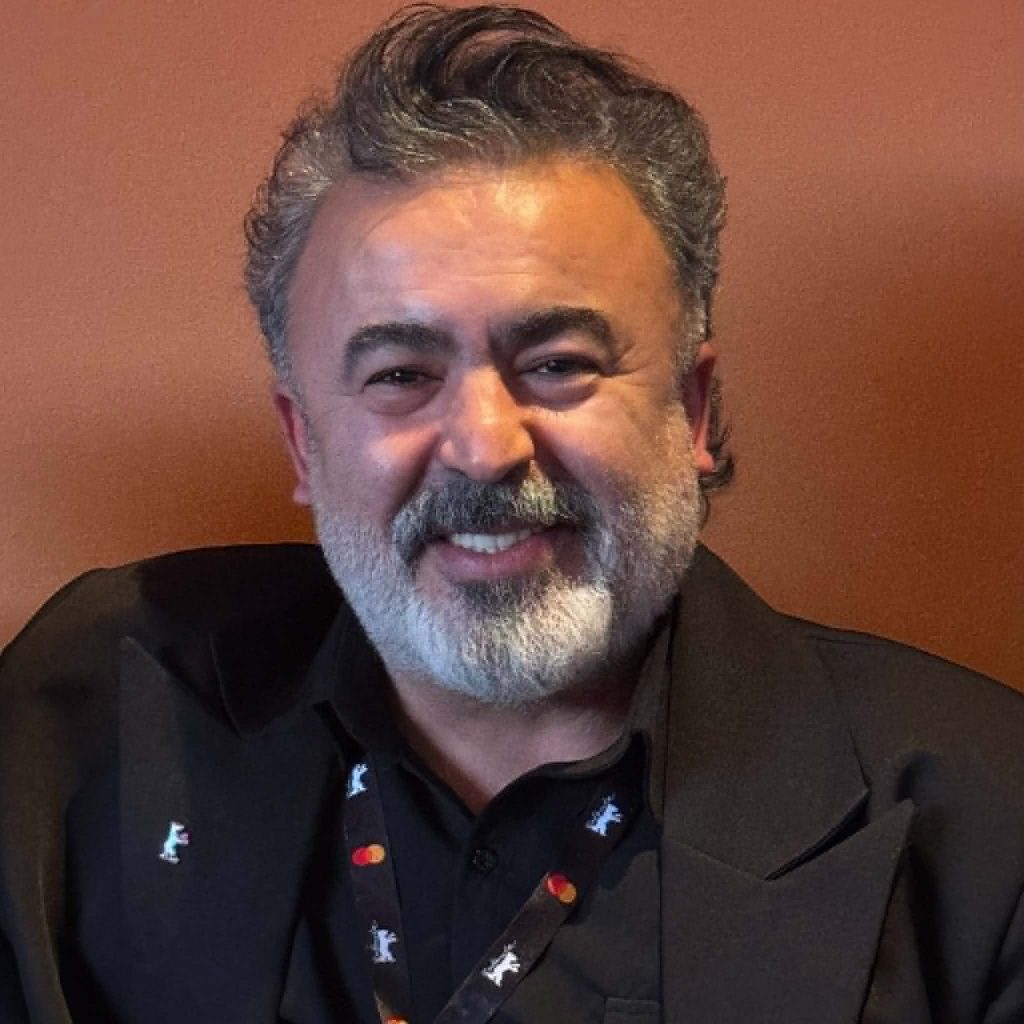
At the 2008 Abu Dhabi Film Festival I watched a documentary called Seven Blind Women Filmmakers / Haft filmsaz-e zan-e nabina, which made a huge impact on me. It was, as the name implies, seven short episodes, made by seven blind women, about the challenges in their daily life. I took note of the film’s director, Mohammad Shirvani, but it was difficult to find any of his films. Shirvani is a truly independent filmmaker, belonging to the world of alternative cinema. In fact, the only other film of his that I watched prior to this year’s Berlin Film Festival, was Fat Shaker/ Larzanandeye charbi (2013), a fictional film but very much product of alternative cinema. At this year’s Berlin Film Festival, Shirvani was back with his new film, Cesarean Weekend, a hybrid of fiction and documentary about a group of young people, and a couple of the fathers, spending a weekend by a swimming pool and having discussions on a range of topics, including love, marriage, generation gap, etc. If this was, say a European film, the focus would be on the discussions between the film’s characters. However, Cesarean Weekend being an Iranian film, made by a filmmaker that has made all his films in Iran, though he now lives in Armenia, much attention will also center around those aspects of the film, officially not allowed by Iranian censor: girls in bikinis, boys and girls kissing and the content of some of the discussions. Cesarean Weekend features Iranian musician Nader Mashayekhi as one of the fathers and Shirvani’s own son, Armin Shirvani as one of the boys. I talked to Mohammad Shirvani in Berlin.
You have a documentary style of directing, even in your fictional movies. We don’t feel the presence of the director and our focus is directed on the subject. It seems that you give your actors almost complete freedom and we’re not sure how much of their dialogue is improvised.
I started with a series of short films. Fictional, semi-fictional, semi-documentary, I was trying to find a style that suits me. After these short films I made my first full length fictional film, Navel / Naaf (2004) and I thought that I had found my film-making method. Perhaps neither my fictional film experiences nor my documentary film experiences satisfied me but the fusion of these two styles, which I call hybrid, is very interesting for me and now I am sure that I like the hybrid format.
I believe that your documentary, Seven Blind Women is a very important film in your canon of films. What are your thoughts about that film?
For me also Seven Blind Women Filmmakers is a very important film among my documentaries, because it discussed image and viewpoint. Perhaps it was the start of me trying out a kind of self-portrait, but I didn’t have the confidence to turn the camera towards me. It looks as though I used a go-between, using people who were talking about their own lives. Then, gradually, after a few self-portrait films, I arrived at this hybrid genre where you cannot define the border between fiction and reality. Even I don’t know where a script was used and where it was improvised. I get lost in that borderline. Now Cesarean Weekend is not a documentary, though it may look like one to you.
The style, hand-held camera, dialogue which appears improvised.
I design the concepts and then within those concepts I leave the actors free. In my first feature film I gave the actors almost complete freedom and there was a lot of improvisation, but now it’s a combination of control and improvisation. As Béla Tarr has said, with interesting people and interesting locations you can make a good movie. I like to frame interesting people. These people are often not professional actors and once-in-a-while a director may put them in a picture. For a long time now, I have been introducing people who are not professional actors, because they have originality.
There is a scene towards the end where we see Nader Mashayehi’s hat floating in the sea with Mahler’s Ninth symphony playing on the soundtrack. That seaside and Mahler music reminded me of Visconti’s Death in Venice (1971).
I prefer the Mahler in our film to the Mahler in Death in Venice! Here we are not saying that Nader is Mahler but at the end of the film we don’t know whether we have recalled Mahler or it’s Nader. The two have fused together. As it happens, I see Nader more resembling Mahler.
With regards to the relationship between the boys Armin and Milad, in Iran friendship between boys goes much deeper than the west. It is perfectly normal for boys to hold hands, kiss on the cheek and say “love you” to each other. But in the west, such actions will have a different connotation.
Well, you are Iranian yourself and rightly point this out. We are very “touchy” people. I, myself, would not be able to talk if my hands were cut off! The lady who is interpreting for me in this festival warned me not to touch people! So, our social distancing is culturally different. During Covid one of my concerns was that the social distancing in Iran was resembling the west, whereas we are very warm-hearted people and embracing and keeping close distances are part of our culture. But in Iranian cinema the body has been denied, as though it does not exist. As though humans express some meaning but are devoid of bodies. If we consider Iran in the last 47 years since the Iranian Revolution, our bodies have been suppressed in all art forms. Every sculpture that our sculptors make, has an anatomical fault, because they are not used to working on naked bodies. Professional cinema actors don’t know what to do with their hands or feet; In practice, they’ve just been a face. I am a body-oriented filmmaker. For me the body is of extreme importance. Perhaps it’s a reaction to all the years where the body has been ignored. In my films, the bodies of characters are very important. The skin in my films is also very important. Regarding the two boys that you pointed out, from the beginning I told them that I want an eastern type of friendship between them. We all have memories of our childhood, our youth. Perhaps this eastern type of friendship, this deep affinity between two boys has been forgotten. Yes, the friendship between them in the film could be interpreted as a gay relationship. But if you ask me if those two have a sexual relationship, I don’t know and cannot give you a definitive answer.
In one scene it appears that a baby is drowning in the sea. In Fat Shaker you also have a scene where the character played by Leon Haftvan has been handcuffed to the bottom of a swimming pool ladder. Are you using these drowning scenes as a metaphor?
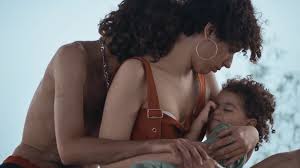
I’m not one for metaphors but maybe there will be different interpretations of that scene. I think movies using metaphors and symbols have very limited meaning and interpretation. This film is very open and allows you to make your own interpretation. So, I don’t want to put a particular interpretation on that scene. When I shot that scene, being the DOP of the film too, I told the mother of the baby girl, though in the film you cannot tell the baby’s gender, that I want her to be naked. Because I wanted to create this feeling that there is no other person in the world except that baby; as though she is the origin of life. Without forcing the notion that she is Eve or Adam. Not at all. What I like about that scene is that when she comes out crying from behind the long grasses, it is as though she was born that minute, looked at the world and became joyous. Then she went forward a few steps, looked at the sea, her joy peaked and at that moment a big wave comes and hits her, somehow telling her, see how life sometimes hits you hard. From then on, it’s difficult for the audience to witness a baby who may or may not be drowning.
You are the film’s producer, writer, director, editor, DOP, yet in the credits we read a film by Mohammad Shirvani and his entourage!
I’m not being modest. Take a mainstream commercial movie; there may be some 200 crew members involved. Each of them has a place in the credits and plays an important role. The director is like the orchestra conductor. However, in what we can call Alternative Cinema, films are made with a limited crew. This form of filmmaking, which is closer to an art form, is my favourite, especially since I have come from a painting background. The director is like a painter who has invited a few of his friends to come and assist him to create his new painting. In the Q&A yesterday, I was saying that I cannot let someone else shoot my movie because for me the camera is like a paintbrush which I must hold, especially since I do a lot of hand-held shooting. The camera must be connected to the body of the filmmaker. The cinematographer’s camera must become the body of the actor and the same way that the director’s presence is not felt, the cinematographer must also seem absent. This connection between the actor’s body to the viewer’s body emits a strange energy. I believe in this and in my view it comes from the history of art, rather than the history of cinema.
The artworks at the end credits are very striking.
Those artworks are a collaboration with one of our best graphic artists called Iman Raad, who lives in New York. In direct contrast to the cold colours in the film, these artworks have very warm and vivid colours, reminding us of this paradise that we Iranians have lost for a long time and long to have it back. The movie’s poster is also full of vibrant colours. That thing that perhaps we don’t see in the colours of the film, we see at the end. For example, that sunset at the end was filmed only a few days before the festival and added to the film. Exactly at the moment when our people rose up, demonstrated against the government and there was a massacre, and I added the sunset as though it was a product of this uprising.
Ali Moosavi has worked in documentary television and has written for Film Magazine (Iran), Cine-Eye (London), and Film International.