

By William Blick.
I do not ask myself what information is available about a figure or would they cooperate. Rather, I ask myself, what is in my own experience or what do I think I know about this figure? What qualifies me to write about this person? That is what is important to me….
–Carl Rollyson
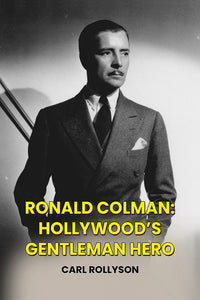
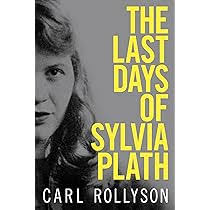
Carl Rollyson is a prolific biographer whose career spans several decades. With over 40 books, 14 of them biographies, Rollyson has written about film stars, writers, poets, and critics such as Susan Sontag, Sylvia Plath, Norman Mailer, Dana Andrews, and two volumes on William Faulkner. He has also been a professor of Art, English, and is professor emeritus of Baruch College of CUNY where he taught Journalism. I was fortunate enough to interview him on Zoom about his latest work on actor Ronald Colman (Ronald Colman: Hollywood’s Gentleman Hero, BearManor Media), as well as discussing all-things-noir regarding authors such as Faulkner and Mailer. Among other topics discussed were the changing literary canon and academia.
Do you have a personal favorite book that you’ve authored?
It is hard to pick. It’s like picking your children. I think the book in a sense that I am most proud of is the book that goes all the way back to my graduate work, which is the biography of Faulkner. I had a publisher that allowed me to do two volumes covering his life and work and unlike the other biographies, I spent more time on his film work and his fiction as well.
I know many people are familiar with Faulkner’s screenplay adaptation of Chandler’s The Big Sleep. What would you say Faulkner’s contribution to noir is?
I think Faulkner’s work on The Big Sleep is Faulkner’s contribution to noir. He made other contributions to film noir that were never produced. One that I discuss in my biography of William Faulkner is called Dreadful Hollow, which is based on a novel that Howard Hawks wanted to produce and direct. It is, believe or not, a vampire/lesbian film….and unlike a lot of the projects that Faulkner worked on, it was just his. He wrote the whole thing for Hawks in about 3 weeks. He never talked about it. I had to read about it in between the lines in one of his letters to get the meaning. The screenplay exists in a Howard Hawks archive. It would make a wonderful film. It’s never been produced. It’s dark. It’s noirish. It’s also a horror film. It’s psychologically interesting. Nevertheless, I think it would be a surprise or even a shock to some readers that he (Faulkner) would write such a thing.
Traditionally noir has been set in gritty, urban landscapes. However, there are emerging genres including rural noir, country noir, that often seem to stem from the Southern Gothic tradition. Would you say that Faulkner is the great-grandfather of these genres?
I think so and I think as a noir, what you can point to from Faulkner is a novel called “Sanctuary”, which was quite controversial at the time. He wrote an introduction to the novel, which kind of got him in trouble where he said it was like a “commercial” novel and not “high art.” It is a beautifully written book. In fact, he wrote it twice. The second time he made it much more cinematic. The way he cuts between scenes is almost like writing a screenplay. It was made into a film twice. The best version is titled “The Story of Temple Drake,” starring Miriam Hopkins. Faulkner did not write the script for that film. The filmmakers made many changes to the novel, but Faulkner admired it, particularly the artwork in the film. The film is about Temple Drake’s redemption. In the novel, Sanctuary, she is not redeemed. Many decades later, Faulkner wrote a novel called “Requiem for a Nun.” It seems that the second Temple Drake film had a great influence on Faulkner writing a second Temple Drake novel. In this second novel, Drake is in a sense redeemed the way she is in the movie.
This shows that the interplay between Faulkner and Hollywood is far more complex than he is given credit for and that is what I tried to convey in my book. Faulkner wrote at least 50 film projects.
Your latest work is on Ronald Colman. What was his contribution to film history?
It is pretty much what I say in the title “Hollywood’s gentleman hero.” He brought to the screen a kind of sophistication and flair but was also in adventure pictures like The Prisoner of Zenda. He was a very dashing, romantic, heroic figure. People often think of the first talkie as The Jazz Singer, but the first film that taught actors how to act for sound pictures is Bulldog Drummond. Colman was nominated for an academy award for that role in 1929. It was shot as a silent film and as a talking film. Colman was successful because he made the transition to talkies. This was before Gary Cooper or Clark Gable. He set the pace and the pattern for actors. He set the precedent for how actors should behave in front of cameras in the talkies. He influenced both men and women actors. Both Susan Hayward and Dana Andrews said that Colman was their idol. This interesting because you couldn’t put Susan Hayward, Dana Andrews, and Ronald Colman in the same sentence usually, but in this case you can.
Switching gears back to Noir again: there are two neo-noirs that come to mind when thinking about your work on Norman Mailer: An American Dream and Tough Guys Don’t Dance. What was Mailer’s contribution to noir?
Mailer was very much interested in the dark side of existence, and particularly the conflicted existence of males. He isn’t given enough credit for that. The interesting thing about Mailer to connect to some of my interests is that although he doesn’t mention Ronald Colman, and although he is known for his tough-guy persona, Mailer started out in his twenties trying to be like that gentleman hero like Colman. Noir was really Mailer’s effort to break out that type of character and transform himself into a very different kind of writer and in a sense a cultural hero.
You are professor emeritus of Baruch College. What was your experience like in Academia?
I had a very strange career. I taught at a private high school and then at Wayne State University and then in an interdisciplinary humanities program there, which is where I got really interested in film and biographies. I wrote my first biography on Marilyn Monroe there. Then I moved to New York in 1987 and was an administrator. My first teaching appointment was in the Art department at Baruch. Although my degrees are in English, the Art department wanted me because I have done a lot of work on iconography. The Art department was small and there were contentions between the studio faculty and the Art History faculty. So I moved over to the English department and stayed there for 10 years. The journalism department broke off from the English department and they asked me to be a part because I had written biographies and they gave me the opportunity to teach biography and film courses.
There have been several changes in curriculums in literary studies. Would you say that authors like Sylvia Plath, Norman Mailer, or William Faulkner still have a place in contemporary literary studies?
Less and less… except for Plath. Plath is increasing in popularity for both academic and non-academic readers. Faulkner is still very much taught. There are still many authors writing about him. People worry about issues of race surrounding his work. There is still a lot of interest in Mailer though feminists go after him because of his depictions of women and his private life. He had many marriages, affairs, and relationships. His career spans so many genres. He is due for a real revival. He once said in an interview, “I am sort of like the mad butler. I will always be back to serve the meal.” That almost sounds like a noir character. LOL.
What was the most challenging biography project for you?
Probably Susan Sontag, because she was so hostile. She did not want the book out. I did the book with my wife who is a lawyer. Working on Susan Sontag was like working on a mob boss. She was so well connected in New York. People surrounding her work would simply “mob up”. She had several powerful attorneys come down on us and tried to stop the book.
Can you describe your writing process? How do you get started on a book?
I do not ask myself what information is available about a figure or would they cooperate. Rather, I ask myself, what is in my own experience or what do I think I know about this figure? What qualifies me to write about this person?” That is what is important to me. Do I have a story to tell? Am I the right person to do this? My subjects have something to tell me and I have something to say about them.
Do you have any interest in the current state of literature or noir?
To tell you the truth, no. I am still consumed with the past. I remember I had met Martin Scorsese when he was filming Shutter Island at a party with Leo DiCaprio, and he told Leo to watch Laura and to watch how Dana Andrews acts in that film. [Note: Rollyson has written the biography of Dana Andrews]
William Blick is a literary/crime fiction and film critic, a librarian, and an academic scholar. He is contributing editor to Retreats from Oblivion: The Journal of Noircon and has published work in Senses of Cinema, Film Threat, Cinema Retro, Cineaction, and Film International Online, where he frequently contributes. He is also an Associate Professor/Librarian for Queensborough Community College of CUNY.