

By Ellie Dean.
I wanted to show these wonderful indie cinemas that are fueled on pure film lust, and to hopefully bring back memories of the cinemas the audience attended in their lifetimes that were meaningful to them.”
—Julia Marchese
In 2014, Julia Marchese made her directorial debut with Out of Print: a documentary love letter to 35mm film, revival cinemas, and the community surrounding them. She was, at the time, a stalwart employee of the New Beverly Cinema of Los Angeles (affectionately known amongst regulars and fans as the ‘New Bev’), one of the oldest repertory cinemas in the area—and a particularly notable bastion of 35mm programming to this day.
This year, the film is being celebrated with an anniversary re-release, and screening in independent cinemas worldwide. I had the pleasure of speaking with Julia Marchese about that process, her career, and the future of communal theatrical exhibition—as well as the differences between the New Beverly Cinema at the time Out of Print was originally made, and the New Beverly Cinema of 2026 (which is currently under the management of Quentin Tarantino).
Out of Print was your debut as a filmmaker, but by no means your first time on a film set. What was it like to take on the role of director after so much experience in other roles—and on such a personal project?
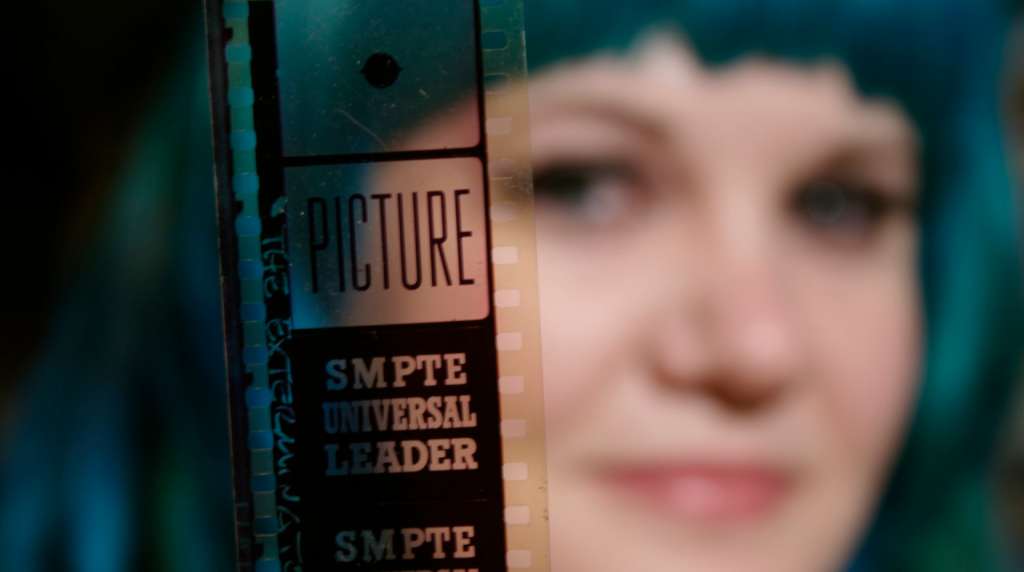
Exciting! I’d directed plays before, but never a film. But a documentary is such a different beast than a narrative film. With a documentary, you have a basic idea of how you want the movie to go, but you’re essentially assembling the film in the editing room. It’s time consuming, but I found seeing the film’s backbone first becoming apparent, the slicing it down to just the real heart of what I was trying to say so such fun. Within the 50 hours of footage I shot were dozens of different movies, but this is the film I wanted to make at that time, no compromises. Moving to narrative films, I’m now also tackling screenwriting, casting, location scouting, and many more jobs within the filming itself. It’s different, but also the same in a weird way.
But from what I have learned, it’s important to be very, very organized as a director, and it’s very important to surround yourself with a good crew that are on board with your ideas. I have no time for drama on set, but I will always have time to listen to my cast and crew’s ideas, because they’re the experts in their particular task on set. Films are a collaboration and I always made sure to tell everyone on set that I was always willing to do another take or try something different—everyone’s ideas were always welcomed.
Luckily, as well, my two projects have been passion projects that resonate with me deeply, so I feel very grateful to have completed two films as I wanted to, saying exactly what I wanted them to. That’s rare.
You speak a bit in the film about your relationship with the New Beverly and its surrounding community, which began long before you were actually hired by the cinema’s original owner Sherman Torgan in 2008. It’s obvious that place—and those people—have had a massive impact on your life. What did your personal relationship with cinema look like before discovering the New Beverly? And how did it change afterwards?
We’d go to the movies pretty regularly as a child, but growing up in Las Vegas, there weren’t too many places to see older or independent films (besides MGM’s long defunct cinema or Rocky Horror Picture Show at midnight!). Once VHS hit, my cinema doors were kicked open and I could watch any film mentioned in my latest issue of Bop, Premiere or Entertainment Weekly.
I also loved watching movies on repeat on VHS, really studying every frame, and adored noticing new details after I’d see the film a dozen times. I also loved showing movies I loved to people I loved—because their reactions added something new to my already repeated screenings, and I could watch the film anew through their eyes. Studying film in college taught me to view movies in an analytical way—how did I feel about the cinematography, the sound design, the editing? That, of course, changed the way I viewed cinema entirely.
Programming films is just an extension of my childhood love of sharing movies that I loved. Getting to then sit through those screenings and hear the gasps of excitement from the audience, or laughter at moments I’d never laughed at would open my eyes again to the film and made me love the movie even more.
Working at the New Beverly was a film course in itself. Not only of cinema, but about 35mm film, projection booths, film pick ups and drop offs, seeing the behind the scenes of movie theaters that most folks never see. It heightened my love for the medium of film, the appreciation of a place dedicated to showing it, and the die hards who lived and breathed cinema.
Has that relationship changed again in the years since the film came out?
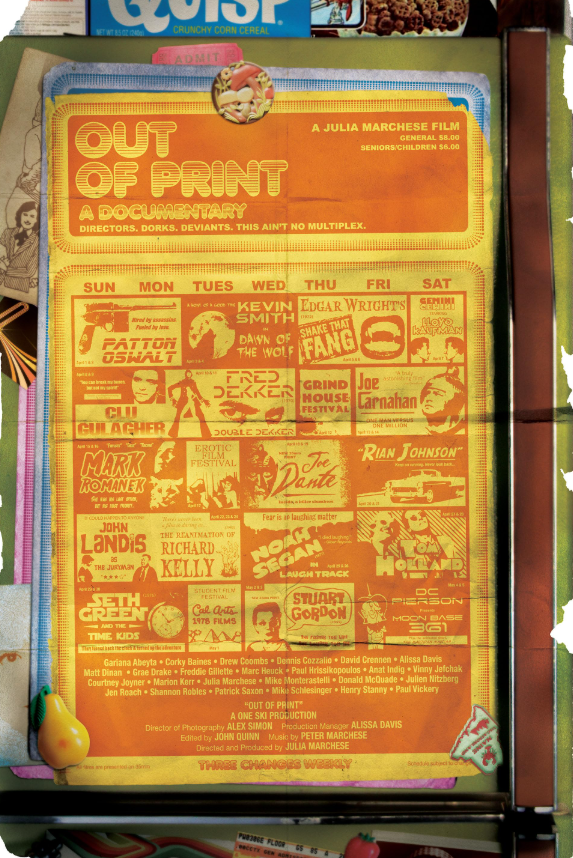
Well, I don’t work at the New Beverly anymore, so that’s certainly changed. I still get messages from folks who have watched Out of Print that tell me how excited they are to go to the Bev because of my doc, and I always tell them to have fun and appreciate the beauty of watching 35mm on a big screen, which hasn’t changed—they’re still solely film, which is terrific. I hope it stays open forever.
I’m so lucky to live in a city where I have so many repertory cinemas to choose from, and spoiled for choice as far a variety of options within that space. I still champion the indie cinema above all else, I still try to attend screenings on film when given a choice, and I love cinema even more than I did 10 years ago.
During the pandemic, I was living alone. Being isolated from humanity for so long was such an unpleasant time, but it did give me a chance to really look at what I loved in life and why—which things left the biggest holes after being taken away? And I’d never quite given movie theaters credit for offering the specific joy of a place to be alone but surrounded by others, all of whom are experiencing the same piece of art as I am. I see movies by myself all the time these days, and love the comfort of being in an audience. The first movie I saw when theaters re-opened was Christopher Nolan’s Tenet. I felt like he would appreciate my choice.
Are there any other particular films and filmmakers—or perhaps screenings—which you would credit with making an impression on you as a creative (and a cinema fan)?
I first saw the Rocky Horror Picture Show at midnight with a shadow cast when I was 12 (hey, I grew up in Las Vegas!), and it blew my mind wide open. I’d never conceived of a film that you interacted with, that you sang and danced with—and call backs were encouraged! It was heaven!
Rocky Horror has always been a safe haven for outsiders since its first release in 1975, and it hasn’t stopped since. I absolutely fell in love with it. Because the film starts at midnight, you know everyone really wants to be there and has made an effort to come out, so the enthusiasm is high before the movie even starts. To this day I still love Rocky Horror, and really hold it in a special place in my heart for introducing me to cult cinema, and I still think midnight movie audiences are the best audiences.
You’ve often drawn on that fan/audience member identity in your creative work. Do you personally feel differences between those two modes, or do they stem from the same place? How much impact do they have on each other?
I think one feeds the other. I can talk at great length about cinema, about horror, about Stephen King, about Shakespeare and The Beatles and so many other things because they’re all things I’ve been cramming into my brain with great ferocity since I was a kid. I learned about them with fervor because I wanted all the information available to me. I am so thrilled they’re things that people want to listen to me talk about—how incredible is that?
I think my Constant Reader ways served me incredibly well on making my Dollar Baby adaptation of Stephen King’s short story I Know What You Need because I’ve read everything he’s written, so I know what he feels like, palpably, in my head. Directing at the University of Maine, shooting in Stephen King’s dorm, these things had enormous weight to me—I knew what a Constant Reader’s dream I was living because I was that Constant Reader. Getting to hear audiences say the film felt both like Stephen King and Julia Marchese was the greatest compliment I could receive, because I wanted to keep it feeling as King as I could, just filtered through my lens. I’m a firm believer that adaptations should be as close to the source material as possible, and that comes from seeing films filtered through my superfan lens.
You should love Stephen King if you’re adapting Stephen King.
I am so thrilled to have the moment where 35mm film projection switched to digital projectors recorded—it was and is an significant change in cinema, and I think as we get further away from that moment, it will become more and more significant.”
Today, with all your additional experience, how do you look back on your time making Out of Print, and how do you see the film itself?
I think there are some really wonderful moments and sequences in Out of Print, and I love its message, but obviously its mixed up for me with the super painful end of my time at the New Beverly, so it’s a hard one to watch sometimes. Not to mention having lost a few friends in the film.
But I am so thrilled to have the moment where 35mm film projection switched to digital projectors recorded—it was and is an significant change in cinema, and I think as we get further away from that moment, it will become more and more significant. Catching the New Bev & Prince Charles, not to mention all of these incredible talented people, were really important for cinemas and the people who love them. And for me, it’s a time capsule of a very crystalized time that is gone.
Has it been difficult to revisit the film in light of that?
Yes. The New Beverly caught in the frames of Out of Print was a magical, once in a lifetime moment in the theater. I encourage going to the independent cinema near you in my documentary, and I still stand by that sentiment 100%. I’m happy the film caught that moment, but now of course, I would make a different film with the 50+ hours of footage we shot.
Also re-rewatching it recently—we’ve lost Stuart Gordon, Clu Gulager—makes me so happy to have them in the film. I think Clu has one of the sweetest moments in the film where he talks about all the friends he’s met in the dark, but he also says they will be friends of his until he dies. That was a tough moment to watch. But I am so very honored to have them caught in the frames—immortal in Out of Print.
When filming, I didn’t have the budget to shoot at more cinemas in the city or country or world, though I desperately wanted to. I still dream of getting to make a sequel or series deep diving into the inner workings and personalities at indie cinemas across the globe. So much history, so many stories!
On that note, although the documentary is full of A-list names (including Patton Oswalt, Edgar Wright, Rian Johnson, Kevin Smith, Seth Green, Stuart Gordon, John Landis, Lloyd Kaufman, Fred Dekker and more…), it also devotes just as much screentime to the perspectives of the A-list of New Beverly regulars (aka civilian audience members). How important was that comingling of perspectives to your vision of the film?
Very! I was inspired by the 2002 film Cinemania, which follows a few uber obsessed cinephiles in NYC, and what their lives were like. I wanted to do a bit of that with Out of Print, because the reason the New Beverly worked so well and was such a unique place was that famous people were treated with the exact same worth and welcome as anyone who came to see the film.

Just like the film programming series we held with the directors, if Edgar Wright vouched for a film, more people would come to see that film, and that’s a good thing. That’s using celebrity in the best way possible—to get more eyes on incredible films that deserve it. Certainly all the famous names in my film attracts people to watch my documentary, but I hope the audiences find the regular patron’s stories just as fascinating as the celebrities.
Do you remember any other specific goals or motivations?
I wanted the world to know how incredible and precious 35mm is, to open audience’s eyes a little bit to the behind the scenes of how a movie theater works and how film is projected. I wanted to show these wonderful indie cinemas that are fueled on pure film lust, and to hopefully bring back memories of the cinemas the audience attended in their lifetimes that were meaningful to them.
And to remind them that movies are made to be seen in a crowd, in a theater (and preferably on film!).
The film is firmly dedicated to the importance of 35mm, but it’s also a love letter to all the adjacent elements that tend to surround it—from the community in the foyer to kitschy anti-PDA public service announcements preceding the film. How much of what revival houses offer to audiences is about the film print itself, and how much of it is about everything that goes with it?
It’s the whole experience. It’s like seeing the trailers and previews before the film on a VHS tape—there are tiny pieces of film ephemera that I would hate to see get lost. I had so much fun digging into old film snipes—ones that clearly took effort to write & shoot (or animate!), and they are part of the cinema experience. While I loathe the commercials in front of mainstream films in multiplexes, I’m all the way down for a silly snipe about the repulsive looking burgers you could buy at some long gone drive in. It’s a different feeling.
The thing I love about cinema is how vast and varied it is. It’s the filmmaker having the idea, the hundreds of people coming together to first make that film, then editing, market, distributing it, sending it out to theaters and being consumed by the audience—and every tiny bit of that matters. In a world that’s losing touch with physical media, I think preserving everything we can is so important. And hopefully my film helps that in a tiny, tiny way.
Out of Print was made possible by support from a Kickstarter campaign. Can you speak to what that process was like, and how it impacted the shape of the final product?
Running a crowdfuning campaign is very similar to a full time job—it’s hours every day of sending out emails to websites and potential backers. Kickstarter, in particular, is nerve wracking because it’s an all or nothing situation, and I am so eternally grateful to everyone who donated, shared my campaign and interviewed me about it, because I couldn’t have done it without their support. I also crowdfunded for I Know What You Need (but switched to Indiegogo, so I would keep whatever I made). After my initial campaign raised about half of the budget, the George A. Romero Foundation were kind enough to run a second campaign that raised the second half.
Crowdfunding has allowed me to make two films that I own completely, with no one trying to dissuade me from my choices. You’re getting full, unadulterated Julia Marchese in my films, that’s for sure.
There’s been a lot of doomsday talk around 35mm and arthouse theatres (and the viability of cinemas in general) over the last 30 years or so, but especially in the past few years. Today—a decade on from the release of Out of Print—how do you see the state of film culture? Where do you think it’s headed? And what role do revival houses like the New Beverly—and the communities that surround them—play in that?
I’m so delighted with what I am seeing—new cinemas and viewing spaces popping up, some dedicated to formats like VHS or 16mm, alongside physical media stores, and people realizing the joy of art is also to talk to others about it.
Because 100 people can see the same film, but actually see 100 different films at the same time, and learning about the differences that people’s mental filtration systems can give to a film is wild. I think the appealing nature of holding your media in your hand—your vinyl record, your audio cassette—and knowing that no one else’s copy of the Once Bitten soundtrack is 100% like yours—with the dust and scratches accumulated over its lifetime with you.
Also we, as an audience, now understand how transient digital media can be—on streaming services one day, gone the next—and we’re longing for art that will be with us as long as we want it. And, of course, the way a film changes when seen on a big screen with a crowd. Perhaps the one good thing to come out of all of the pandemic’s madness was that everyone saw the importance of art to humans, particularly in times of crisis, and also how important communal gatherings really are.
Do you ever dream of starting your own picturehouse? And—if the budget was unlimited—what would the non-negotiables be?
I would 100% love to have my own theater. What a magical dream that would be!
I think mine (very fittingly!) would be super groovy, with capabilities for all film formats (8mm, 16mm, 35mm, 70mm), as well as VHS projection. There would be a raffle every month with the chance to program a double feature for the cinema. It would also be attached to a VHS, record & bookstore, very cozy, with lots of places to sit and talk about film.
I would make British pastries to go in the concession stand (I lived in England and fell in love with cherry bakewells, battenbergs, Victoria sponges and all the delicious treats we don’t get here in the USA).
It might also be fun to do a mini traveling cinema and go town to town in a caravan and set up screenings. Take movies to the people!
If anyone wants to fund this cinema (or my next movie!), hit a sister up!
The new restoration of Out of Print is screening at cinemas internationally. For more information, visit juliamarchese.com.
Ellie Dean is an independent cinema scholar based in Australia.