

A Book Review by Thomas M. Puhr.
It’s hard to think of a genre filmmaker today capable of going so far out on the ledge of bad taste while maintaining an artistic skill that ranks them with the best of the horror masters. In this sense, Stuart Gordon remains one-of-a-kind: : an auteur well deserving of the royal treatment this collection bestows upon his oeuvre.”
Read any overview of a ’70s- or ’80s-era horror director and you’ll invariably come across diehard fans claiming their filmmaker of choice was the real deal, churning out misunderstood works of genius after everyone else had already lost their creative spark, sold out, etc. Hence, articles about how Tobe Hooper’s The Mangler (1995) is a brilliant satire of American industrialization and worker exploitation, or how Wes Craven’s Cursed (2005) was great before damned studio meddling saddled it with a toned-down PG-13 rating.

As a horror fan, I too am guilty of this borderline hyperbolic praise of movies that are, well, just fine (my hill is that John Carpenter’s Ghosts of Mars, 2001, was a joyous return to form before the director’s quasi retirement, but I won’t subject you to that think piece just yet). Surely, all such reassessments can’t be right; if everyone is underappreciated, then no one is.
It therefore comes as no surprise to read editor Michael Doyle’s assertion, in his introduction to Stuart Gordon: Interviews (University Press of Mississippi), that the Re-Animator (1985) director was producing “some of his darkest and most fiercely experimental works” when other “old school” masters of horror had either faded into obscurity or devolved into self-parody. But given that Gordon’s last three films (King of the Ants, 2003; Edmond, 2005; Stuck, 2007) rank quite comfortably among his best – not to mention his most critically acclaimed – work, one realizes Doyle is not succumbing to exaggerated one-upmanship (“No, this director is the true overlooked genius!”) but attempting to shine a light on a writer-director who never quite reached the status of your Hooper, Craven, or Carpenter. This comprehensive collection of interviews may help remedy that.
Doyle’s introduction notes Gordon’s career-long “abhorrence of censorship and…unwavering faith in the discerning intelligence of the audience.” Indeed, the very first direct quote ever attributed to the filmmaker – in a review of his stage play reimagining of Peter Pan, which came complete with nude dancers – says as much: “‘No one has the right to censor a work of art except the audience,’ said producer Stuart Gordon of Chicago, a drama senior.” One of the last interviews in the collection, with Doyle for Rue Morgue, touches on the same theme; in it, Gordon voices his distaste toward working with the MPAA – whom he describes as having “a very puritanical attitude” – for his sophomore feature, 1986’s From Beyond. It’s a fascinating juxtaposition: two interviews, each separated by nearly 50 years, with the same impatience for censorship. Gordon appears to have been nothing if not consistent in his convictions.

Other patterns emerge. Gordon’s lifelong love for Hitchcock films, especially Psycho (1960), which he repeatedly describes as the best and/or scariest movie ever. His roots in the theater, where he first got his start and to which he would return near the end of his career, with the critically acclaimed play Taste as well as a musical adaptation of Re-Animator. And, of course, his passion for writer H.P. Lovecraft. Five of his directorial outings are explicitly based on Lovecraft stories – Re-Animator, From Beyond, Castle Freak (1994), Dagon (2001), and a 2005 Masters of Horror episode based on “Dreams in the Witch-House” – but a thread of otherworldly, dreamlike terror runs through much of his other work, from Fortress (1992) to Space Truckers (1996).
His kid-friendly fare – including Joe Johnston’s 1989 fantasy Honey, I Shrunk the Kids, for which Gordon shares a story credit (his original and, in my mind, far superior title for the film was Teenie Weenies) – shares a dark undercurrent with his most visceral horror outings. “I think these films are about dreams, and how incredible dreams can be,” he tells James Morgart and Robert Cashill in a 2009 interview for Cineaste. “And the horror about dreams is that you have to be careful, because sometimes they can wind up becoming nightmares.” Such comments make me pine for the Gordon-directed Honey that could have been (he was supposed to helm the original, before health concerns forced him to step down). Tellingly, his 1998 family film The Wonderful Ice Cream Suit was penned by another literary master of the fantastic: the one and only Ray Bradbury. Even his “lightest” work, then, has one foot firmly planted in the realm of the macabre.
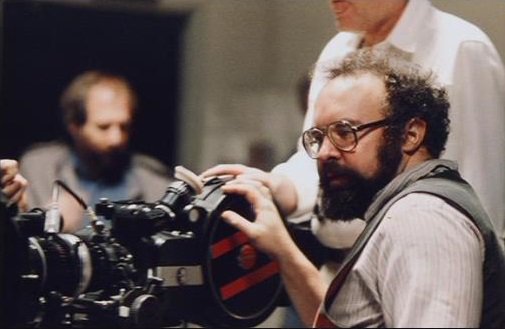
Looking at the collection’s cumulative impact, one gets the sense that Gordon was an incredibly generous interviewee. Whether speaking with major publications (Rolling Stone, Film Comment, Fangoria), specialty websites (Shock Till You Drop, Daily Grindhouse), or local newspapers (Petoskey News-Review, the source of that very first interview), he always seemed to exhibit an enthusiasm for cinema as well as a refreshing, self-aware sense of humor. Both attributes are on full display in an early interview with Anne Bilson, for Time Out: “‘When I really start to get scared is when I realize that the director is capable of anything. I also don’t like the idea of those films in which, as soon as they have sex, people are murdered. My feeling is they should have sex after they’re murdered…’”
It’s hard to think of a genre filmmaker today capable of going so far out on the ledge of bad taste while maintaining an artistic skill that ranks them with the best of the horror masters. In this sense, Stuart Gordon remains one-of-a-kind: an auteur well deserving of the royal treatment this collection bestows upon his oeuvre.
Thomas Puhr lives in Chicago, where he teaches English and language arts. A regular contributor to Bright Lights Film Journal, he has published “‘Mysterious Appearances’ in Jonathan Glazer’s Identity Trilogy: Sexy Beast, Birth and Under the Skin” in issue 15.2 of Film International.