

By Kristin Rhodes.
It’s feeling very, very big picture at the moment with it all. When I really think about this weird cyclical nature, it feels like I landed on a body of work (in writing and directing Episode 9 of The Beatles Anthology) that I’m very proud of. And now I’m sort of resetting to decide where to go next….”
Even The Beatles can use as occasional tune-up: the long-anticipated documentary series The Beatles Anthology premiered on Disney Plus the week of November 26th, just in time for Thanksgiving. Episodes 1 through 8 saw footage added, and, with the help of director Peter Jackson, songs for the now four-CD set were cleaned so clearly, Beatles fans heard more than they ever had before. But the addition that fans waited for the most was the entirely new Episode 9.
The Beatles Anthology originally debuted in 1995 as a three-CD set, an eight-episode documentary series, and later, in 2000, a large coffee table book. The project took the Beatles world by storm. From never-before-seen clips of the lads in the early days as the Quarrymen to then-new footage of George Harrison, Paul McCartney, and Ringo Starr recording songs left unfinished by John Lennon, fans were allowed an inside peek of the Beatles world and the rollercoaster they rode for so many years.
In 2016, fans experienced the Beatles’ touring years with Ron Howard’s documentary The Beatles: Eight Days a Week. In 2021, marveled at Peter Jackson’s docuseries Get Back, which explored the creation of the Let it Be album and the unforgettable rooftop performance. Then came Beatles ’64 (2024), produced by Martin Scorsese and directed by David Tedeschi, showcasing Beatlemania in America.
Those films were all in addition to one more, unfinished Lennon composition Now and Then, gifted to the surviving trio by Lennon’s widow, Yoko Ono, Lennon’s widow. George recorded guitar for the song in the nineties, with Paul and Ringo finishing the tune for what became a poignant, heartfelt public release in 2023.
Which brings us to the latest treasures, a fourth CD to the Anthology and a ninth episode to the docuseries, ironically playing into Lennon’s obsession with the number “9.” The man picked to write and direct the new film was Oliver Murray.
Murray has had great success as the writer and director of such documentaries as The Quiet One (2019), Ronnie’s (2020), My Life as a Rolling Stone (2022), Lang Lang Plays Disney (2023), They All Came Out to Montreaux (2024), music videos for Noel Gallagher and Band Aid 40, and commercials for such companies as Braun, Tesco and Red Bull.
Murray was gracious enough to grant Film International an interview about his documentary film career and how he snagged the coveted role of writing and directing the newest and final episode of the Anthology series.
—————————————–
Kristin Rhodes: You’ve had an amazing career. How did you first get interested in documentary films?
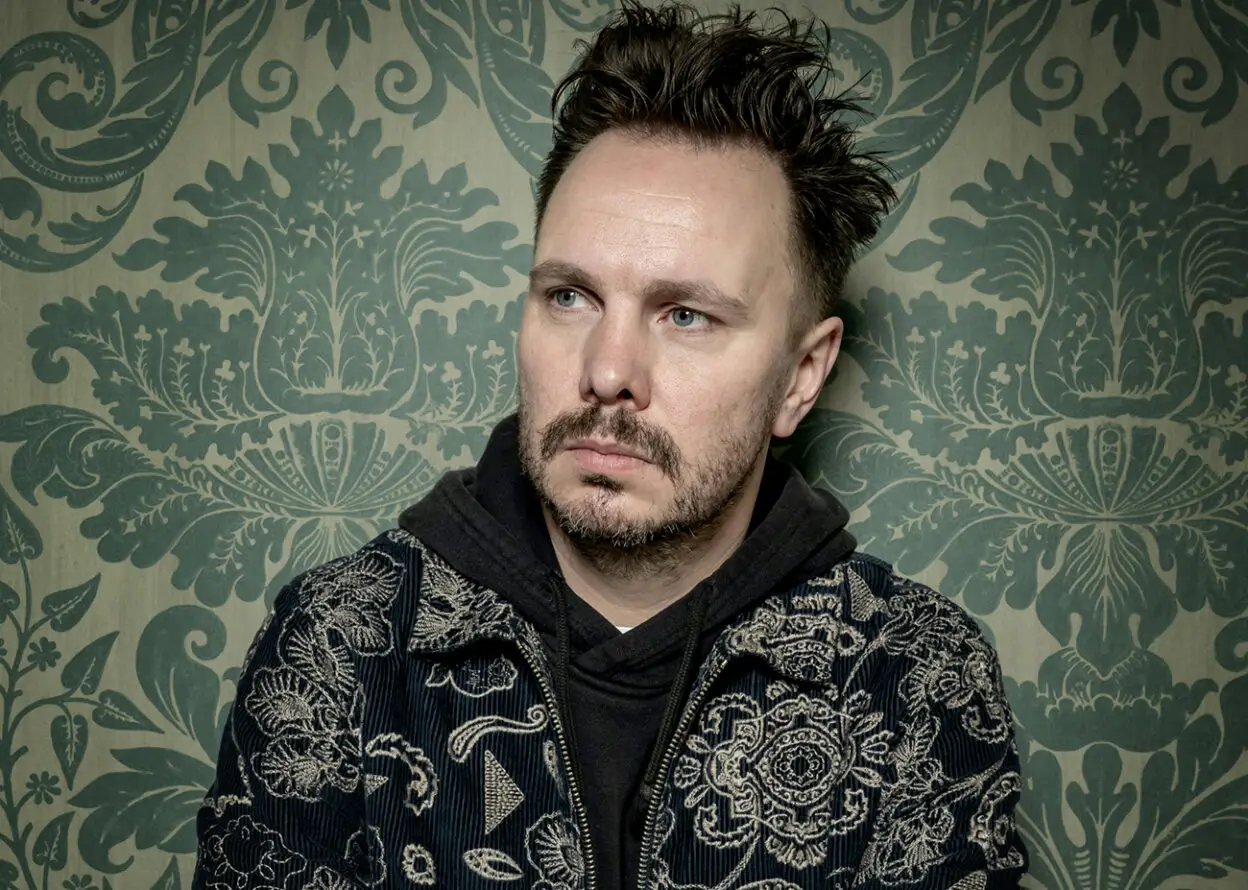
Oliver Murray: I went to art school in Scotland and for a little bit in New York. And then I moved to London and this is in about 2009. So just after the big financial crash, if you’d started a career then that was a bit troublesome. But given that I had no career or money to lose or anything like that, starting out in financially difficult times was actually a bit of a blessing because doors were open that were usually pretty shut because people had to rethink how they were going to make music videos, make short films, and also crucially for me, commercials. So I started out in short form filmmaking, making documentaries for brands and advertising agencies, music videos for record labels, and then as projects sort of got bigger, when I ended up quite neatly just combining those two worlds of documentary storytelling and music videos and everything that goes on in those two things, it made sort of perfect sense when I look back on it, that my first feature film would be a music documentary.
That was kind of me putting everything I had into one thing. And that was how I started. The mad element of that though, was that because I’d done a few videos and the like, I actually ended up making a film with Bill Wyman, the original bass player of the Rolling Stones. So, that was, you know, where they always say there’s luck and timing involved. There’s also complete sort of in the pinball machine of life that you’re getting sent around to start with A Rolling Stone is a pretty remarkable place to start. So, that was what gave me then the trajectory. Then I went and I made a film about Ronnie Scott’s jazz club, which is a place that’s very close to my heart. And another weird thing about the way the world was at that time, So, as I say, when I started, there was a financial crash which allowed me to get into an industry that usually had all the doors shut. When I made my second film about a London jazz club that should by all rights have remained fairly UK centric, we had a global pandemic and everyone around the world had this newfound sense of understanding that we need to protect all our institutions and arts and culture venues especially. Everyone had a story where they were from. And it was either you know, sometimes it was a huge concert hall that was having to close or it was someone’s favorite bookshop where they get, you know, everyone understood this value of it. I had this kind of flowering of interest in a London jazz club all across the US in Japan, Australia. And then before I knew it, I had two sort of well received music documentaries under my belt. And TV came calling at that stage in that kind of golden age of TV where, you know, Netflix, Disney, here in the UK we’re very lucky to have the BBC that gets us, you know, really well respected broadcaster that I did some stuff again, went back and worked for the Rolling Stones. I made a documentary about Lang Lang, the Chinese pianist on Disney, and then quite recently, sort of in my mind fairly recently made a show about the Montreux Jazz Festival in Switzerland, which was executive produced by Quincy Jones. It was the last thing he did before he died sadly. And just when I thought that, you know, that the world had sort of done its bit. I felt like I’d got a lot of blessings. Even to that point.
Then ludicrously, the Beatles, who I thought had no more music at all to pull out, I was suddenly asked if I wanted to make a short film about this new song Now and Then that they created with technology that Peter Jackson had developed, which was an extraordinary project to be involved in for all sorts of reasons. Then that kind of brings us up to date because through doing that, when that was released in November 2023, I was in Los Angeles with Jonathan Clyde, who is the producer of all the Beatles recent shows or films, and he said, what do you think about throwing your hat in the ring to make a new episode of the Beatles Anthology? Obviously, I was delighted and, and spent all Christmas writing up these ideas and things and started in February 2024 and then here we are now with that coming out three or four days ago.
It’s an amazing episode.
Thank you. It’s interesting to talk to you about my career to date because I was ten when the Anthology came out. And I can honestly say that was a window into a world that for a number of reasons inspired me to want to, I wouldn’t say make films because as a ten-year-old I obviously had no real idea of filmmaking. Filmmaking’s a weird thing to get into as a ten-year-old, but definitely this idea of storytelling and creating and what a band was. I thought, I want to be in a band. I don’t really know what I wanted to do, but I like this idea of this kind of gang, of this brotherhood of people getting in a van and having adventures. It was kind of in the UK, The Beatles, I think, prospered around the world, but they’re like sort of modern folklore. Even though, you know, Paul and Ringo still exist. There is an otherness to it where it’s like mythology really. And I was sort of bought into that as a ten-year-old and got a guitar and got into music and art and all these things. It sort of, for me legitimized the idea of those things could be celebrated beyond a hobby, you know, or just beyond something nice to do. In between some more serious concerns. All the stuff also that I was awful in at school, like maths and things that, you know, I was no good at and just went from quite a young age, went one hundred miles an hour into art and music. And my parents kind of supported that, as best as you can, just by never telling me to ease off, you know, I think. I think they sort of maybe thought if you’re gonna try and make a living out of doing that, you can’t think of it as some backup or something. You just have to go for it. So that was, that. That’s weirdly where I’ve sort of come to now. It’s only when you start talking about it, talking to, you know, people like yourself, where I don’t sit and think about it in the grand scheme of things like I’m doing right now. It’s a big sort of circular moment for me really to have gone from 2018, really, when I started working with Bill Wyman to now. It’s been a very prolific few years. It’s been a really amazing golden age of opportunity for filmmakers. It’s looking rocky moving ahead. Unfortunately, the business of film is very tricky. Right. I don’t claim to understand it, but I think if I went and tried to pitch, certainly something like the Ronnie Scott movie I made, I don’t think I’d get to make it in this, certainly not the same way. I’d have to make huge concessions now because it’s. It’s all very different.
Yeah, it’s feeling very, very big picture at the moment with it all. When I really think about this weird cyclical nature, it feels like I landed on a body of work that I’m very proud of. And now I’m sort of resetting to decide where to go next and how to be useful within the culture and how to have a voice and create meaningful discussion in what’s becoming quite a difficult and fractured world. And especially when we talk about the Beatles and how the Beatles have this sort of like a sort of language, cultural language that is international and multi-generational. And I struggle to think of any other band. Well, there are no bands anymore, but any other music individual or movies. Everyone’s very siloed off, so to try to try and tell stories, there’s still an audience in all these different places, but this idea of trying to tell a grand narrative is very difficult.
I just want to take people back in time and use archives, like a kind of time machine, and just take people back to that moment….”
Did you think about Ronnie’s, like the style that you did it in, as, in kind of the same vein as when you did the Beatles, Episode 9? Did it or your other documentaries have any kind of influence?
Definitely. Ronnie’s represents a style and a tone of voice that is very naturally where I want to come from, because I was kind of left alone to make that film for a bunch of reasons. I wouldn’t say I think it’s a mistake for me to sort of look back and say, oh, I took this just very naturally from film to film. More often than not, I don’t see the merit of filming the people, individuals. And a lot of that is to do with the fact that if you’re interviewing someone who’s maybe in their seventies or eighties or even nineties, about what they were doing when they were twenty, you’re starting to toggle between the past and present all the time. And I just want to take people back in time and use archives, like a kind of time machine, and just take people back to that moment. The difference with Anthology is we’re already doing that. For example, I definitely didn’t want to go and interview Paul or Ringo last year, because as much as I absolutely love going down to Paul’s studio and hanging out and all that stuff, don’t get me wrong, that’s a fantastic day out. But it would have been too much, for example, to have Ringo in 2025 talking about Ringo in 1994 who is actually talking about himself in 1964, for example. So that, that spaghetti of timelines, it’s just sort of too distracting. So I definitely think when it comes to something like Ronnie’s (2020) and also My Life As a Rolling Stone (2022), I was across a lot of that. Very much across the Keith Richards episode. When they’re safe to say, you know, icons, you want to see them, because part of it is sitting with them, especially Keith Richards, you know. I think if Keith just went and sat on a stool in a museum or something like that, people would definitely drive across America to just see him hanging out in a glass box. But the whole. The whole thing that I really loved about Episode 9 was quite unbelievable, there’s footage that no one had seen of the three of them sitting together, which isn’t the way one to eight, one to eight was very new. It’s my one, I wouldn’t say criticism, because if you start putting them together all the time, it loses that structural discipline that you need when the story is so long. But I really loved watching the three back in Studio 2 in London in that time. Because by then they’d started to watch each other in the interview footage. It’s at the end of the process of making the Anthology. So there’s a sort of, there’s so much warmth in that material, rather than thinking of the Beatles story as one that ends in a very somber fashion. And it doesn’t end with this big, explosive conclusion. Just one of those slow sad demises of a working Business relationship, an artistic relationship and a friendship. It’s very, It’s very sad. And I felt like what I may be most pleased about is if I’ve done anything at all with Episode 9, it’s to add a new ending that feels more like coming full circle to that optimistic beginning.

That sort of Beatles energy that will be left, I think, for hundreds of years after they’ve gone, it’s safe to say that if Mozart’s still around, the Beatles will be around for some time. No one thinks of the Beatles in the slow breakup of 1970, whatever it is all about, you know, there’s always become cliches now. Peace and love and all this stuff. Episode 9, I hope, although it’s very melancholic, because they’re missing John and it’s sad for us to see. Also, even, you know, George, it’s very poignant what he says, because he’s no longer with us. But the whole thing of ending with them together, rather than this idea of and then the Beatles break up. That’s why I hope maybe Episode 9 creates a sort of circle where it’s a conclusion to the Anthology, but it’s not at all an end to the conversation and the enjoyment of everything to do with the whole world of Beatles. It kind of lives on, and I hope it brings it to a whole new generation as well. That’s important.
I hope so. I got into the Beatles because my mom had their records. And I remember when John died. And then in ’95, I was actually working at a record store when they released Anthology, and so it was on the tv. For it to have a ninth episode now, as a Beatles fan, I was ecstatic because I think it bookended the Anthology really well. Unless there’s more footage of Now and Then that we don’t know of?
No, sadly not. I mean, I feel like I probably can speak with some of the most authority of almost anybody about it, unless there’s some tapes somewhere that no one knows about. There isn’t any more Now and Then. Sit tight on Free as a Bird is all I might say. We’ll see how we go with some bits and pieces, but for the most part, they’re really isn’t. There’s no case of material that no one knows about, you know, unless there’s someone that’s been incredibly, bizarrely sort of sitting on a suitcase somewhere, holding on to home movies that they took during whatever. The Anthology is the definitive story of the Beatles, when it comes to what footage is out there.
I saw Paul in concert three weeks ago. There were a lot of younger kids. Do you think that by it being on Disney+ and do you think especially like I hear on the Beatles channel, a lot of the kids saying my dad or my mom introduced me to the Beatles, this is meant to pull in or to help cement further generations to come?
It was absolutely central to the design to go through this whole process of restoring it for 2025 and beyond. And Disney, I think for Apple Corp., the Beatles production company, Disney has been the perfect partner because they don’t think about the beyond. This isn’t just an initial release and then it will peter off into some corner of the Internet somewhere. The idea is that with Disney+, you know, that it will be safe for a generation of young people to come and discover it. And we’re in this sort of era where, you know, there’s a passing of the torch, definitely there’s sort of a passing of the mic, if you will.

I certainly wanted to try and although I was going back in my mind like I was working in 1995 with all that material and I made sure there wasn’t any material beyond 1995 because of that discipline with this kind of time machine sort of feel, I definitely wanted to make something that feels of now. And I do think, or at least I hope that 9 feels different to 1 to 8 and it feels more contemporary and there’s a sort of otherness to it, but it still has an anchor towards, you know, the look and feel of one to eight. It’s a bit faster. Like I said before, I wasn’t going to go back to them now and ask them to fill in gaps because too much time has passed, there’s too much loaded with the story, the narrative. They think about things differently or I needed that time capsule discipline. We open with this sense of, this idea about memory and about even just the idea of getting the Anthology together. What that tells you about the Beatles themselves, of just them talking about their own sense of self and what the band means to them and all that stuff. And then we talk about John and his absence and then the stories, which is maybe one of the most fun bits is I was amazed, actually, when I watched one to Eight that they didn’t talk about the haircuts or the Beatle boots particularly. They talked about Brian Epstein wanting to smarten them up. But we gotta go back and properly add that. That’s a huge part of their appeal, that whole immaculate uniform. So, we did that and then go and talk about the live years, talk about the recording years and then the sessions, the Anthology sessions. Maybe what you don’t do with voiceover, you do with score, because Episode 9 has a score and 1 to 8 doesn’t. And it was weird that the two line producers, they were so kind of excited to tell me when we started editing, by the way, you can basically help yourself to the Beatles back catalog for Episode 9. Isn’t that great? Because in any other scenario, if you want Beatles music in your film or your documentary, it’s prohibitively expensive, let’s say, with the Stones, whatever. And so, they kind of couldn’t believe it when nearly once I’d done my rough cut and said, no, let’s talk about score, they couldn’t believe that. I said, well, actually, none of the Beatles music’s gonna work. And it was because you can’t have them talk about what it’s like being a Beatle and just put an acoustic version of, you know, Hey Jude underneath it, because the music’s so powerful and it conjures up so much imagery that you stop listening to the story and you immediately go to the music. So, that was a kind of funny moment of explaining to the line producer why. We need to work with a composer on this. Sorry. The music is good. This is one of my favorite things to do is work with a composer on an amazing score. It’s a fantastic part of the process. And I think it needed someone like Alex Heffers who did it, because it’s very understated. It’s not a scenario where you go, amazing, we’re going to put some music into the Beatles documentary. Let’s go. Really. Let’s throw everything at it. It was almost the opposite. How refined can we make this thing? The amazing thing about working with the Beatles is how much respect they give and how much space they allow for the creative. They’re not really on top of you. And then wanting to see lots and lots of rough cuts and all that kind of stuff. It’s more. It’s completely the opposite actually. It’s more them saying, look, do your thing when you’re ready. When it’s ready for us to see it, show it. And that’s the most terrifying moment of my career, for sure, because you realize that, okay, I’ve been given all the space and the resources to make something, and now there’s a fairly, there’s a real possibility that there’s something that they really don’t like about it. And as I was saying about when you elect to not use voiceover and all those kinds of things, there is not that much wiggle room. When you put this puzzle together, it’s almost like, well, if you don’t like the puzzle when it’s finished, it’s the image, it’s the whole thing that someone doesn’t like. No one looks at a finished puzzle and says, oh, I don’t like the number of pieces or something. You know, they just see what it is when it’s done. And that’s kind of how it feels for me, anyway, when I get notes on any of my documentary work because it’s such an organic process and they evolve. And a lot of the time you have to be very patient with people because often what you said you were going to make versus where you end up, it’s traveled every day that you’ve been working on it. It’s really moved. But for some people that have said yes, especially when it’s the Beatles, when they say, go ahead and do your thing, it’s based on, you know, eight pages or something that I may have written up. But for me, it’s tiny movements every day that’s got me. When I look back over my shoulder, it’s actually moved quite a lot. And they see that just because they go, hang on, six months ago we were doing this and, you know, you’re. You’re in a different state. Not just like down the street with the idea, but in this case, what was fantastic was it went down very well. And I got, I think, hopefully got to make quite a sort of heartfelt, quite melancholic episode that is maybe a bit more unexpected as a conclusion. But the Beatles meant a lot to me. So, then I think, well, you know, I’m pretty sure they mean a lot to all sorts of other people all over the world as well. So, you kind of make something. It sounds selfish, but you try. And you always make these shows for yourself. I don’t mean because, like, oh, well, I don’t care what other people think. It’s more sort of like, well, if it moves me and it resonates with me, I trust that it’s gonna do the same to other people. If it operates on a human level, the facts and the pace and the technicalities are all, you know, objective that the team will help you sort. But the thing I’m always trying to preserve is that sense of, like, well, I’ve learned something on an emotional level about those men, then that’s hopefully the bullseye. Because I think everyone wants, everyone wants more than just the music from these kinds of especially music shows. Actually, I think good music documentaries aren’t about music. They’re about what the music reveals and then what the story behind the music really is. And to be given the freedom to focus on that for the final chapter of the anthology, which is, you know, hopefully the definitive narrative of the Beatles. I think it’s a very fitting conclusion to that particular story.
There were a lot of playful scenes and I think that really showed through the episode as well, which is always something us Beatles fans love to see. And it reminds us of where they were at the beginning to the end, I think it ended very well. Can you tell us what you may have coming out in the near future?
Thank you very much. I wasn’t ever expecting to get the opportunity to do it and I have no idea how I’m supposed to sort, of deal with that from the perspective of the ten year old kid who was inspired to do what I do because it would be a bit like some sports star that watched the super bowl as a ten year old. And then later got to go onto get the super bowl winning touchdown or something like that. That was how sort of raw it was for me to engage with all that. And I feel like I’ve come out the other side with it all being overwhelmingly positive and exciting. And now really it’s time to take a bit of a breath, which is nice with Christmas coming up that I can sort of do that and go into next year. Hopefully being able to add to the body of work that I’m starting to accumulate, that’s what I love about doing what I do is you make these things right. They’re entertaining, they’re informative. They bring something out of you emotionally, but then they stay with you and make you rethink your connection to that musician or make you think about moving forward. Hopefully it makes people want to go see more live music. The things I’ve done over the years, you know, that’s under threat now. So much is sort of under threat. So, if there’s anything I can do to fly the flag for the good that these kinds of men and women have done, then that’s what I’m going to do. As I say, the nice thing about this is that this represents the end of a run of shows and films that have come all the way out the back of the pandemic. That slowed everything down and made me really think about what I might be able to do. So, there’s a couple of things that may or may not happen. I can’t really talk about them because I genuinely don’t know who might finance them and where they might end up. But a couple of genuinely ginormous things that I’m trying to leverage. But then I also think, what do you do after the Beatles? And at the moment, the answer is possibly go to Eastern Europe and do something about the Migrant sounds out there. People, you know, moving as musicians are now moving through Europe, and trying to hold on to their culture as they’re displaced and things like that. Do something that isn’t about fame and, because what’s bigger than the Beatles, quite honestly? So, you kind of go 180 on that and look for something completely different. And now I’m lucky that because there’s a profile around doing stuff for the Beatles. For the last couple of years, occasionally the phone goes and someone on the end of it is asking if I’m interested in such and such a story. So, it’s getting used to that, having a certain level of visibility now, which means sometimes I don’t have to be master of my own destiny. Sometimes the universe calls me up and says, do I want to do something that if I’d written down a thousand things I would like to make movies about, it wouldn’t be on there. But as soon as someone says it, you’re just, your brain sets on fire about how great the thing is, and often I know whether I’m gonna take up the opportunity two seconds after it’s been offered, the synapses just flare up and you kind of know that that’s going to be the next project. But at the moment I’m going to enjoy, I think going into Christmas with the anthology safely delivered and being well received.
Kristin Rhodes, along with being a lifelong fan of the Beatles, is a film historian. She is currently at work on a biography of actor John Boles.