

By Jonathan Monovich.
I’ve had good luck in my career by following my own interests/impulses. If you’re an ambulance chaser, you’re not going to be successful.”
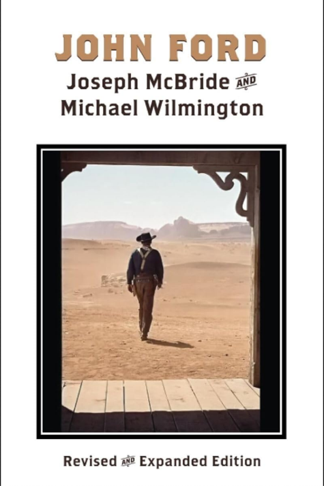
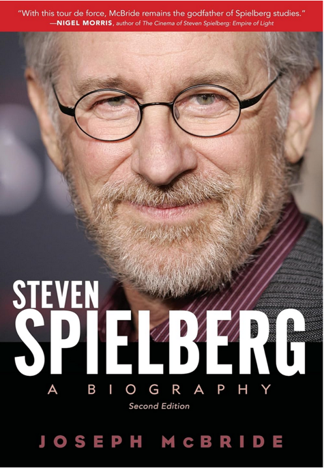
Born into a large Irish-Catholic family, Joseph McBride was raised by two newspaper reporters. Naturally, McBride followed in his parents’ footsteps to become a writer. Having lived a traumatic childhood, McBride was temporarily institutionalized as a teenager; his moving memoir, The Broken Places, recounts this time period of his life. Despite McBride’s obstacles, escapism was found via the moving image and the page. Instilled with the value of education, McBride has spent his life searching for knowledge. A life-long learner, McBride’s eclectic interests span history, literature, politics, sports, and of course, film studies. McBride first fell in love with movies via westerns, but it was seeing Citizen Kane (1941) at the University of Wisconsin-Madison, in the 1960s, that changed his life. McBride and his idol, Orson Welles, share many parallels in their lives; the most obvious is their Wisconsin birthplace. Consider it fate that the two became collaborators before McBride moved to California in the ’70s. After portraying Mr. Pister in The Other Side of the Wind (1970-2018), McBride spent many years working to get the film released. A leading Welles scholar, McBride has written three books on the man and his work, including What Ever Happened to Orson Welles?: A Portrait of an Independent Career. Other notable books from McBride’s lengthy catalogue include studies of John Ford, Frank Capra, Howard Hawks, Billy Wilder, Steven Spielberg, George Cukor, Ernst Lubitsch, and the Coen Brothers. Along the way, McBride has earned praise from some of the most revered filmmakers, including Martin Scorsese, Peter Bogdanovich, and Lawrence Kasdan.
McBride’s exposure to the lively film scene at UW-Madison helped shape his creative practices. Influenced, and later championed, by Andrew Sarris and François Truffaut, McBride’s writing was initially inspired by the auteur theory. He has spent nearly fifty years developing his own authorial voice. Apart from his critical studies/biographies, McBride’s writing from Variety, Sight and Sound, Film Comment, and elsewhere can be found in Two Cheers for Hollywood. Defined by integrity, McBride has dedicated his life to finding truth in an industry that often lies. At heart, McBride considers himself an investigative reporter and a historian. This is most apparent in Frank Capra: The Catastrophe of Success, Searching for John Ford, and Into the Nightmare: My Search for the Killers of President John F. Kennedy and Officer J. D. Tippit.
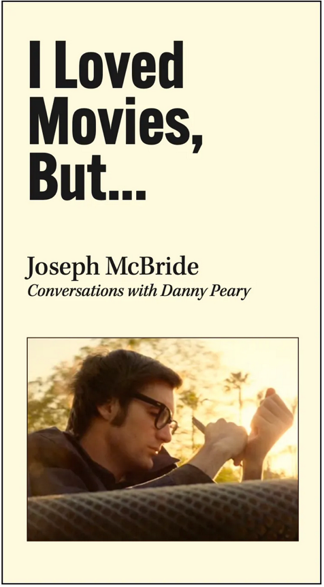
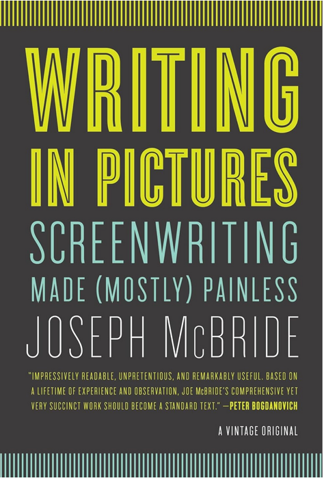
An esteemed emeritus professor of San Francisco State University’s (SFSU) School of Cinema, McBride ranks amongst the most respected film educators. He has been a firsthand witness to the progression of the film industry/film schools and their relationship with one another over the last fifty years. A pragmatist, McBride is candid about his experiences in screenwriting. His book, Writing in Pictures: Screenwriting Made (Mostly) Painless, is the antithesis of what Charlie Kaufman satirizes in Adaptation (2002). McBride’s screenwriting credits include the iconic Rock ’n’ Roll High School (1979), Blood & Guts (1978), and five AFI Life Achievement Award tributes. Expanding on McBride’s longform conversation with Danny Peary in Sticking Place Books’ I Loved Movies, But…, an extensive autobiography, I was fortunate to speak with McBride over Zoom about the evolution and future of film education. We are confronting a cultural decline in cinephelia, changes to societal viewing habits, and a scarcity of genuine opinion, but McBride was quick to remind me of Sturgeon’s Law—“Ninety percent of everything is crap.” Even so, the fact that McBride and I are generations apart and engaging in discourse proves that film is not just merely “the art form of the twentieth century.” McBride recently retired from teaching, but those willing to listen will find his words incisive.
How did your time at the University of Wisconsin-Madison help prepare you for a career in writing?
My first magazine article was about baseball. It was published in 1960, when I was twelve years old, for the Young Catholic Messenger. It gave me tremendous confidence. Later, I wrote my first book, High & Inside: The Complete Guide to Baseball Slang, when I was in high school. When film magazines started burgeoning in the ’60s, it was an easy transition for me. Before I started writing for film magazines, nobody else in Madison, Wisconsin, had thought of it. Suddenly, my peers also started getting published. We called ourselves the “Madison Film Mafia.” Russell Campbell started a journal, The Velvet Light Trap, that drew a lot from our Wisconsin Historical Society’s film collections. I edited a collection of “Madison Film Mafia” film criticism, Persistence of Vision: A Collection of Film Criticism, in 1968 via the Wisconsin Film Society Press. Sticking Place Books is republishing it.
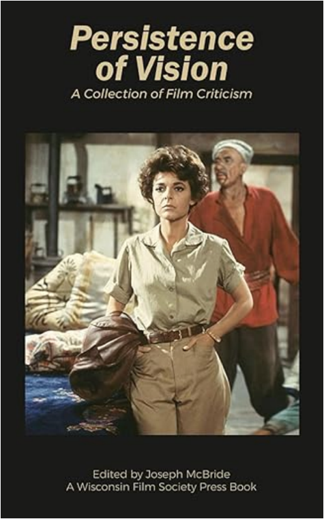
When I started writing about film in the late ’60s, people were just beginning to become fascinated by film studies. It was a wide-open field for young people. I first started writing for Film Heritage, which was published by a professor named Tony Macklin. Then, Ernest Callenbach began accepting my writing at Film Quarterly. Later, I started writing for Sight and Sound.
How did you encourage students to maintain their own voice in their writing?
I wish students were more rebellious. I like it when students have their own thoughts. When I was a student, we talked back to professors in a respectful way and engaged in debate. Today, most students are afraid to debate for fear of offending their professor. There’s a story I told students, hoping it would encourage them to write what they’re passionate about. In 1973, I was wondering what Richard Lester was up to. I went to London to interview him, and it turned out he was preparing The Three Musketeers (1973). This was Lester’s comeback film, so it was a pivotal moment in his career. The interview ended up being my favorite that I ever did with a filmmaker.
Sight and Sound’s editor told me, “When Ingmar Bergman makes a new movie, we get fifty essays and might run one. When you turn in something, it’s so unusual that no one else has thought of it.” People have a tendency to forget filmmakers when they’re out of touch, but I think it’s a good rule of thumb to be out of touch with the trends. When Michael Wilmington and I submitted our essay on The Searchers (1956) to Sight and Sound in 1971, the film mostly had been forgotten. Because of that article, The Searchers jumped to the top twenty on Sight and Sound’s critics poll for the first time in 1972. Finally, people realized it’s an important film about America’s problems. You can be influential if you’re not trendy. I’ve had good luck in my career by following my own interests/impulses. If you’re an ambulance chaser, you’re not going to be successful. It’s best to develop your own personality, and it seems like you do that well. Who else was writing about Out of the Blue (1980) when you were?
You have always written about classic films. The classics are an essential building block of film education. What do you think caused younger generations to abandon respect for the classics?
I was the only person who showed La Grande Illusion (1937) to students at SFSU, and my students loved it. You shouldn’t leave film school without seeingthat film. The Merry Widow (1934) and My Darling Clementine (1946) were also hits. When I was in school in the ’50s/’60s, we learned classic literature, such as The Great Gatsby and The Red Badge of Courage, and films such as Citizen Kane and The Battleship Potemkin. In the ’70s, the mindset became that we didn’t need to know history, so educational budgets started to become cut and students stopped learning history. I covertly taught “Film and Society” as a history course and showed films about Watergate, Vietnam, etc. When I showed Hearts and Minds (1974), I asked students for their reactions. One said, “Well, I wasn’t born then.” This encapsulates the problem. I have always loved period films and documentaries; they’re time machines.
This lack of appreciation for the classics also says something about ageism. Why do you think directors’ final films typically get an underwhelming response before being reevaluated years later?
Cukor told me old filmmakers have a certain wisdom. John Ford couldn’t get a feature film made after 7 Women (filmed in 1965, released in 1966). I interviewed him in his office in 1970 when he threw in the towel and decided to retire. That was the day he found out his attempt to make an Italian Western had fallen through. There is a whole body of literature on late style that says artists refine more to the essence over time. François Truffaut was someone who really did that well. Welles said an artist has always to be out of step with his time. That was certainly the case with 7 Women, yet it is one of my favorites. Some of its detractors at a preview perceived the film as an attack on religion, but it’s actually an attack on religious hypocrisy.
André Bazin sagaciously realized what we were seeing was the aging of the cinema, not just the aging of directors. In the late ’60s, the studio system fell apart. That’s the theme of The Other Side of the Wind, which I happened to get into right when I came to Hollywood. It’s about the old order collapsing and the new order coming in. Roger Corman was one of the only production executives who had the sense to hire new talent, as he did in hiring me to write three screenplays. As I’ve gotten older, I love Yasujirō Ozu’s films. Ozu mourns the collapse of old values, but he’s also sanguine about finding virtues in young people. Ford, on the other hand, generally had a blind spot for younger people.
My first printed piece was in Film Matters, which publishes the writing of undergraduate film students. Sometimes all it takes is a little encouragement for students to keep going. What avenues did you recommend for your students?
In my biographies, I recognize that a lot of directors credit teachers as their heroes.My wife is a psychologist, and she says “everybody needs encouragement as a kid.” And she says if one adult figure gives you encouragement, it can make the whole difference in life. I got the sense that many of my students were never encouraged. I remember asking a student to read his paper to the class, to vigorous applause, and he was thrilled. This was a turning point for him, because somebody thought his work was of value.
I told my students if you have an unusual, yet serious, piece to pitch it to Gary Morris at Bright Lights Film Journal. My first work with Bright Lights was an interview Patrick McGilligan and I did with George Stevens in 1979. Cineaste is another magazine I recommended. Sight and Sound is also still important, though they’ve become more trendy.
Film schools face a constant battle of navigating between theory and practice. You blended American and European ideology, integrating the two. How did you approach this balance in the classroom?
SFSU’s philosophy was that production and scholarship are supposed to go hand in hand. Some of the best filmmakers such as Steven Spielberg, Martin Scorsese, Quentin Tarantino, and Joe Dante know a lot about film history. When I went to Hollywood, I naively thought everybody was there because they were film aficionados. I quickly found out that most people only cared about money and power. Now, it’s even worse. When I talked to such veterans as Orson Welles and Richard Lester, they said they can’t watch movies without seeing “the invisible clapper” at the beginning/end of every take. The more you know about making films, the harder it is to simply submerge yourself into them like a fan.
It’s important to be academically well-rounded. What advice did you give to film students to supplement their film education?
Paul Schrader has referred to film schools as a scam. Students pay a lot of money and might not get a job when they graduate. Billy Wilder said he’d advise his own children to be stuntmen, special-effects creators, or lawyers because those jobs are all they can get in the modern film industry. In 1971, we were shooting a scene for The Other Side of the Wind at USC that didn’t make it into the film. Welles was sitting in as Jake Hannaford, John Huston’s character, and students were asking him questions. Welles said, “You’ve already seen too many movies.” One of the students asked what should they study in college. Welles put his arms out and said “the history of the world!” The great directors used to come from different fields, because they didn’t have film schools. Leo McCarey was an attorney. Howard Hawks was a race car driver and a U.S. Army flying instructor. Frank Capra failed to become a chemical engineer and was in the Army. Filmmakers used to know the world. Today’s great directors, such as Spielberg and Scorsese, are knowledgeable of many subjects. I told our film students that their most important courses were such GE subjects as history and literature. I would suggest Shakespeare courses. I was fortunate that Shakespeare was a part of my high school education.
In addition to Shakespeare, The Elements of Style was also required in my high school English courses. I respect that you incorporated Elements into your syllabi. How did you encourage the value of writing?
Stephen King said “every aspiring writer should read The Elements of Style.” Dorothy Parker said “the second-greatest favor you can do… [for an aspiring writer] is to present them with copies of The Elements of Style. The first… is to shoot them now, while they’re happy” [laughs]. When I came to California in 1973, the state was rated second in the country for education. Now, California is ranked twenty-ninth. This is a result of Proposition 13 in 1978, which froze property taxes on existing homes. I predicted that it would seriously hurt the education budget in California, and it did. Now, when high school students graduate in California, on average, they read at a sixth grade level.
An outside task force said SFSU’s students’ biggest problem was their writing. Almost nobody had been taught punctuation, and I was told by the school that I couldn’t teach grammar, although I continued doing so successfully. One professor outrageously told me that “once you get to be a junior in college, you can’t learn anything.” Writing is like playing golf. You’re playing against yourself, and nobody gets a hole in one for every course. The serious students were appreciative and got better quickly in a semester. When SFSU raised the acceptance rate from 65% to 95%, that made a huge difference. I was told to be more lenient, but I refused because I thought I wouldn’t be doing my job.
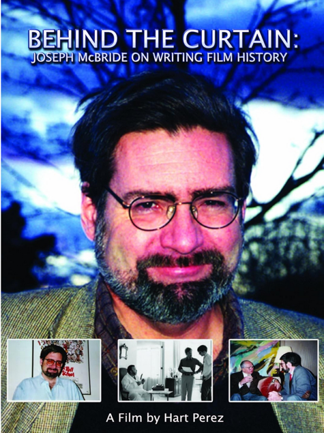
One of the fallacies at SFSU was that we supposedly frowned on auteurism because it’s too “individualistic.” Yet all the professors followed the auteur theory. Their syllabi listed the directors’ names in parentheses next to the films and never credited the writers. I would always discuss who wrote the films we watched. SFSU also fostered the idea that students had to write and direct their own movies, which I think was a terrible mistake. Some people are better at writing than directing and vice versa. One of my students, Hart Perez, made a documentary about me, Behind the Curtain: Joseph McBride on Writing Film History. I always recommended students band together to form a team. Collaboration is the essence of filmmaking, but film schools often don’t foster collaboration.
In a way, films like Timecode (2000) and Chelsea Girls (1966) prophesized shortening attention spans. There was a recent article in The Atlantic about professors recognizing that many students can no longer sit through films without looking at their phones. Did you see this at SFSU?
In my final teaching years, it seemed like our cinema majors never went to the movie theater. I theorized they didn’t have the attention span to watch a movie. To be good at anything, you have to learn how to concentrate. If you’re writing a book, you have to dig into the research material. When I wrote for Variety, you only had one chance to see a film before writing your review. I had to learn how to concentrate so I was accurate. If you’re writing an in-depth critique of a film, it can require five-ten watches. A lot of reading is also necessary. Being a film scholar necessitates that level of attentiveness, but I struggled finding students who wanted to be film scholars.
I read that article; it’s very disturbing but true. I had little interest in last year’s films, but One Battle after Another and Sinners and Sentimental Value are interesting. There have been encouraging recent developments in television and documentaries. I’m in a new documentary, Boorman and the Devil (2025), about the great film maudit Exorcist II: The Heretic (1977). With the success of streaming, audiences’ binge-watching habits go against the idea that people now have shorter attention spans. Watching something at home is very different from the communal experience. Yet, in the 1980s, audiences started becoming poorly behaved at film screenings, which made it increasingly unpleasant to go to the movies. My friend Ronald Haver wrote about this in American Film.
I wish more streaming services would include commentaries/interviews on their platforms like the Criterion Channel. These are educational tools, but they’re oftentimes viewed as disposable.
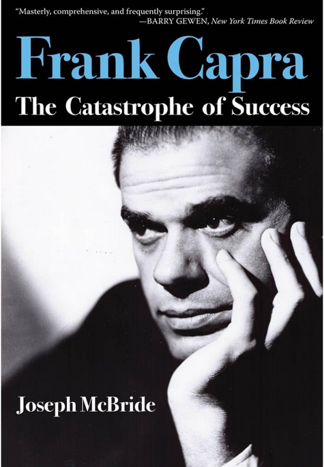
I still get asked to do audio commentaries, and I’m happy to do them. You never know when a film will disappear from streaming, but it costs money to buy discs. Olive Films did a package, Mr. Capra Goes to War: Frank Capra’s World War II Documentaries, after I wrote about them. I did an interview and some commentaries on the films. When Olive Films folded, nobody was interested in picking up the rights. Film is a very ephemeral medium. Hitchcock disturbingly said, “In 100 years it’ll all be cornflakes in a can.” Books are more durable. There are books from thousands of years ago that still exist.
Whenever there’s a significant change in the medium, we lose a lot of the history. We’re going to lose a lot of movies that are being made digitally, because to avoid problems you have to preserve them on film as well. Archivists say the problem with digital is that the hardware keeps changing. It’s expensive to buy new equipment and transfer copies of films from one system to another. Nevertheless, film prints can be lost if there’s a fire. Many Fox films were burned in a 1937 fire, including John Ford’s, but prints of some of his have been found.
Film schools have long partnered with industry professionals to augment screen pedagogy. How important do you think it is for film schools to partner with the industry?
We didn’t have as much money as USC or UCLA to fly people into town. But Francis Ford Coppola lived in the Bay Area. He gave a wonderful talk at SFSU, and the students loved him. When we asked if he would like to teach film, he said, “I love talking to students, but I don’t want to grade papers.” If I had been the chair, I would have said, “Let him do it that way!” My friend Sam Hamm who wrote Batman (1989), also loved coming to my screenwriting classes. The very first screenwriting class I taught, a student asked, “How do we sell our scripts?” I said, “Well, first you have to learn how to write them. Let’s not put the cart before the horse.” I didn’t want students to be overly obsessed with celebrities and money, so I waited until the end of the semester to have Sam visit so he could talk about selling scripts. When I wrote for Variety, I interviewed such screenwriters as Terrence Malick, Robert Towne, Paul Schrader, and Gloria Katz. Malick pointed out how you get brainwashed into thinking too much about what will sell. You have to avoid that.
When Sam would visit, he talked about the realities of the business. He would start by asking, “How many of you have some talent that’s not film-related?” Two-thirds of the students would raise their hands, and he would tell them, “Do that instead, because it’s very hard to make a living in films.” I would also mention that Harrison Ford was a carpenter before he became recognized as an actor. It takes a while for anybody to break in, so you have to have a day job. Coppola also stressed that to our students. When I wrote Writing in Pictures, my discussion of the difficulties of selling scripts were said by one publisher to be too negative. That publisher preferred an inspirational book, but that wouldn’t have been honest. But Random House published what I wrote. Like every professional screenwriter, I wrote a lot of scripts that weren’t filmed. I hate doing serious work that I invest my soul into and nothing happens to it, so I went back to writing books.
How do you think screenwriting will evolve with the advent of AI?
The secret they don’t talk about very much is that AI is already being used by a lot of filmmakers, and we just don’t know it. The Writers Guild of America, which I’m a member of, is worried about AI. If the studios come up with an idea for a film, they are starting to have AI write up a treatment. Then they might hire a real writer to rewrite it.
I think the concerning word there is “might.” If AI replaces writers, rather than becoming something supplementary, it’s going to have serious ethical and economic repercussions.
CGI is a wonderful tool in some ways. If you’re trying to make a period film, you can recreate different time periods quite easily. AI is a dangerous tool, because you could create a whole film using it. In addition to writers, a lot of actors are freaking out because they’re going to be out of jobs with AI. There’s that infamous example of somebody creating an actress using AI and getting her an agent.
There was a recent piece in The New Yorker about a project to create Welles’ original cut of The Magnificent Ambersons (1942)using AI. What are your thoughts on this?
I wrote a letter to The New Yorker, correcting mistakes about what happened to Welles and why he was fired by RKO. I’m dubious about the AI Ambersons project. My friend Roger Ryan did an Ambersons “reconstruction” in 1993. Using the RKO cutting continuity from Robert Carringer’s book The Magnificent Ambersons: A Reconstruction, with stills and frame enlargements from missing scenes, Roger rearranged the scenes the way Welles wanted. It’s shockingly different. Because we know what the dialogue was, Roger was able to have actors read the lines. He also added the Bernard Herrmann music that was dropped from Ambersons. It was a low-budget enterprise, but I found it refreshing that they didn’t try to imitate the actors from the film. Roger couldn’t restore everything because he couldn’t find stills for some of the missing scenes. It ended up being 111 minutes, but the Welles cut was 132 minutes. Roger has since found additional stills. He was working on redoing the restoration with Stefan Drößler from the Munich Filmmuseum, but Criterion passed on it, and he can’t show it publicly since he doesn’t own Ambersons.
In any art form, the human elements are always the most important, and that’s what AI is missing. Jean Renoir said the problem with American films was their “cult of technical perfection.” Renoir said he’d rather sit on a chair made by a carpenter than something polished from a factory. Renoir’s films, like Boudu Saved from Drowning (1932), are rough in some ways. Even though some camera movements are wobbly, you can tell a group of human beings made that film. Ironically, if the AI Ambersons project looks too good, people might be fooled into thinking the actual footage was found. Joshua Grossberg has been traveling to Brazil to try to find the missing Ambersons film print. I’m going to be in his documentary—The Lost Print. I don’t think he has found anything, but his theory is that Welles left the film in Brazil when he was working on It’s All True (1942).
Before you recently retired from teaching, did you begin to see consequences of AI with your students?
It’s becoming very difficult to detect a paper written by AI. To get better at catching plagiarism, I gave assignments that were very specific. One semester, I had about fourteen papers on Marnie (1964) that were plagiarizing a specific essay from the internet. When you get multiple papers that look the same, it’s obvious. The mixture of illiterate writing and smooth writing is another indicator. Another time, a student wrote a piece on Rock ‘n’ Roll High School (1979) that was a blend of three reviews. Since I co-wrote the film, I knew these reviews really well. When I taught John Ford and Orson Welles, I’d say “don’t bother cheating,” because I know all the literature.
Today, some students refuse to watch films because they don’t agree with moral aspects of a character. What are your thoughts on this?
Actors often say that playing a villain is more interesting to them. However, many students believe that if you watch a film or read a book that depicts a serious problem, then you’re somehow endorsing that problem. With Schindler’s List (1993), some criticized Spielberg for making a hero out of a Nazi. In my Spielberg biography, I explained the point of the movie is that even someone who’s that opportunistic can have human values. Schindler’s character is somewhat mysterious, but you see him evolving. Drama is all about conflict within the human psyche. We’re all mixtures of the good, the bad, and the ugly.
The longevity of film and humanity are dependent on hope. I think Francis Ford Coppola was trying to convey that in Megalopolis (2024). Do you agree?
I agree with the sentiment and like Megalopolis. It is wacky and doesn’t totally work, but it is really interesting. To Coppola’s credit, he made the film with his own money. I respect what he did, but I’m sort of pessimistic about the future. I had trouble writing the ending of I Loved Movies, But…. I was reminded of Sean Connery asking Michael Caine “have our lives been misspent,” during the avalanche scene in The Man Who Would be King (1975). I find that scene humorous, but everyone does think about that as they get older. However, I’ve had fun writing and studying about film. It’s clear that nobody knows what the future is going to hold. We stopped calling our department “film” at SFSU and changed it to “cinema” to encompass digital. William Goldman famously wrote, in ALL CAPS, “NOBODY KNOWS ANYTHING,” and that’s really true. There’s a tendency for older people to be too pessimistic. You have to guard against that; it’s too predictable. Inevitably things will change, yet there will always be stories with moving images.
Jonathan Monovich is a Chicago-based writer and a regular contributor for Film International. His writing has also been featured in Film Matters, Bright Lights Film Journal, and PopMatters.