

By Jonathan Monovich.
I find that the past lives in the present. Like Faulkner said, ‘The past is never dead. It’s not even past’…. Whenever there have been attempts to return to zero, they’ve amounted to nothing.
—Kent Jones
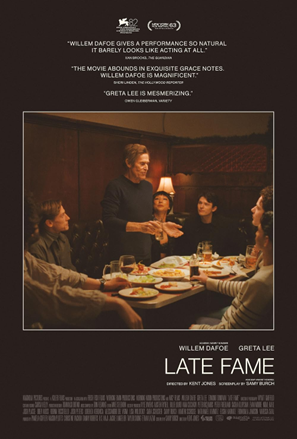
In the deeply personal My Voyage to Italy (1999), Martin Scorese concludes his exploration of Italian cinema by professing, “History remains something that’s handed down… something that happens between people… the best way I have to keep film history alive is to try to share my own enthusiasm.” Kent Jones, who co-wrote My Voyage to Italy, similarly has an undeniable enthusiasm for cinema and applied a similar philosophy to his documentary Hitchcock/Truffaut (2015), where many of the great contemporary directors recounted their admiration of Monsieur Hitchcock. Jones’ book Physical Evidence: Selected Film Criticism extends this notion, doing what the best film critics do—helping readers find a reason to revisit films they love, convincing readers to seek out films they haven’t yet seen, and making compelling arguments as to why elements of films didn’t work. Though, like Val Lewton, who Jones studied in his Scorsese-narrated documentary, Val Lewton: The Man in the Shadows (2007), Jones too has spent much of his career in the shadows writing/editing for publications like Film Comment, programming the New York Film Festival, and archiving for Scorsese. Jones’ relationship with Scorsese spans decades, and he also helped co-write/co-direct the underrated History Channel documentary, Lady by the Sea: The Statue of Liberty (2004), and A Letter to Elia (2010)—a moving appreciation of Elia Kazan. The latter is perhaps the most poignant cinematic love letter of its kind. Most recently, Jones penned four episodes of Martin Scorsese Presents: The Saints (2024-2025) for the maestro. Jones’ examination of Saint Carlo Acutis holds a particularly discerning weight for our time. Beyond his work with Scorsese, Jones also helped pen the screenplay for Jimmy P: Psychotherapy of a Plains Indian (2013), which remains one of the most overlooked films of the 2010s. With time, Jones forged his own path as a filmmaker, continuing the great legacy of critics turned filmmakers like Jean-Luc Godard, François Truffaut, and his friend Olivier Assayas. Jones’ long-awaited narrative feature film debut, Diane (2018), sharply investigated themes of guilt, regret, addiction, faith, reconciliation, and death with exceptional performances from Mary Kay Place and Jake Lacy [who returns in Late Fame (2025)]. Whereas Diane was a much-welcomed introduction from one of our greatest film critics, Jones’ second narrative film, Late Fame, cements that he has developed his own distinctly recognizable filmmaking style.
Jones’ style has become defined by a transcendental quality via meditative exploration of daily life, navigating family troubles, an embrace of nature, meaningful music curation, and the use of dissolves. Like Diane, Late Fame also takes place in the winter. Having grown up in Massachusetts and lived much of his life in New York, Jones shares familiarity with the winters of the east coast. Films often depict winter as brutal on screen, yet Jones appears to be attracted to the serenity of the season. Because film critics look to film history to find commonalities and comparisons with contemporary cinema and relate their viewing history with their personal lives, naturally, Jones has done something similar with his films, exploring his characters’ relationship with the past and how it drives their lives in the present. For Late Fame, Jones has teamed with May December (2023) screenwriter, Samy Burch, to adapt Arthur Schnitzler’s 1895 novella of the same name for the screen. The collaboration works well as Jones enjoys casting comedic actors in his work, and like May December, Burch finds a way to intelligently blend comedy into a dramatic story in Late Fame. Notably, both Jones and Burch have also incorporated songs from Leon Russell’s Carney into their films.
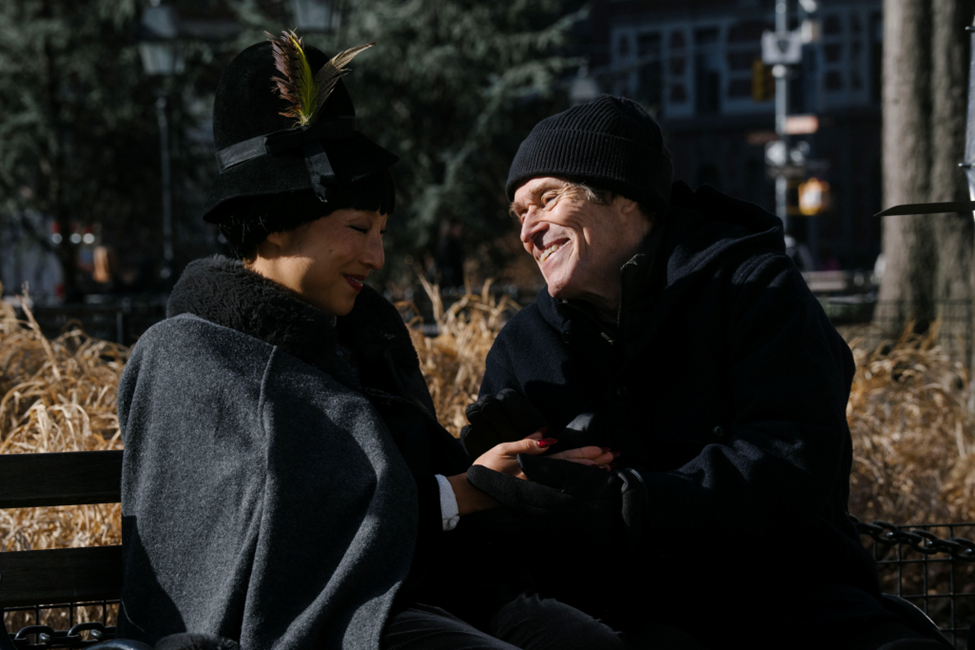
In Late Fame, Willem Dafoe leads as Ed Saxberger, a former New York poet turned postal worker who prefers peace over popularity. The character of Saxberger possesses similarities with Dafoe’s role in Julian Schnabel’s Basquiat (1996), an electrician by day/sculptor by night who enjoys his life and is in no need of public validation. Countering Dafoe is Edmund Donovan as Wilson Meyers, the leader of the self-proclaimed “Enthusiasm Society,” who crowns Saxberger an unrecognized genius for his forgotten 1979 poetry collection—Way Past Go. Meyers fawns over Saxberger as do his brethren of the Enthusiasm Society who live by a credo of rejecting technology and social media (“as much as they can”) in their daily lives. Eventually, Saxberger comes to learn that he has been selected to do a poetry reading at the group’s insistence. Simultaneously, Saxberger begins to fall for the seductive actress Gloria (Greta Lee). At first, Saxberger finds Meyers, Gloria, and their collective amusing and is honored by the prospect. But, with time, the charm wears off, and Saxberger comes to see that the society’s enthusiasm is performative, and their ideals are a facade. Whereas Diane at times had echoes of Europa ’51 (1952), Late Fame’s Enthusiasm Society reminded me of the great LCD Soundsystem song “New York, I love You But You’re Bringing Me Down” and the phony literary society of Noah Baumbach’s Mistress America (2015). Late Fame displays the New York of the past and the present as one, and sometimes it’s personal and preserved from Saxberger’s memory and other times distorted by the delusions of the Enthusiasm Society.
Overall, Late Fame maintains the spirit of its source material, but Jones and Burch have modernized the story and updated the setting from Vienna to New York City. Jones and Burch also improve upon the novella by actually including poetry in the film, whereas Saxberger’s Wanderings were previously left to the imagination. Incredibly observant of today’s ever-growing generational divide, the youth’s longing for the past, the ability to discern ulterior motives that comes with age, and the attraction of staying true to oneself over notoriety, Late Fame ranks amongst the greatest social commentaries of the decade. Jones’ latest cinematic triumph should be treated as physical evidence of his ongoing fight to preserve cinema’s integrity and a reminder of Jones’ authentic enthusiasm for cinema—the art form that has shaped his life.
Days before a series of screenings with Q&As at Lincoln Center and Film Forum, Jones kindly spoke with me via Zoom from New York.
There is a common thread for the films you have written and directed. Diane, Jimmy P., the documentaries, and now Late Fame are about grappling with the past and how it informs the present. I think everyone romanticizes elements of the past in some way. What inspires you to keep returning to the past in your films?
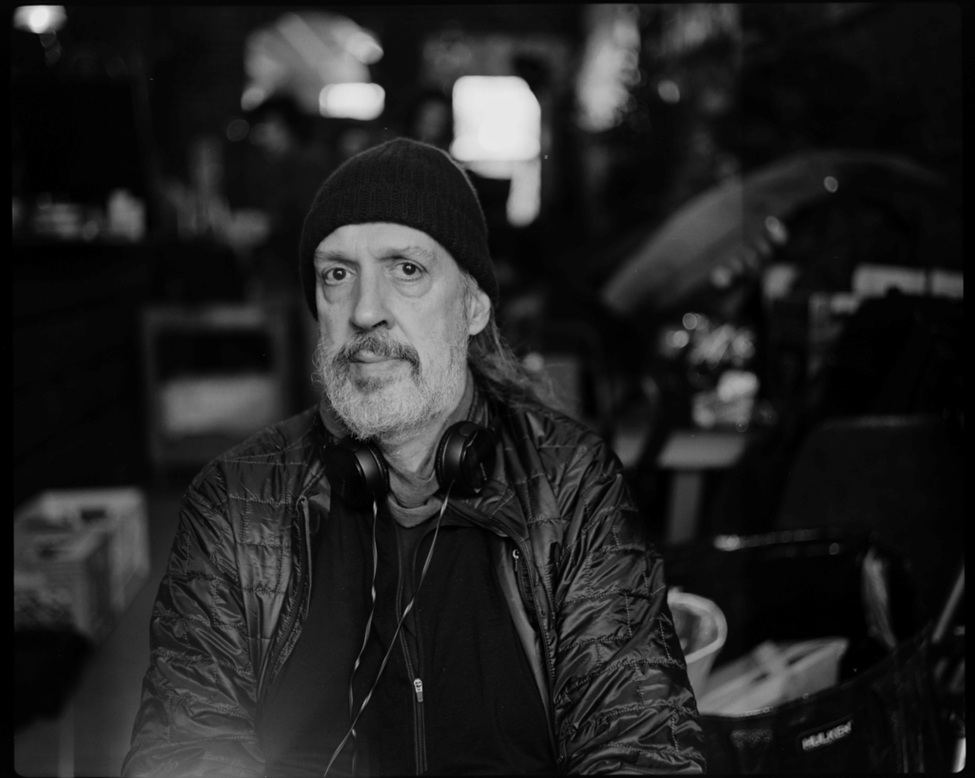
That’s really interesting. Even Jimmy P., it’s true. Well, where to start? One of the things I find really jarring or insidious or frustrating or all three combined about the last few years is the attitude towards the past among the loudest voices that people pay the most attention to. They get mixed up with reality. Obviously, I’m referring to social media. I remember years ago a friend of mine said, “It’s easy to be a profit of the past.” I suppose it’s even easier to cite the past for injustices that it wasn’t aware of. I find that the past lives in the present. Like Faulkner said, “The past is never dead. It’s not even past.” The past is so obviously true that it doesn’t even need to have an argument mounted in its favor. It’s just true. Whenever there have been attempts to return to zero, they’ve amounted to nothing. There’s a great discussion between Michel Foucault and these malists in the early ’70s. Foucault’s talking about history, and the malists keep saying, “Yes, yes, yes, but we must return to zero.” And Foucault recognizes it’s just not possible. You wind up in a situation where I’ll quote Foucault again saying, “Everyone these days knows how to deconstruct texts, but they don’t know any texts.” I don’t mean to be militant about it, but I find that there’s nothing in life where the past doesn’t inform the present, even when we’re not aware of it. Jimmy P. is completely Arnaud Desplechin’s film, and it was completely his idea to adapt that book. I just helped with that film. A Letter to Elia and Diane are very personal films. It’s interesting; they’re different senses of the past. In Late Fame, Saxberger has a very personal sense of the past. For the boys in the Enthusiasm Society, it’s a romanticized vision of the past. It’s kind of ridiculous. For Gloria, it’s something else that’s a little sadder. She has this vision of coming to New York, and it isn’t really as inviting to artists as she thought. Plus, my mother was a history teacher, so how about that.
Robert Bresson’s L’argent (1983) is an incredible film, and your book L’argent (BFI Modern Classics) details the significant differences between the film and Tolstoy’s novella, The Forged Coupon, that inspired it. However, Samy Burch’s screenplay for Late Fame is pretty similar to the spirit of Schnitzler’s novella apart from the change in setting, some of the characters’ names, terminology, etc. From your perspective, what’s the most important aspect to consider when adapting for the screen?
Well, the first answer would be the simplest, which is “does it work?” When you can take a text and update it, depending on a lot of different factors, sometimes it works and sometimes it doesn’t. Samy’s adaptation immediately worked for me. I preferred the screenplay to the novella in the sense that I found it more compassionate. The novella is certainly harsher. The guys are pretty much charlatans. The novella’s situation is great. I’ve been in that situation where I’ve gone to someone and said, “I love your work. It’s no longer recognized, and I want to champion you.” I think it’s interesting that you brought up L’argent. In the case of L’argent, Bresson took Tolstoy’s story and completely chopped off the second half of it. The second half is the redemption part, which is of course closer to Bresson’s early films, but he turned it into something closer to Dostoevsky. L’argent is curious, and it’s a great film. Samy’s a wonderful writer, and she did an amazing job. It’s an incredible thing to have adapted Schnitzler’s story and to have done it the way that she did. It was great working together. Scripts always change in the making. Different actors come and go, and you adapt. The original time frame for Saxberger’s past was originally about ten years earlier, but we changed it because of Willem’s age. I really love what Samy did with the story.
The great irony of Late Fame is that the Enthusiasm Society professes to not use technology or social media, but they do and constantly seek validation like social media users. Saxberger on the other hand, understands that writing is very isolated. Contrary to what the Enthusiasm Society believes, it’s not a social activity. You mentioned in the booklet for the new Diane Blu-ray that Substack gives you a “queasy feeling” because there’s “too much vying for attention, too many ‘predictions,’ and way too much diagnosing of whatever we happen to settle on calling ‘the culture’ at any given moment.”1 Was Late Fame inspired by your cultural observations and recent encounters that you’ve had?
What you’re describing wasn’t really that big a part of Samy’s first draft that I read. It was something that I wanted to explore. It’s obviously felt in every moment of life now, particularly in New York or any other big city. If you go on the subway on any given day, odds are you’re going to see that the majority of people are going to have their heads in their phones (myself included a lot of the time). I’m of a generation that doesn’t feel the pressure of participating in social media. Fifteen years ago, there was a moment where a friend that I worked with at Lincoln Center said, “Oh, God! What a grueling weekend. It was just an incredible Twitter storm. I don’t know what to do.” And I said, “Well, you can just drop out. How about that?” She replied, “No, I can’t do that.” I questioned why, and she told me, “You have to participate.” For me, that’s not even a question. I do when I feel like it, and I don’t when I don’t feel like it. But for her, it’s a different story. There are some people that I respect who spend a lot of time participating. For the guys in the Enthusiasm Society, it’s a group that isn’t really a group. It’s basically Meyers’ idea, and these people kind of gather together. Some of them come and go. They’re there, but they disappear and reappear. One of them has taken a vow of silence. They’re all people with means, Meyers in particular. I think that for them to take the stance about cellphones would be an expected noble response, but it isn’t really possible in the end for them. They aren’t really prepared to do that. When they say they’re a group of writers, well, what does that mean? Of course, you’re right. Writing is a solitary activity. That’s why the one person in the group who is probably going to have a future as a writer is Winn (played by Luca Padovan). But, at the end, Winn makes the mistake that a lot of young people make, thinking he can plug into Ed’s being and pull a little bit of energy out of him. It’s something that I feel very keenly among a lot of younger people, which I’m very sensitive to.
In your book, Olivier Assayas, you suggested that growing up in the ’70s “was to be continually reminded that you were too late.”2 I think that also applies today as people long for a pre-internet/social media age, and that explains why the Enthusiasm Society acts the way they do. There really is a timeless never-ending cycle of people feeling nostalgia for a time they have seen images of or read about but never actually grew up in that era. What are your thoughts on that?
Well, my first thought is that Woody Allen covered that very well in Midnight in Paris (2011). He really did.
The concept of “golden age thinking” described in Midnight in Paris is absolutely true.
It’s great when Owen Wilson is in the ’20s, talking with Marion Cotillard, and she says, “La Belle Époque would have been perfect.” Everybody always feels like they’ve missed out on something from the past, if you have the consciousness of it in the first place. I don’t think it’s a bad thing to romanticize the past as long as you keep paying attention to it. The more you do pay attention to it, you grapple with it and engage with it in a different way. People see the past through a particular lens, and it appears to be scrubbed of the difficulties they encountered in their own age. It must be kind of weird to have so much rhetoric thrown around now that decontextualizes so automatically, but I’m not sure if that’s as true now as it was let’s say three years ago. I remember listening to an interview with Mel Brooks a few years ago and someone said, “Do you regret making Blazing Saddles (1974),” and he said, “No” [laughs]. I know what they meant, and what they meant was that he made a film with a forbidden word, but the forbidden word is a part of the film because it’s a film about racism. The idea is to unmoor it from the context, so that you’re afraid that uttering the word is going to have people parodying it. It’s a very odd preoccupation, and I think it has the opposite effect of what it’s meant to have, which is that, in general, it gets people feeling cornered. It’s a whole language thing.
I think people probably see freedom in the past, and they also see romance in the past. When I was young, films from the ’30s and ’40s were bountiful on television. I certainly loved watching those movies and thinking about that era. Of course, the more that you learn about the ’30s, the more you understand the tragedy of the depression. The more that you understand about any time from the past, the more you understand that reality is always complicated and impossible to put together. You can only do it in retrospect, and you always have to look more and more closely.
Everybody always feels like they’ve missed out on something from the past, if you have the consciousness of it in the first place. I don’t think it’s a bad thing to romanticize the past as long as you keep paying attention to it. The more you do pay attention to it, you grapple with it and engage with it in a different way.”
You previously quoted Brian Eno, recognizing to be in the moment and “trust in the you of now.”3 I was reminded of this quote because of its relevance to Late Fame’s themes and you use music by Mars from Brian Eno’s No Wave curated album—No New York. As Saxberger grows suspicious of Gloria, the use of Lou Reed’s “Charley’s Girl” is also fitting. One of my favorite aspects of your writing is that you see the synergies of music and film and make references to Jimi Hendrix4, Neil Young5, Lou Reed & John Cale6, etc. When I spoke with Assayas about Suspended Time (2024), he said, “Rock, in one way or another, is the poetry of our times.”7 Would you agree with that?
Sort of. I mean Olivier and I are very close friends. We talk about music a lot. When we get together, among other things, it comes up a lot. However, I’m not sure if I see eye to eye with him on that front. I remember when Bob Dylan won the Nobel Prize, I had a friend who was outraged. I said, “Well, let’s remember the troubadours, and a lot of poetry was written to be sung.” He said, “Yes, yes, yes, I know.” Well, put that in your pipe and smoke it [laughs]. But, that’s Bob Dylan. I think that poetry is poetry. If you’re going to write poetry, you need a pencil and a piece of paper. The whole debate of worrying about whether cinema is an art that Francis Ford Coppola brought up, where the tools have to become as cheap as paints and canvases, that’s never been a worry with poetry. There are a lot of different schools of poetry, and there’s a lot of great poetry that’s written that is not popular. That’s the nature of poetry, and a lot of poetry that becomes popular is often not that great. The poets that you see in the opening credits, Bernadette Mayer, Lewis Warsh, Ted Berrigan, and Anne Waldman, are great. The film is dedicated to my friend Peter Gizzi. He’s a great poet and so are the poets whose voices are heard, but they never made a living off of their poetry. To say that rock music is our modern poetry is a little too much of a generalization for me, personally. I suppose it’s not a generalization if we’re talking about Lou Reed, who has his own poetic tradition, but rock is its own entity, and it stands on its own.
Lou Reed and Bob Dylan are great songwriters/poets, but there are also plenty of rock and rollers who are not poetic. Like everything else, I suppose it’s case by case. On the topic, I’d also like to give a shoutout to your use of Bob Dylan’s “Tonight I’ll Be Staying Here with You” in Diane. To transition, I’d like to ask you about Martin Scorsese who is an executive producer for Late Fame, just as he was for Diane, and you’ve worked with him on several projects together.
I’m in a back room in his office right now.
Wow, my case in point! A Letter to Elia, which you co-wrote/co-directed with Scorsese remains one of the most passionate cinematic statements. When Scorsese concludes the film saying, “The only way I could tell you how much you [Elia Kazan] meant to me was by making movies,” I assume that you felt similarly about Scorsese when you started making films of your own. Can you speak about your relationship with Scorsese and how it informed your films?
I wouldn’t know where to start, and I wouldn’t know where to end. It’s a little too personal and emotional for me. Let’s just say the answer is that the general thrust of your question is absolutely correct. He’s always believed in me making films. It’s always been important for me to come to it in a particular path. When I made Diane, I consciously did it without going to Marty first and asking him to help. I wanted to be able to do it as a way of showing him, “Here, now I’m making films.” It’s a very emotional topic. We’ve known each other at this point for thirty-five years. We’ve worked very closely in a lot of different ways. He’s the godfather of my daughter and my sons who are Roman Catholics. There’s just so much. He and I share a lot. We share a lot of preoccupations and interests. That begins, for obvious reasons, with cinema. I’ll leave it at that.
There’s an image in Late Fame’s opening montage that resembles Jean-Luc Godard’s Breathless (1960). My assumption as to why you included it is because much of the cinema of the present is owed to Breathless, and Late Fame is about the relationship between the past and present. Were you consciously thinking about this?
Well, I could answer in two ways. In one sense, yes, of course, but in no way, was I thinking consciously because Godard is just present in cinema in a way that very few filmmakers are. On the other hand, that moment had its own energy. To quote Brian Eno again, he was recording an album that was never released and the tracks were lost, but he said he rediscovered his “idiot energy” that he had found when he was making Here Come the Warm Jets and Taking Tiger Mountain (By Strategy). In one way or another, everything that’s in that montage comes out of the moment. There’s the poets, there’s the Richard Foreman video, the city archives, and the shots from those movies. It had to be of that moment and had to come out of that moment. It’s like Manny Farber said, “Every movie carries the DNA of its time.” Well, so does every artwork and every poetry reading. Don Fleming perfectly understood what I wanted for the score. It’s a different kind of New York and a different kind of New York sound in Late Fame, but I still wanted a New York sound. Don might live in New Jersey now, but he’s a New York guy. That was the intent.
Before you go, I see you have a Lost in America (1985) poster behind you. When that film came out, I went to see it a couple of times. I thought it was very funny, but I noticed there was something weird in a reel change. There was some kind of scratch or something like that. I was over at my friend Paul Slansky’s house, and he was getting phone calls from his good friend Albert Brooks every ten minutes. I told Paul that there was a weirdness to the movie when I saw it, and he said, “Here, talk to Albert. Tell him about it.” I said, “I don’t know. Hi, I really loved the movie. It’s a very small thing.” And Albert said, [Jones does an Albert Brooks impression] “You know, it’s… it’s… it’s unbelievable what happens! You make movies, and it costs so much money. You have so much preparation. Stanley Kubrick spends five years lighting a movie by candlelight, and then, someone gets chewing gum on the negative [laughs]!” So, it was like this mini comic monologue that I got to hear, and then, he said, “Well, goodbye! Thank you.” It was very funny.
[Laughs] Thank you for sharing that. I suppose that’s a great example of why we love the past.
Notes
- Jones, Kent. “Q&A w/ Kent Jones conducted by Craig Keller, November 2025.” The Film Desk, 2026. pp. 22.
- Jones, Kent. Olivier Assayas. FilmmuseumSynemaPublikationen, 2012. pp. 89.
- Jones, Kent. Olivier Assayas. FilmmuseumSynemaPublikationen, 2012. pp. 52.
- Jones, Kent. Physical Evidence: Selected Film Criticsm. Wesleyan University Press, 2007. pp. 61.
- Jones, Kent. Physical Evidence: Selected Film Criticsm. Wesleyan University Press, 2007. pp. 69.
- Jones, Kent. Olivier Assayas. FilmmuseumSynemaPublikationen, 2012. pp. 180.
- Monovich, Jonathan. “Cinema as Memory: Olivier Assayas on Suspended Time.” Film International, 2025. https://filmint.nu/olivier-assayas-interview-suspended-time-jonathan-monovich/.
Late Fame is now exclusively in theaters via Magnolia Pictures.
Jonathan Monovich is a Chicago-based writer and regular contributor for Film International. His writing has also been featured in Film Matters, Bright Lights Film Journal, and PopMatters.