

A Book Review by Ali Moosavi.
Cannot be classified as, nor does it claim to be, a biography of Alfred Hitchcock [but] Hitchcock: The Man, The Myths, The Legacy is essential reading to obtain a balanced view of this iconic director.”
Alfred Hitchcok and Stanley Kubrick are perhaps the two directors about whom most books on filmmakers have been written. Hitchcock was perhaps the first filmmaker that people went to see a movie because of the director’s name on the poster. His cameos in his movies and his appearances on his TV shows made him the most recognizable director in the history of cinema (Chaplin’s recognition was chiefly as an actor not a director). Though the most referenced and studied book on Hitchcock remains Hitchcock/Truffaut which contains an extended conversation and discussion between the two filmmakers, the one which caused most controversy, and which no doubt pushed its sales, is Donald Spotto’s The Dark Side of Genius (1983), published after Hitchcock’s death. Spoto had interviewed Hitchcock extensively and first published The Art of Alfred Hitchcock, published when Hitch was alive and met his approval. However, in Dark Side of Genius and later in Spellbound by Beauty (2008) Spoto presented Hitchcock as a monster, preying on his hapless actors and, in particular, actresses.
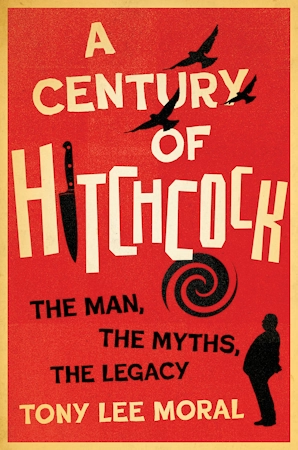
Tony Lee Moral’s new book, A Century of Hitchcock The Man, The Myths, The Legacy (University Press of Kentucky), aims to put things right by joining the debate started by Patrick McGilligan’s comprehensive 2003 biography, Alfred Hitchcock: A Life in Darkness and Light. In his introduction Moral describes Spoto as “a rejected biographer intent on crafting a sensationalized narrative that distorted the truth for dramatic effect” and adds that A Century of Hitchcock “challenges the accusations that emerged in Spoto’s biography and the more extreme accounts that later appeared in Spellbound by Beauty and have been perpetuated by the media.”
Moral’s book, together with Spoto’s books set the scene for a courtroom drama. In Spoto’s books he assembled everything negative that he could find about Alfred Hitchcock and compiled them in two books. With Hitchcock no more around to put his side of the story, it was an easy case for prosecutor Spoto to win. Now we have Moral prosecuting Spoto and defending Hitchcock. He has gathered mostly positively glowing remarks from various people, some close to Hitchcock and some who had very minor roles in Hitch’s life and career. Now with Spoto no longer alive, Moral has a relatively easy task to find Spoto guilty of all charges. I say “relatively” because one of the most important witnesses, who arguably did most damage to Hitchcock’s reputation, Tippi Hedren, is still alive. She has appeared in interviews, documentaries, and talked to writers, anyone interested and repeated her allegations of Hitchcock’s mistreatment and sexual harassment towards her. Furthermore, in her memoirs, Tippi: A Memoir, published in 2016, she detailed sexual advances by Hitchcock towards her, including an occasion when Hitchcock “suddenly grabbed me and put his hands on me. It was sexual, it was perverse, and it was ugly, and I couldn’t have been more shocked and more repulsed.” Moral does refer to this passage but argues that in 1980 she did not report such an incident to Spoto. Then Moral adds the rather ageist remark; “what are we to believe: fifty-year-old Hedren’s account in 1980, or the 2016 version of an eighty-six-year-old woman?”
We’ll get to more of Moral’s views on Hedren later. He has attempted to be fairer and impartial than Spoto by also including a few of the reported indiscretions by Hitchcock in among the countless tributes he has assembled. Sometimes the disclosures appear contradictory. Grace Kelly’s hair stylist tells Moral that she never heard her say a bad word about Hitchcock, but then adds, “except she said that Hitch was ‘a little perverted’.”
Take this incident with Brigitte Auber (the ‘thief’ in 1955’s To Catch a Thief): In Spellbound by Beauty, Donald Spoto writes that Auber told him about an incident which took place in her car in Paris whereHitchcock bent over and attempted to kiss her “full on the mouth”. But when she protested and refused, Hitchcock“appeared mortified by the incident”. Moral while not refuting the incident, asserts thar Auber was not offended by Hitch’s attempted kiss and quotes Auber as “I politely refused and we resumed our bursts of laughter.” And adds this strange observation by Auber: “Any man in his position would also have wanted to kiss me!”
Moral has tried to explain some of the widely reported misbehaviour by Hitchcock by psychoanalytical and cultural-sociopolitical accepted behaviour of men in his era, as well as Hitchcock’s directorial methods which included putting some of the less able actors under inordinate pressure to get his desired performance out of them. To this list we can also add Hitch’s penchant for practical jokes, which Moral argues may have been misinterpreted as vile and misogynist. An example is Madeleine Carroll’s carriage scene in The 39 Steps (1935), with Hitchcock sitting opposite her. Both Spoto and Moral agree on the fact that Hitchcock unzips his fly. Spoto asserts that Hitch did this to expose himself while Moral maintains that it was a practical joke where Hitchcock pulls out the end of his shirt and says,“Two dollars from Woolworths!”
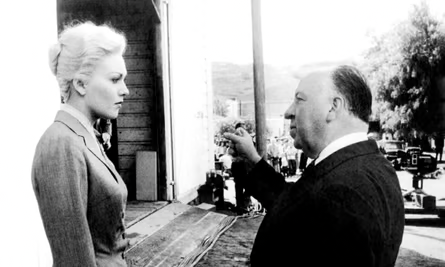
Another actress referenced by both Spoto and Moral is Doris Day. According to Spoto, Doris Day told him that during the making of The Man Who Knew Too Much (1956), ‘Not once did Hitchcock say a word to me that indicated he was a director and I was an actress’. Moral argues that this was part of Hitchcock’s directing methods “because he wanted her to be frightened all the time and cry. He was as smart as hell to get all these women to react.”He adds that in a 2012 interview Doris Day had only complimentary things to say about Hitchcock.
Regarding another Hitchcock blonde, Kim Novak, Spoto wrote that Hitchcock took perverse delight in making Novak repeatedly jump into the studio tank representing San Francisco Bay. Moral states that Novak has denied this, claiming it was filmed only once and that she never witnessed Hitch acting improperly. Moral also adds that at the 2013 Cannes Film Festival Novak said, “I want to say in defence of a man who’s no longer alive and here to defend himself, the Alfred Hitchcock I knew was a good man, a professional man, a good director and a good person.”
Moral also quotes the esteemed film critic Geoff Andrews (sic), who interviewed Patricia Hitchcock and James Stewart upon the rerelease of Rear Window (1954). Pat Hitchcock told him that many of Spoto’s stories were exaggerated. James Stewart told Andrew he did not recognize the man portrayed in Spoto’s book.
This continuous He Said – She Said tone of the book does become a bit monotonous and after a few dozen glowing testimonies we get the message and would like to find out new facts regarding Hitchcock’s directing methods, his interaction with the technical crew, his preparations, etc. There are however some interesting titbits included in the book. Here are a few examples (according to Moral):
- Hitchcock was very strict on rhythm and tempo, and he worked with a metronome on some scenes, such as the chase up the bell tower in Vertigo (1958).
- While filming North by Northwest, Hitchcock offered its screenwriter Ernest Lehman to write his next planned film, No Bail for the Judge. But when Lehman found out that Audrey Hepburn was going to play a prostitute, he declined.
- Every actress in Hollywood seemed to want the role of Marnie. Elizabeth Taylor called Hitchcock and demanded an audition. Lee Remick, Susan Hampshire, and Elizabeth Montgomery were all proposed but turned down.
- Rock Hudson and Peter Finch were offered Sean Connery’s part in Marnie (1964), which they turned down.
Moral has assembled many testimonials in praise of Hitch’s directing methods. Director Ronal Neame (The Prime of Miss Jean Brodie, The Poseidon Adventure), who was a camera assistant on Blackmail (1929): “Hitchcock used sound in a way that I thought was brilliant”. Gregory Peck (Spellbound / The Paradine Case): “Hitchcock’s minimal direction and discussions about the psychology of the character allowed the actor to inhabit his character’s trauma organically.”
Undoubtedly Hitchcock influenced many directors. Moral cites specific examples of their films and the Hitchcock movies that influenced them. Examples include Wong Kar-Wai’s In the Mood for Love (2000) / Notorious (1946), Christopher Nolan’s Inception (2010) / Spellbound (1945), Bong Joon-ho’s Parasite (2019) / Rebecca (1940), and Guillermo del Toro’s Crimson Peak (2015) / Rebecca. Other directors which Moral names as being influenced by Hitchcock include Ingmar Bergman, Rainer Werner Fassbinder, Park Chan-wook, Michael Haneke, Lynne Ramsay and Kathryn Bigelow.
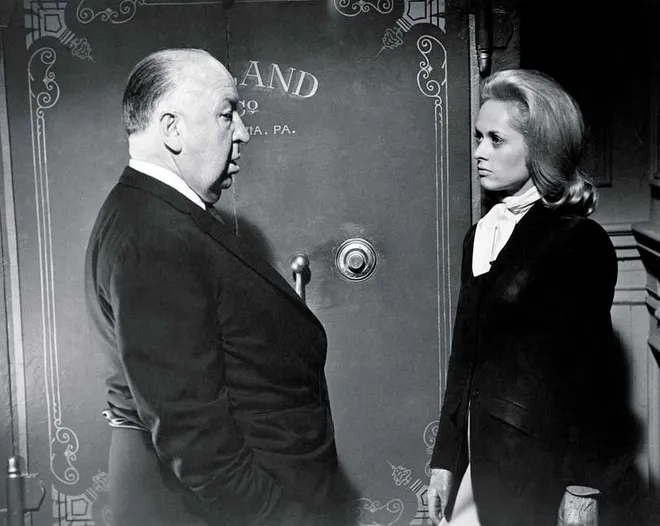
As expected, a significant section of Moral’s book deals with accusations made against Hitchcock by Tippi Hedren and the movies she made with him: The Birds (1963) and Marnie. Moral alleges that Hitchcock had a “Pygmalion complex” with the director wanting to make Hedren a great movie star. Moral also attributes some of Hitchcock’s behaviour on the set of The Birds to the jealously he felt when Hedren and Rod Taylor developed a very friendly relationship. Taylor confirms this in the book by stating that after Hitch would say cut at the end of a shot, he would also shout; do not touch! Furthermore, he would not let Taylor and Hedren ride in the same car.
Hedren has continuously stated that Hitchcock tortured her by using birds to attack her both physically and psychologically in the attic scene, causing her both physical pain and stress. A Hitchcock assistant offers the rather feeble explanation that Hitch and his crew didn’t tell Hedren that real birds would be used because “they didn’t want to alarm her!”
Moral states that Hedren has offered variable descriptions of what happened in the attic scene over the years and offers an equally questionable explanation that these shifting accounts of what happened “reflect the complex interplay of memory and public discourse and highlight the challenges of reconstructing historical events, where personal memory and collective myth often intersect.”. According to a couple of the crew members that he has interviewed, meticulous safety protocols were in place during filming. If Hitchcock did use real birds without informing Hedren, causing her injury and lasting psychological damage, then Moral’s assertion that “the attic scene exemplifies Hitchcock’s commitment to visceral realism” appears totally unjustified. Of course, one may ask why instead of raising these concerns, Hedren went on to make another film with Hitchcock. One explanation could be that she has just started her career and was under contract. Another explanation offered by Moral, which would get totally blasted if offered to justify similar behaviour today, is that Hitchcock’s behaviour must be viewed in the context of the time, “Hollywood in the 1960s was notorious for its exploitation of actresses, with male executives wielding tremendous power over their female stars”. Further adding that Hitch’s behaviour and directing methods, though admittedly “harsh”, were “driven by artistic perfectionism rather than personal malice”.
Hedren was not the only actress disclosing to Spoto about Hitchcock’s sexual harassment during the making of Marnie. Hedren’s co-star, Diane Baker told Spoto that Hitchcock once entered her dressing room unannounced and kissed her firmly on the lips. Moral writes that Baker has told the same story to him. The explanations offered by Moral that Hitchcock “may have been affected by alcohol, as he was known to drink wine at lunch” or a “psychological manipulation aimed at achieving a better performance” are feeble at best and border on ridiculous and insulting.
I feel that Moral had gathered sufficient evidence to refute some of Spoto’s more outlandish conclusions, but by trying to whitewash some of the well documented misbehaviour by Hitch, he has damaged his more concrete findings.
The part of the book that I found rather strange is when Moral’s attention shifts to Donald Spoto and he tries to explain some of Spoto’s sensationalist claims in his biographies on his upbringing, religion and personal character. Moral writes about Spoto’s “difficult childhood” partly caused by a domineering mother and tension and psychological problems fuelled by his parents’ divorce. Though initially Hitchcock was receptive to Spoto and granted him interviews, he reportedly got bored with him and turned down his future requests or, as Moral informs us, Hitch pretended to be sleep whenever Spoto surfaced! Therefore, Moral deduces, for Spoto, Hitchcock’s rejection was “a catastrophic disappointment” which then turned him against the man that he once idolised.
Moral speculates that once Spoto became a successful biographer, he would act in ways that he had accused Hitchcock of, “dropping colleagues, demanding loyalty, harassing coworkers with sexual innuendoes and prying into their personal lives”. He adds that Spoto’s assessment of Hitchcock was based on his own religious views and damaged his credibility as a biographer.
An interesting hypothesis by Moral is that the #MeToo movement is responsible for unseating Hitchcock’s Vertigo from its position as the greatest film of all time in the 2012 Sight & Sound poll by Chantal Akerman’s Jeanne Dielman, 23 quai du Commerce, 1080 Bruxelles (1975) in the 2022 poll and adds that one prominent filmmaker reportedly refused to vote for Vertigo in the 2022 poll, citing Hitchcock’s alleged predatory behaviour towards women as the reason.
Moral’s book cannot be classified as, nor does it claim to be, a biography of Alfred Hitchcock. However, if anyone’s biographical knowledge of Alfred Hitchcock is limited to those in Donald Spoto’s The Dark Side of Genius and Spellbound by Beauty, then Hitchcock: The Man, The Myths, The Legacy is essential reading to obtain a more balanced view of this iconic director.
More Recent Books on Hitch:
The Secret Hitchcock: How Hollywood’s Legendary Director Lived through Cary Grant and James Stewart by Nat Segaloff (available 27 October 2026 from University Press of Kentucky)
Birds, Strangers and Psychos: New Stories Inspired by Alfred Hitchcock, edited by Maxim Jakubowski (Penguin Random House)
Ali Moosavi has worked in documentary television and has written for Film Magazine (Iran), Cine-Eye (London), and Film International (Sweden).