

By James Slaymaker.
It’s a film designed to make you feel something, even if you don’t understand it. Again, it’s like looking at nature…. You may not understand why it makes you want to cry. There’s just a universal experience.”
—Julia Weisberg Cortés
One of the standout short films at this year’s Tribeca Film Festival, Julia Weisberg Cortés’s Boyfighter is a haunting meditation on masculinity, fatherhood, and the cycles of violence that echo across generations. In the film, Michael Mando plays Diego, a single father who is forced to turn to bare-knuckle street fighting to support his young son. Although Diego is a reluctant fighter, his agility in the field draws the admiration of his son, who aspires to follow in his father’s footsteps. The film delicately interweaves fragments from different periods in Diego’s life, alternating between images of Diego raising his son to the older father reckoning with the long-term effects that his fighting career has had on the family.
Despite its subject matter, Boyfighter avoids glamourising violence; the fighting is primarily kept off-screen, and when it does appear, it is presented in brief snatches of sound and image, as though reverberations of a traumatic past which momentarily surface in Diego’s psyche. Instead of sensationalising the street fighting scene or mining it for cheap tension, Cortés constructs a highly evocative work of lyrical impressionism, lavishing attention on textures, gestures, and details to build a story that is highly personal while also holding deep political resonance. Having already honed her craft through five remarkable shorts, Cortés has proven herself a master storyteller, and her forthcoming leap into feature filmmaking is eagerly anticipated. I was fortunate enough to speak with Cortés over Zoom about Boyfighter, the challenges and opportunities of the short film format, and how to stay optimistic when faced with creative setbacks.
First of all, would you mind talking about how the initial idea for Boyfighter originated? I was intrigued by the fact that the film is dedicated to your two brothers. Was the film rooted in personal experience, or experiences that have happened to those close to you?

Boyfighter is definitely inspired by my personal relationships and family stories, particularly revolving around the the men in my family. I’m the youngest sibling, and I have two brothers – Richie and Gregg. My middle brother Richie passed away in 2023, and he died the same way that many men in my family have died. Which has been this inherited, generational way of life. So I wanted to make a film. I was obviously very deep in my grief, and I wanted to make a film that was unafraid to look directly at the tragedy of it. Obviously Boyfighter is a tragic film. And I think the point of the film is that it’s really not afraid to take its time and let the audience sit with the tragedy that’s unfolding. I wanted to make a film that honoured the tragedy of my brother’s circumstance, and his life, and also the other men in my family’s life, but at the heart of it is this love, that seems to persevere and stay and continues their legacy, if that makes sense. But at the same time, but at the heart of it is this love, that seems to persevere and stay and continues their legacy, if that makes sense.
So much of this film seems, to me, to be about the corrosive effects of hyper-masculinity, and how this is passed on through generations. Not just directly, from father to son, but also culturally. I’m thinking, for example, about the story the father tells his son at the beginning of the film, about the ‘great invincible warrior’ who lived by the river. Is this an original story, or a story you’ve heard? And why did you decide to open the film with this?
Well, the story itself is a story my grandfather used to tell us, and I think the film definitely deals with the themes of resilience and invincibility. My brother and my grandfather, my uncle, my great grandfather, all these men who died the same way, I think they all lived their lives thinking they were invincible, unbeatable. And when my brother died, in a way, when you’re around someone who feels they’re invincible, that kind of rubs off. And, in a sense, I thought he was invincible too. Obviously, I knew my brother was living a lifestyle that was very dangerous, but I never though that death would actually find him, because he emulates this invincibility, this strength. And when death does find them, it forces you to grapple with the question: what does it mean to be invincible? In many ways, I was forced to ask myself a lot of hard questions about my brother, and I think that, for me, it’s a kind of making peace with, I know that in death it’s very complicated, and there’s a lot of different interconnections here. What I’m trying to say is that in death we are invincible, and we, kind of, continue on. And I think what this story was trying to say was that this warrior, he died and it was exactly how he was meant to die, and he continued on, and he offered his bones, and it became part of the fabric of the universe. It’s just a message of hope and resilience, and continuing on, even in hardship. I hope that makes sense. It was also just a nice story that was told to me as a child.
And it seems to there’s a strong strand of socio-political critique in the film, as well. The only lucrative work the father can find is fighting, although he clearly has mixed feelings about doing it. And yet his son clearly thinks that being a successful fighter is something to be proud of, something to aspire to. I was struck by the line the father says to his son at one point – ““I fight so you don’t have to. I want you to use your brains, not your fists”.
Yeah, it’s definitely a film that touches on the social lack of opportunity. We so desperately want our kids to have a better life than us, to do different things than us, but when you have a lack of opportunity and a lack of access, it’s inevitable. You can only protect your kids from so much. And that’s what happened to my brother, and my uncle, and my grandfather, and so on. But it is interesting, because the actual fight scene, when they’re in the plastic room, and they have these cameras- The fighting in Boyfighter is really metaphoric to me. It really represents the middle to lower classes fighting every day to survive, you know, literally just doing everything they can to survive. And then we have the top 1%, who are a faceless population, many of us have never even interacted with these people, and they watch our suffering, and, in many cases, actually get off on our suffering, whether it’s through tax cuts, or corruption, or things like that. The top 1% want us to suffer because it puts money in their pockets. So, it’s very metaphoric, and it’s interesting, because the surface-level story is that there’s a fighter who goes there, and it’s implied that the people who can afford it watch it through these cameras, but it really is to me a commentary on politics and the class clashes, and things like that. But no matter how hard this father wanted to give his son something else, he’s coming home every day with bruises on his face, and he can’t protect his son from the world he’s involved in. and the lifestyle of my family, the men of my family, some of them did questionable things, or straight up wrong things. But these are still the men putting food on our table, these are the men who we love, so what do we do? We glorify the lifestyle. We glorify these men who do anything possible to make sure that we’re fed and taken care of. So, yeah, I think that’s what the film is about.
Yeah, absolutely. And I think there’s definitely a sense in capitalist culture, that there’s a sense of nobility in anybody who goes out to work, who performs, particularly, physical manual labour. And that, would you say, is a way for the politicians at the top, the ones who create the unjust system, trying to make those exploited by the system feel good about their own exploitation?

Yeah. And I think if Boyfighter were a feature film, it would be able to explore all those things. Because if you’re a fighter, it’s definitely associated with things like strength, like you’re a powerhouse, unbeatable. Especially in the more masculine framework. Men want to be strong and they want to be the best fighters. So that’s definitely part of it. But it’s a short film, so we weren’t really able to delve that deep into it.
I think you managed to touch on these issues in a lot of depth, very succinctly. I think it’s very concise, but you point at a much larger picture, sociologically and in terms of the family relationships. Which was one of the elements I thought was so successful about the film.
Thank you. I think ultimately the film really is a father-son story, and how all these different themes and the things that are happening, they have an impact not just the individual, but entire generations. I mean, it’s impossible, I’m speaking specifically about the USA, but I’m sure elsewhere there’s a complicated history, as well. But in the United States, we are so deeply connected to our roots, our ancestry, where we come from. Because what happens to somebody two generations ago absolutely can affect me. And, again, it’s a short so we can’t really dive that deep into it, but it really is a film that is meant to talk about how these issues do not just effect the individual but entire generations. And that’s the big scope of it. But it is a short film, and the more intimate story really is the story of my brother, and my relationship with him, even though I’m not a man.
Yeah, I think the short film does a great job of filtering the political through the personal, and the macro through the micro. So just to shift gears a bit, I found the tone of the film very interesting. It’s a film about illicit fighting circles, violence and hyper-masculinity, yet the tone felt very gentle. I’m thinking about all the calming shots of the natural elements, and the rhythm of the lead character’s narration. Was that a conscious choice?
Yeah, absolutely. Again, because it is a short film, we didn’t have a lot of time to go into all the different layers of the story, but as I said at the beginning of our conversation, the film was meant to be unafraid to stare at the violence and the tragedy, but at the centre is this love and the endurance of love. And because we didn’t have much time to explore literal scenes of love and connection, I wanted to make sure that we explored the themes of love and connection through visuals. And so we created a film where you could feel it, even if it’s not being said or directly shown. And I feel connected with landscapes and nature, and I think that most of us, we go out and we feel the wind move through us, or we look at a beautiful river, and you’ve lost someone, you can’t help but – your mind goes to these people, and that’s the power of nature.
So, when I sat down with my cinematographer, I said, you know, one way we can capture the endurance of love, and that gentleness and that connection, is through leaning into nature and capturing the memory of ourselves in places like nature with our loved ones. Sometimes it’s not in nature, sometimes it’s in a house or a city. But specifically with me and my brother, we spent so much time by the water, by trees, in nature. So capturing those memories, even if, again, we’re not seeing the two characters directly in the frame, there’s a memory there. I think that’s a universal thing. You know, when we’re standing in front of a giant oak tree, even if you come through a land with no oak trees, there’s something that moves through us when we’re in nature. So that was a big element that we wanted to explore visually.
I wanted it to be a stark contrast, and it is brought back in at the end. I know this is a spoiler. But when he goes back and he sees his son, I wanted, when he goes into that room, you hear the sounds of nature, they follow him. And we needed to spend the first half of the film, even if it’s subconsciously, defining what these sounds mean to these characters, so that when they’re brought in at the end, the people know exactly what it represents, in this moment.
It’s a very tactile film, too. The first image we see of father and son together is just their hands, with the father passing on the rock to the son. And, then, later on, there’s a real sense of tactility with the images of physical violence. There’s a real emphasis on touch and physical sensation.
That’s a really nice observation. I think if you’re familiar with any of my work, you’ll notice that I have a certain love for hands. Maybe it’s because, you know, we have our eyes, but for me touch is a huge part of the experience of life. The way things feel. I feel that I’m much better at remembering something through touch versus sight, scent, or even hearing. There are moments where, for example, in the opening scene you see the boy’s hand reaching out for the leaves, and then there’s a hard cut to the father’s hand, which is covered in bruises. It’s meant to show that legacy or passage of trauma. And the same thing with the rock. We see it directly pass from him to his son, and, again, at the end, when we see him lift up that blue cover, when he sees his son’s hand, now looking how his hands looked in the opening of the film, where they’re now covered in deep gashes. So, there’s definitely a lot of themes being passed on through hands.
I was struck as well by the film’s use of impressionistic editing. The way you oscillate between past and present, and fragmented images are interweaved through associative logic. How much of that was in the writing stage and how much was sculpted in editing?
Well, I think the film was largely found in the edit. Especially because we had a major setback the night before shooting, where we basically had to toss out all our shot list and much of the work we’d done for the film. So, a lot of the film is actually improvised. And so, we really had to lean into B-roll, and just the characters existing in these places. My poor script supervisor, was like, ‘What scene is this? What are we doing’, and I’m like, the script basically doesn’t matter anymore. We are literally just putting our characters out in the elements.
We had some of the lines—like, for example, in the scene where he’s telling his son the story, the opening scene, where he’s telling him about the warrior, that was supposed to be a bedtime story, to be told in a bed. But we could no longer shoot in a house with a bed. So, we had to make it feel not super cheesy and inauthentic, out in nature and outside. So, we had to definitely find that language in the edit. How I like to work in the editing is I like to edit as much of the film as possible myself, I like to edit it myself. I like to play around with the scene structure, and loop the footage, and then I usually pass it on to my editor and, based off the style I’m going for, they then build off of that. I have an incredible editor and he’s able to make magic. It was a very hard process, though, because we didn’t have a script to follow, a lot of things were disorganised, because the script supervisor didn’t know what things to label. It was a very complicated film to edit, but it’s interesting because it ended up lending itself to the style of film anyway.
I’m really surprised to hear you had that many setbacks before shooting, because it feels so cohesive to me.
I think it’s because—so this is the second film I’ve made with the same cinematographer, and I feel that it worked very similarly. We don’t have a very strict shot list, and we don’t plan our setups down to the T. we’re very much improv filmmakers. We like to improvise. We don’t like to feel glued to plans. When we go into a space, of course we have an idea of what we want, but we want to give as much autonomy to the actors as possible, to be able to move around. So, our lighting setups are never really constricting. We like to light for a world that allows our characters to stand, to move around. So, I think that because that’s how we work, when we all of a sudden lost our locations, and we were all of a sudden like, ‘well I guess we’re gonna have to improvise’, we are doing that either way. So, we were able to really lean into that. Again, if you’ve seen any of my previous work, you’ll understand there’s definitely a throughline of my love of nature and similar language. So, no matter what, even if all hell goes—if you just lean into your strengths as a filmmaker, and you hire very good people, you still have everything you need to make a great film. Even if the shot list and the script goes into the garbage.
So would you go so far as to describe it as a liberating feeling? The fact that you had to essentially start from scratch?
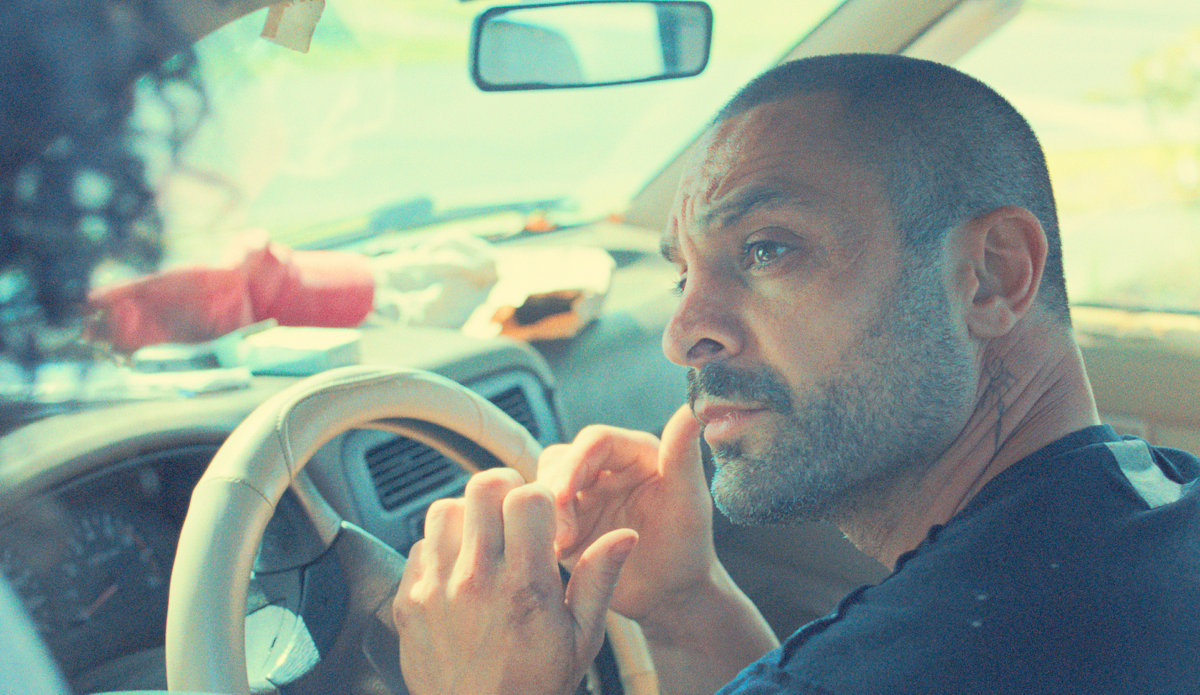
Not in the moment, no. In the moment, it was obviously devastating, because probably the most important part of my process as a director is locations. Finding those locations, for me, I don’t know what kind of film we’re making until we know where we’re shooting. Because so much about a film is explored through a setting and the textures of a setting. I knew I wanted to film this in Louisiana, because Louisiana is such a magical, textured place. The landscape is seeping with history and story and resilience. So, I knew I wanted to film it in Louisiana. I went down to Louisiana, I found my locations, and then, the night before, I was told, ‘You’re gonna have to shoot everything in a parking lot basically. We can’t get you these locations anymore’. I was like, we went all the way to Louisiana to shoot in a parking lot? That’s crazy. So, in the moment, it was very scary and disheartening. But, at the end of the day, we were able to make it work. That’s why half the film is literally just him sitting in the car. That was not how it was supposed to be. He was supposed to be in his house. But in a way, it’s interesting, because people have told me that the presence of him being stuck in his car is reflective of where he is as a character. He’s stunned by his grief and he’s trapped by it. So it worked out in the end. We just have to trust our films. And it might seem like it’s going wrong, but that’s because films have their own little souls, and they’re like, ‘Hey, this is actually how it’s meant to be’.
Yeah, just trust in the process.
Yes, exactly. Though it doesn’t mean it’s not scary when it’s happening. Especially working with Michael Mando, who is a very well known actor, because of Better Call Saul, he’s a pro. So, I want him to be having a good time. I want to make sure that he has everything he needs to be giving his best performance. And so then to go to him and say, ‘Yeah, everything we rehearsed or talked about is out the window, so now we have to find a way to make it work in a parking lot’.
So did you originally envision the film to be so narration-heavy? Or did you plan for dialogue which you then could not film?
I don’t think of it as a narration-heavy film. There’s the opening, with the story, but… Well, the film is built around memories, and it’s built around the complexity of time. I think people watch the film and they get frustrated, because they think, ‘Is this the present or the past, or what’s going on?’ But, for me, I really wanted to think of time like a circle. Because it’s a cycle. The film is about cycles. Because while he’s grieving, he’s still living with his son. Obviously, he’s lost his son, but he’s also still living with him. Time need doesn’t necessarily fit into this linear construct; I know I wanted it to feel as though these two timelines were happening at the same time, almost. And we kind of wanted that to be a discovery for the audience. There’s no title that says ’10 years later’. It isn’t until the girlfriend shows up that the audience starts piecing it together. Because I really wanted to explore time and the perception of time, because that’s part of the healing process of grief. The beauty lies in the fact that we all existed. Even though my brother physically doesn’t exist right now, that doesn’t mean that he doesn’t exist. He does exist because I lived with him, and I know him. So, I definitely wanted to play around with these very visceral, metaphorical scenes, more capturing a feeling than an actual narrative.
Yeah, I know when I first saw the film, I was initially slightly uncertain as to how the different fragments were supposed to fit together temporally. But I also felt that there was an emotional logic at play than superseded cause-and-effect narrative logic.
There were a lot of people who had that reaction. I didn’t intend to be this intense about—I wanted people to know what was going on, so I didn’t mean to confuse people, but there’s definitely a lot of people that watched it and said, ‘You know, I wasn’t really sure—the person in the body bag at the end, was that supposed to be the person he was fighting? Was it himself?’ There are a lot of different ideas. A lot of people actually didn’t know that was his son at the end. But the point is people said, ‘I didn’t exactly know 100% what was going on, but by the end of it, I felt something profound’. And I thought to myself, well, that wasn’t completely my intention.’ I wanted people to understand. But as long as people left feeling something, feeling some kind of connection, I think that’s the point. It’s a film designed to make you feel something, even if you don’t understand it. Again, it’s like looking at nature, it’s like looking at an oak tree. You may not understand why it makes you want to cry. There’s just a universal experience.
Yeah, absolutely. Finally, what do you see in the future with this short film? Would you be interested in expanding it into a feature?
Right now we’re applying to more festivals, and we’re doing the Oscar campaign, because it’s an Oscar qualifying film. I’m not holding my breath there, but it’s still cool. We’re trying to get Academy members to watch the film and hopefully to vote for it. Boyfighter was my fifth short film, and I feel very ready to venture away from shorts, at least for a little while. So, I’m making my first feature in the UK. And Boyfighter itself- I do have a feature length script which is not 100% the same as Boyfighter, but it definitely deals with similar themes. It’s more from the perspective of the young boy than the father. Yeah, I hope to make that, and we’ll see. Trying to make a feature, is basically where I’m at.
Can you reveal any details about the feature you’re shooting in the UK?
Yeah, it’s set up in Scotland, or maybe Northern England. We haven’t set on the location yet. it’s more of a period piece, but it’s also a drama. All my films are dramas at heart. And it’s about sisters, twins, one of them is born with a disability, and the other is born without. And it’s basically meant to reflect the ways in which their lives have been shaped very differently as a result of this. My mom is disabled so I really wanted to explore that identity, specifically in the world of coming of age. Because I don’t think we’re seen that movie before. At least, not enough. A girl is coming into her womanhood with a disability, and how that effects their desires and hopes and dreams and things as such. They have the same things that we all have, but they are viewed very differently. At least that was my mom’s experience, unfortunately. So yeah, that’s that film. Hopefully, if we can stay on track, we can get it made next year.
James Slaymaker is a journalist and filmmaker. His articles have been published in Senses of Cinema, Bright Lights Film Journal, MUBI Notebook, Little White Lies, McSweeney’s, Kinoscope, Film Comment, and others. He is the author of Time is Luck: The Life and Cinema of Michael Mann (Telos Publishing) and Essay Cinema in the Digital Era (Palgrave Macmillian). His films have been featured on Fandor, MUBI, and The Film Stage, as well as screening at the London DIY Film Festival, the Concrete Dream Film Festival, the InShort Film Festival and The Straight Jacket Film Festival. He is currently a doctoral student at The University of Southampton, where his research focuses on the late work of Jean-Luc Godard, post-cinema, and collective memory.