

By M. Sellers Johnson.
[The new 4k restoration of My Brother’s Wedding] catches me at a strange moment because I’m caught up and trying to get some things done, and they’re not working out quite as well as I’d love them to. But things sort of take their time, you know? Like with this film and people getting around to seeing it.”
—Charles Burnett
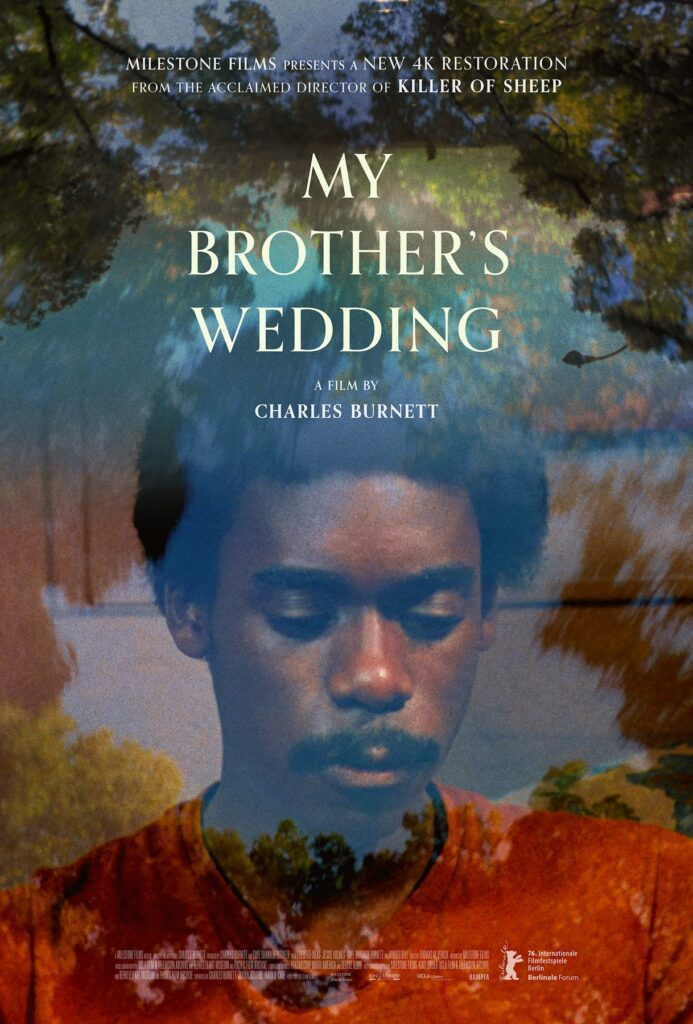
Films are, indeed, a living archive. In their early exhibition, formative reception, restoration fortunes, and all manner of manifestation. Invitations to restore and re-engage with underseen repositories of film are usually good omens of providential work. Such is the case for Charles Burnett’s comic and soulful sophomore feature, My Brother’s Wedding (1983). Drawing considerably from autobiographical traces of his own life—dealing with socioeconomic adversity as a youth, while facing generational distortions of manhood and Blackness in South Los Angeles—the echoes of experience greatly inform the spirit of this overlooked film. During its production, My Brother’s Wedding dealt with notable challenges, from flighty actors disappearing from set to fraught foreign oversight undercutting its initial exhibition. Nevertheless, it now finds a foothold in the decades following as an important work of American film history.
Beginning production in 1983, My Brother’s Wedding incorporated many background elements of Burnett’s master’s thesis debut, Killer of Sheep (1978), including non-professional casting (his niece Angela and wife Gaye Shannon-Burnett each play supporting roles), a South Central LA setting, and key collaborations with a LA Rebellion cohort (Julie Dash worked here as the 1st AD). Impatient producers at Zweites Deutsches Fernsehen, in Germany, rushed Burnett during post-production, accepted a pressured rough cut as final submission, and left the unfinished film to play at the New Directors/New Films festival in New York, to muted reviews.
Under the auspices of Milestone Films and the Pacific Film Archive, Burnett’s early features saw a resurgence in restoration and distribution, circa 2007. Having premiered at Film Forum, with a larger re-release, Burnett called in one late-summer afternoon to discuss My Brother’s Wedding. With great warmth and candor, Burnett shared how personal hardship and humor shaped his work, and how fortunate collaborations with preservationists and art film distributors led to a metamorphosis and legacy for My Brother’s Wedding as a once-dismissed, now celebrated piece of Black independent cinema. From topics spanning generational class conflicts and artistic integrity to William Faulkner and trips to New Zealand, Burnett’s perceptive insights were as kind and candid as one might expect from this iconic, generous artist.
Over forty years after its original debut, My Brother’s Wedding is having renewed exhibitions around the globe, with recent screenings in Japan and one coming up in New York. How does it feel to experience this invitation to re-exhibit your work so many years later?
Well, it catches me at a strange moment because I’m caught up and trying to get some things done, and they’re not working out quite as well as I’d love them to. But things sort of take their time, you know? Like with this film and people getting around to seeing it. There are people like Dennis Doros at Milestone Films and other companies that helped to promote the film, to donate the funds to it, and things like that. So that was very good and refreshing to know that there are people out there who are interested in its making.
2007 was quite the year for you, in terms of restoring and reengaging with your early films. Your debut, Killer of Sheep, was remastered and transferred to 35mm, and My Brother’s Wedding had a second wind, as well. How has Milestone Film & Video been instrumental to this support for your work?
Well, when I made Killer of Sheep, for example, it was a student film. I didn’t worry about licensing the music, because if it wasn’t going to show theatrically, then that wasn’t an issue. So, I used the music, but I should have negotiated the license fees. It would have saved a lot of time and money. Then when Milestone came and picked it up, they had to negotiate the music rights, which took forever. Initially, the music rights cost a lot of money, which made it very difficult. But I never expected it to be shown theatrically, so I didn’t worry about it until Milestone came along. In their efforts, it took a while, but they stuck with it and got the funds to buy the music rights for the film. My Brother’s Wedding didn’t have so much as a problem in terms of rights. But Killer of Sheep had a lot of music, so it took forever.
It’s great to know that your work has had this legacy, even as archival findings, in a sense. The works have been remastered and met with great critical appraisal. For instance, you’ve worked with Criterion and Ash Clark.
Yeah, he’s a good guy.
I know your work has also attracted attention from Chicago-based scholars. Like Allyson Field and Jacqueline Stewart, who’ve written a lot. As well as critics like Robert Daniels. A great community here, looking to your work.
Floyd Webb is another Chicagoan, and there are a bunch of others… but it’s been so long (chuckles), if you don’t mention their names, they can sort of pass through your mind.
I’m very interested to ask about the emotionality of My Brother’s Wedding,as itcovers quite a range. There are these moments of melancholy to joyous inflections of comedy spiced in throughout the film. You’ve described it yourself as a tragicomedy?
So, My Brother’s Wedding is autobiographical to a certain extent. Not totally, but there are some moments in it that happened to me. For instance, there was this young lady who had moved to California with her boyfriend, and I was working at this agency. She was a secretary at the agency with me and didn’t know too many people here. So, she asked me to be in her wedding, and I said yeah. It wasn’t an issue for me because the wedding was quite a ways off. But as time passed, a friend of mine was killed in an accident. Then the wedding happened to be on the same day as his funeral. I was going to tell her that I couldn’t make it, because I had to go to this funeral, which was more important.
She saw me coming and must have noticed a look on my face, because the first thing she said to me was, “You’re not going to say you can’t make it to the wedding, right?” Then I was flustered and said, “No, no, I’ll be there.” The funeral and the wedding ended up happening at the same time, and I was trying to decide which one I should go to. So, I stopped by the wedding first, and they sort of held me hostage, so to speak. The wedding ended up not being on time because they were waiting for an uncle whose plane was late. Initially, I was hoping that if the wedding was on time, then I could probably make it to the funeral, which ended up not working with the delays. I regretted having to stay.
My friend, he wasn’t a bad kid, but he was always getting into trouble. He had been looking for a support system. I wasn’t that much older than him, but still, being a brother’s keeper, you had to be a person of responsibility; you had to be an adult.
What became very poignant for me, and this all ties in, was that I got a grant to do Killer of Sheep. And a friend asked me to loan him some money to get out of town. I had just received money to budget the film, but I didn’t loan him the money, and I always regretted it as he was killed afterwards. That haunts me a great deal. So, if you’re going to be responsible, you have to support the person and have the means to go all the way. I didn’t feel that I was capable of any of those things. In order to take on responsibility of this nature, you have to be mature. Not just have the right words to say, but to physically do something. To volunteer or whatever it is.
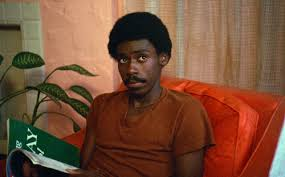
But anyway, so this all came around to talking about a lot of things that were going on in the community. Particularly, growing up in a community where there is more class difference. In My Brother’s Wedding, Pierce romanticizes the poor and has this distortion of the middle class. The thing is, is that you have to be mature enough to look at things, see what’s of value, and go from there. To see through these distortions. It haunts you in the end. It comes back, and if I had been more realistic about class and things like that, it probably would have worked better for me.
I think of my grandmother, who was very religious, and my mother, who always had this thing about too much money being bad. This distortion and romanticized view of the poor, having conflicts with middle-class people, who some people felt were abandoning the community. As a teenager in South Central, these were the kinds of things we were experiencing.
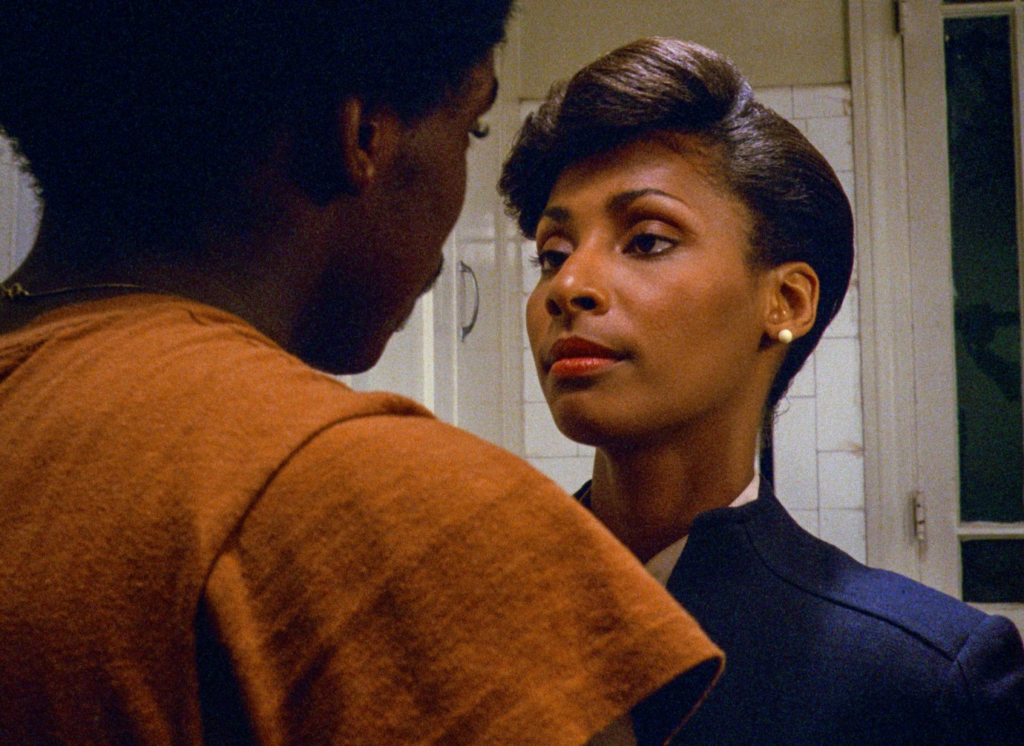
Like the tragicomedy of all life, being torn between these decisions? In the case of Pierce Mundy, this leaves him in a broken state by the end. With these class distinctions in mind, there’s this dinner scene where Pierce is distrustful of his future in-laws, calling all doctors and lawyers crooks. And maybe that’s a way of dealing with the existential crisis of it all. Was this scene crucial to you in the story?
It was, because I grew up in South Central and most of the kids around were working class, if you can call it that. I remember being in this class because I had a stutter, and the other kids had some kind of “problem” that they were trying to correct. One day the teacher had written on the board different classes, like middle class, working class, or poor. And when she asked around, most of the kids raised their hands saying that they were middle class. The teacher responded by saying, “You’re not middle class, you’re poor!”
I went to a really bad school, as you can tell, and I remember the teacher walking down the aisle saying to the students, “You’re not gonna be anything, and you’re not gonna be anything…” She even said the same thing to me, and there was this notion that Black people couldn’t do anything. One of the things that really disturbed me for years and years and years was this other teacher disparaging Africa, saying that Africans can’t draw. You know? And he pointed to the Egyptians as an example of people who supposedly couldn’t do anything artistically. Later on, I went to Egypt and saw the pyramids and all the art there. Remembering what the teacher said, I was so mad because of this notion that Egyptians couldn’t draw because of two-dimensional characters.
Anyway, so when you make a film, you deal with a lot of things that can make you feel disillusioned by finding out the truth. So, in a sense, Pierce didn’t realize his limitations and that his notion of reality and people were all distortions, stereotypes, and other crazy notions. I had grown up with these guys who were a lot older and who had all of these different ideas about certain things, passing them on to younger people. Then you grow up and realize the misinformation that you’re getting from these older guys. A lot of this played a role in how I saw these characters.
By the end, we find Pierce in the aftermath of an impossible choice. He hesitates and falls flat under both social pressures. How do you feel for your protagonist, as an extension of you, and how might you hope others view Pierce?
Well, the Pierce in real life was a difficult person. That’s why the film was delayed in many ways because he disappeared during the middle of shooting. I had spent two months or so looking for him. He had wanted more money in his contract. But it was a little bitty film, and so I had to pay everyone the same, to be fair. He had an agent who wanted more money for him, saying that he was the star of the film. I didn’t consider him the star of the film or look at it in those terms. So, this went on and on and on. I eventually had a meeting with the producers, and they were initially nice about not pulling the film, but I should have told them that I couldn’t turn the film in because of this actor; I couldn’t find him anyway.
This caused delays, and you hear about these stories of independent films; it can be worse, so you just have to accept it. Some of the people said that I had to fire this guy, but we had already shot a lot of film. I knew that we just needed him for a little while longer. Anytime I was getting in trouble, I thought, “Oh, I should have fired this guy.” But you learn as you go.
Did you shoot the film in chronological order? Or did his disappearance affect the end?
I did shoot it in chronological order. But I managed to get him back and finally caught up with him. He said he’d become a preacher and came back on a plane, wearing a cape with a bible in his hand. Putting on an act, you know?
In many ways, he was a pleasant guy, but at the same time he was very clever in finding ways to try and get more money. It was a lesson.
I actually just returned from Toronto this week from the festival. I recall the film having a difficult release in New York, but did it initially debut at TIFF?
You know, I don’t recall; it’s been so long ago. It escapes me, but I’m just so happy that Dennis and those guys made it possible to come back. During the re-edit, the outtakes were gone, but the trims off of the material that I had helped a great deal. I liked the story, but it bothers me because it wasn’t really completed because of the difficulties at the time.
Do you often think about your shorts [Several Friends (1969), The Horse (1973) and When It Rains (1995)] in relation to your feature films?
Well, I was a big fan of William Faulkner, at one point, so I made this short inspired by his story “The Bear.” And I knew a film student at UCLA whose brother was involved in a film festival in Germany, which showed short films. They invited me to show my short, The Horse. He came back from Germany and told me that I won the second prize at the festival. I was surprised, and that was my first entry and prize at a film festival, which was terrific.
If you want to see the films, it would probably be with Milestone. With Dennis and his wife and partner, Amy Heller, at Milestone. With all the schools you go to, when you mention their name, everyone says, “Oh, they’re the greatest.” They have this love for film, are great about promoting things, and are really terrific.
Just as your work has taken on a great legacy in American film history. Everything from these new exhibitions, Chicagoan scholars and critics writing about your work, and even music artists like Mos Def, who are all inspired by your films. How does it feel knowing of those writers and artists who are invoking your work?
I appreciate it a lot. Sometimes I wish more people would do it (chuckles). But, you know, people might be aware of you, and then you disappear, but then you come back. Growing audiences really help. At times you might deal with some rejection notices. I remember writing To Sleep with Anger (1990), and they kept wanting me to make changes when I would turn in a draft. In order to make changes, they would pay me for portions of what I would do. But when I didn’t make the changes they wanted, they wouldn’t send me a check. I would call in to ask about the check, and they would always say that it was “upstairs.” Pretty much saying that they weren’t going to do anything until I made changes. This would go on and on, and finally I’d say that I couldn’t make those changes anymore. It wouldn’t be the film that I wanted to make. They were really upset, writing me letters and such.
Horton Foote was then producing this film for PBS about a conversation surrounding this family. And in To Sleep with Anger, these people talk about the past and the South, so when my producers started giving attitude, I mentioned the Horton Foote film that had a similar dynamic; then this lady said, “Well, you’re no Horton Foote.” Then they wrote me this letter, saying how I would never be a writer or anything like that. Later we were at this event in Indiana screening this film [To Sleep with Anger] at a university. At the end of the film, the students asked, “How come we can’t see films like this?” And I was sitting in front of all these people from PBS, and I said, “You’ll have to ask them behind me, because they said you wouldn’t understand it.” To which the student replied, “Man, no one asks us anything” (chuckles). They said I’ll never be a Horton Foote, you know?
So anyway, then I’m out in South Africa making a film, and I get this call saying that I won this award. That I needed to come to the States to get it. I said I couldn’t, but they insisted since they had to give it to me in person. We kept arguing back and forth. It’d take fourteen hours to get from Namibia or Johannesburg back to the States. I finally asked, “Well, what is the award?” And they said it was a Horton Foote writing award [for Special Achievement in Screenwriting in 2007], to which I said: “Oh, I’ll be right there.”
People will try to say anything to do what they want you to do. Anyway, it’s been a strange journey. It was one of those kinds of things where you appreciate having to argue because when you succeed, it makes you feel right with your film and the direction you’re going. Particularly when people appreciate what the film is about and the things you thought and so forth. It’s been a journey.
I have a good friend of mine who often travels to Namibia for work at the North Carolina Zoo, and he always has great things to say about it. I’m sure it was a great experience to be there too.
It was a great experience, really great to make a film about Sam Nujoma. There are a lot of very nice people there. It’s a wonderful place to visit. Have you ever been to Africa?
I’ve never been to Africa, though I have traveled a little bit. I lived in New Zealand when I was in grad school. I was actually there, incidentally, during the pandemic.
Oh, yeah.
Yeah, probably one of the best places to be. Though, I will say that during uncertain times, thinking of my family back home. But I lived abroad there, and it’s every bit as beautiful as you’d imagine, and the people were great. There are also some African diasporic communities there from Eritrea and Ethiopia. But I’ve never been to Africa. Not quite sure where I’d go first, given the chance.
Egypt is spectacular, seeing the pyramids and all. And if you’ve been to Greece and the Parthenon, you see where it all starts from. You can’t even imagine the sculpture and art you find in those countries. I’ve been to New Zealand, and I really liked it a lot, too. It was beautiful.
Are there any underseen filmmakers you enjoy watching?
I was a great fan of Ermanno Olmi, who did The Tree of Wooden Clogs (1978). His films are like Bresson’s films, to a certain extent. Very dry, in a way. Using real people and not actors. I was a great fan of his.
I remember working at the agency, down the street from UCLA in Westwood, who represented all of this talent. Then, these Italian producers came to the office one day. I was working on the switchboard, and I happened to see a friend whom I wanted to talk to about Ermanno Olmi. And when the producers heard me mention his name, they were so against him, saying he was boring and stuff like that. I was surprised (chuckles). They didn’t like his work, I guess, because it wasn’t commercial enough. He was one of the great directors.
I’d also like to mention one person who was involved. There was a student at UCLA, Ross Lipman. We both worked with Milestone, and he actually saved Killer of Sheep because the film was lying in my garage. Not doing anything, just sitting there. It needed to be archived and put in a place where it wouldn’t deteriorate. And it was through him that the film had its restoration and rescue.
M. Sellers Johnson is an independent scholar and editor whose research interests include French art cinema, transnationalism, historiography, and aesthetics. He received his MA from Te Herenga Waka (Victoria University of Wellington) in 2021 and his BA at the University of North Carolina Wilmington in 2018. His work has appeared in Afterimage, Film International, Film Quarterly, Media Peripheries, Mise-en-scène, Offscreen, and sabah ülkesi, among other outlets. He is the founding Citation Ethics Editor for Film Matters, and the current Book Reviews Editor for New Review of Film and Television Studies.