

By Alex Ramon.
Although I enjoyed the research and writing aspects, I didn’t feel comfortable in the academic environment…Writing independently has not made me wealthy but at least I have maintained a long and productive career, against the odds.”
–Stephen Bourne
It will be 30 years next year since the British researcher, cultural critic and social historian Stephen Bourne published his first book on film, Brief Encounters: Lesbians and Gays in British Cinema 1930-71 (1996), and 50 years since the then-teenage Bourne wrote a school paper on the pioneering role of a Black actress, Cleo Sylvestre, in the British television soap opera, Crossroads (1964-1988).
Completed twenty years apart, these two projects established the research interests that have defined Bourne’s output ever since. Notably productive, Bourne is an unusual figure in several ways, not least for combining analyses of screen and stage representation (1998’s Black in the British Frame) with works of biography and social history, the latter usually focusing on the often overlooked Black presence in the two World Wars.
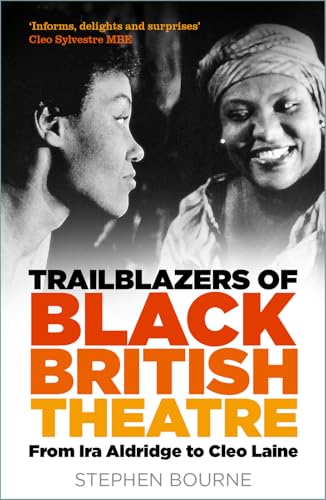
As a white, gay, working-class writer who has largely dedicated himself to exploring Black culture and history, Bourne challenges the binary simplifications of contemporary identity politics. He has also maintained considerable independence, mostly operating outside of academia and ensuring that his work reaches the wider public. His most recent book, Trailblazers of Black British Theatre: From Ira Aldridge to Cleo Laine (2025), highlights Black actors, writers and directors on the UK stage, uncovering a rich and vibrant history where others have perceived on!y absence.
In the following conversation, Bourne talks about his background, his sense of distance from the academic world, his ground-breaking research into Black and gay representation in British TV and cinema, and his reaction to Steve McQueen’s Blitz (2024).
Alex Ramon: I sense that your research interests in Black arts, culture and history, and in gay representation, come from quite a personal place. Would it be accurate to define your work as largely an attempt to highlight stories that have been erased or overlooked?

Stephen Bourne: Yes, this is a main motivation for me. Throughout my life I have always been conscious of marginalised voices. It probably started with the older women in my family – all of them working-class – whose stories could not be found anywhere, in books, films, television or other media. When I was a teenager in the 1970s I listened to all of them and the most inspiring was my grandmother, who had been born and raised in Merthyr Tydfil in South Wales. Her father was a coal miner and she spoke movingly about the social depravation they faced in the 1920s, especially at the time of the General Strike. My mum shared stories of her childhood in London during the Second World War. Some of her stories were comical, others dramatic, such as being caught in an air raid on her way home from school.
Then there was Aunt Esther, a Black woman born in London before the First World War. She was raised by her Guyanese father in the same tight-knit community as my family but, when he was killed during the London Blitz of 1940/41, Esther was adopted into my close-knit, white, working-class family. Aunt Esther was the first person to give me insights into the lives of Black Britons in the pre-1948 Windrush days. So these were the first marginalised life stories I heard.
Though you studied at London College of Printing (now the London College of Communication) and received an MPhil from De Montfort University, you’ve always ensured that your scholarship engages audiences beyond academia. Why has this been important to you?
Although I enjoyed the research and writing aspects, I didn’t feel comfortable in the academic environment. I found it very exclusive, stifling, disconnected from the “real” world and something I could not relate to. If I had pursued a full-time career in academia, I would have had to publish work in academic books, but these would not have reached the readership I wanted. Academic books and journals can be very expensive to purchase; I have in the past contributed to some, but I recently decided not to continue to do this. I have just declined a contract to contribute a chapter to a new reference book about Black theatre in Britain. I said no on the basis that (1) there was no payment offered and (2) it would have meant facing a lot of hard work for so little gain. As someone who works independently outside of academia, I can decline such offers, but I still have to pay the rent. Writing independently has not made me wealthy but at least I have maintained a long and productive career, against the odds.
Brief Encounters, your first book about LGBTQ+ representation, included an unusual final section – reminiscences from gay men about Basil Dearden’s Victim (1961; see top image) and what it meant to them. Why did you include those personal testimonies about the film?
In 1991, when the opportunity came to write a modest book about my adopted Aunt Esther, the publisher encouraged me to include first-hand testimony. From a series of interviews, I uncovered a great deal of fascinating material. For example, in the 1930s, Aunt Esther worked as a seamstress and made dresses for the popular African American cabaret star Elisabeth Welch. She also met and befriended the influential Jamaican political activist Marcus Garvey who lived nearby. From this work I realised that my history books would always include first-hand testimony from the people who had made the history happen.
For Brief Encounters I advertised for older gay men to write to me about their experiences of seeing Dearden’s ground-breaking film Victim in 1961, when homosexuality was still a criminal offence. Dirk Bogarde risked his career by playing a closeted gay barrister who is blackmailed. I was inundated with replies from a range of gay men. They not only wrote about Victim and the positive impact it had had on their young lives; they also gave moving and emotionally charged descriptions of what it was like to be gay in the early 1960s. Two years later I did the same thing with Black in the British Frame. I advertised for older people to write to me about their memories of seeing Paul Robesons films in the 1930s. Once again, I was inundated with responses. Robeson had made a huge impact on British cinema audiences in the 1930s and he was remembered with tremendous love, affection and respect.
In the late 1980s/early 1990s, you worked as a research officer at British Film Institute on a project that documented the history of Black people in British TV, resulting in the Isaac Julien-directed documentary Black and White in Colour [BBC2, 1992]. What are your memories of that project, and what were some of the most unusual or surprising works that you encountered?
That job was a lucky break for me and I had a brilliant time. Regarding the most unusual and surprising works that we rediscovered, it’s a very long list! What was most revealing were the progressive dramas and documentaries that had survived in our television archives from the 1950s to the 1970s. When they were first transmitted, these ground-breaking programmes coexisted alongside the BBC’s racist but hugely popular Black and White Minstrel Show which ran from 1958 to 1978.
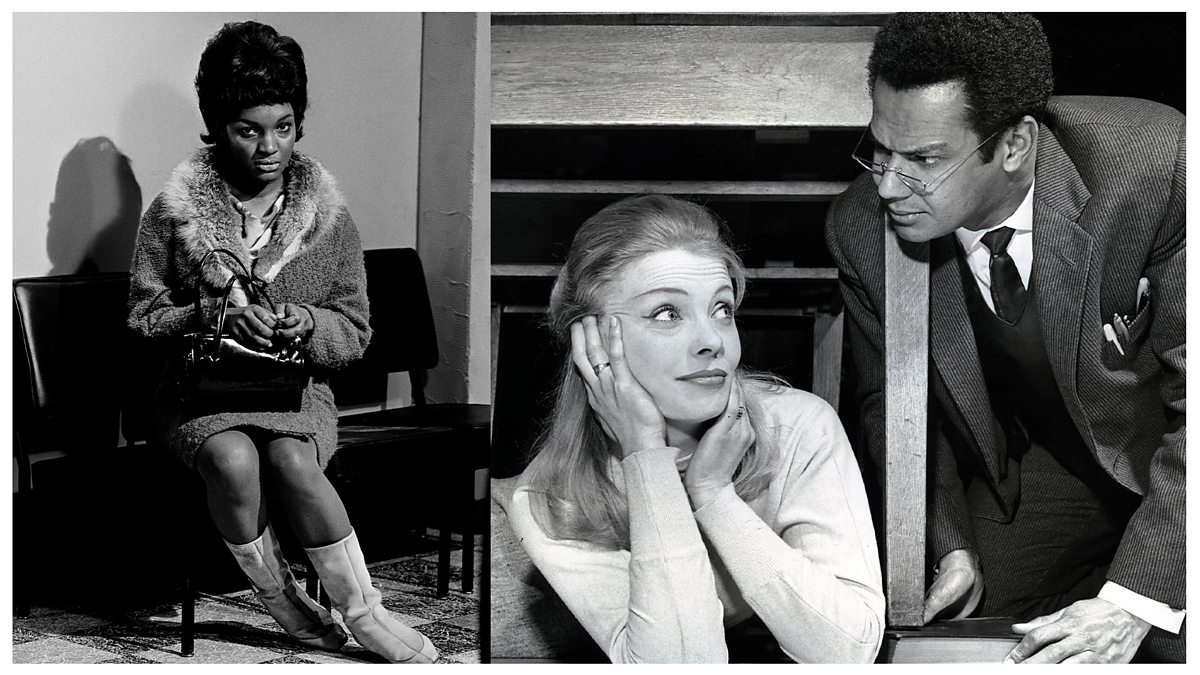
But they also gave us, the researchers, new and exciting ways of looking at how race was represented on British television in its early, formative years. After two years of research, Isaac came onboard as the director of the documentary, which was based on our discoveries. He admitted that he was expecting the worst – Black and White Minstrels and very little else – but he was surprised and impressed with the range and depth of some of the programmes we showed him. I was very proud of what we – the research team – had achieved, and happy to share our findings with Isaac who then gave his own interpretation of a remarkable, but “hidden” history. For the documentary he was assisted by two consultants: the filmmaker John Akomfrah and Professor Stuart Hall.
How was the process of making the documentary?
In addition to selecting what archive programmes to include, the recording of the interviews was intense and exhausting. Fifty four interviews were crammed into a tight two-week schedule in the summer of 1991. Isaac rightly insisted on surrounding himself with as many Black crew members as possible. He asked for Remi Adefarasin to be on camera, Judi Lee-Headman on sound, and Tammy Harewood on makeup, amongst others.
Which of the rediscovered programmes were most revelatory for you?
The most striking of the archive programmes came from the BBC and included Othello [1955] with the gay African American actor Gordon Heath, then based in Paris, giving a sensitive portrayal of Othello that was far removed from the crude ‘fire and brimstone’ interpretations of white actors in blackface. Then there was A Man from the Sun [1956], a drama documentary about Caribbean settlers in post-war London; A Place of Safety [1964], an episode of the highly acclaimed police drama series Z Cars featuring a superb performance by the West African actor Johnny Sekka; and Philip Donnellan’s extraordinary documentary The Colony [1964] which gave a voice to working-class Black people in Birmingham. In fact, 1964 was a watershed year in Black British television. ITV’s Freedom Road won several international awards. This documentary with a concert format featured a range of Black singers who performed songs from slavery to civil rights. They included Cleo Laine who sang Billie Holiday’s “Strange Fruit,” Cy Grant and Pearl Prescod.
Any other surprising discoveries?
Well, I also discovered that, as far as television is concerned, Britain was ahead of America when it came to integrated casting. For example, in Britain in 1964, we had two popular soap operas which provided continuing roles for Black actors: the Jamaican actress Joan Hooley as Dr Louise Mahler (Emergency – Ward 10) and the Trinidadian actor Horace James as a magazine photographer (Compact). This was two years before Nichelle Nichols was cast as Lieutenant Uhura in Star Trek. American television has always taken the credit for introducing integrated casting, but we were there first. Is this important? Perhaps not. However, the point is that, in Britain, we seldom give ourselves any credit for these breakthroughs.
An Americanised viewpoint is often imposed on British social and cultural history, especially when it comes to race, despite the very different histories of the nations. Given that you’ve also written books on US performers including Elisabeth Welch, Ethel Waters, Butterfly McQueen, and Lena Horne, how important has it been for you to address the specificity of Black British contexts, and their difference to American ones?
I like to think of myself as knowledgeable about mainstream African American cinema and television as well. I have always been interested. As a young boy in the 1960s, I watched many American television imports and some of them had Black stars. In the early 1970s I began to take an interest in the film careers of Black actors such as Sidney Poitier and Dorothy Dandridge. At Peckham Odeon, I saw Richard Roundtree in Shaft [1971] and Diana Ross in Lady Sings the Blues [1972]. I absconded from school one afternoon to go to a cinema in London’s West End to see Cicely Tyson and Paul Winfield in Sounder [1972]. I probably learned about these films from reading Ebony magazine which was imported from America to Peckham where we had a large Black community. At that time there was no British equivalent of Ebony. I found plenty of books and material about African American actors, entertainers and jazz musicians, but nothing about their Black British counterparts.
What are your memories of seeing now-canonical works of Black British film, such as Menelik Shabazz’s Burning an Illusion [1981] and John Akomfrah’s Handsworth Songs [1986], on their original releases? What sort of impact did they have at the time?
I have never forgotten the first time I saw Burning an Illusion. It was in February 1982 at the Festival of Black Independent Film Makers at the Commonwealth Institute. The film’s leading actress, Cassie McFarlane, gave a stunning performance as a young woman who becomes politicised in contemporary Britain. The screening was received with tremendous enthusiasm by a predominantly young Black audience who shouted their approval and applauded loudly all the way though. They had rarely if ever seen such realistic images of themselves in a British film. Two years later I curated the National Film Theatre [now BFI Southbank]’s first Black British film retrospective and closed the season with Burning an Illusion. It sold out and brought several hundred young Black people into that predominantly white, middle-class space.
I first saw Handsworth Songs during the 1986 London Film Festival. It had a profound effect on me because I had lived through the 1981 Brixton uprising (I refuse to describe them as “riots”) when local Black youths clashed with police officers on the streets. The troubles spilled over into Peckham, where I was living at the time. Handsworth Songs is one of the best documentary films I have ever seen. Later on, I got to know John when he worked with us on Black and White in Colour.
When it comes to gay or Black research/representation, you’ve commented on the importance of “keeping an open mind” – i.e., not simply highlighting absences or instances of oppression, racism or homophobia. Do you feel that the culture currently tends to be too invested in negative narratives of trauma and victimhood when it comes to minorities’ representation?
It does concern me that there is too much investment in highlighting racism and homophobia in British films and television of the past. This is something which should not be ignored, but there also needs to be equal attention given to the bigger picture. When I give my Black history talks, I always inform people that, in Britain’s past, not all white people were racists and not all Black people saw themselves as victims. I have learned that Black people do not want to be defined by racism, and LGBTQ+ people do not want to be defined by homophobia. It is too limiting. That is why I encourage people to keep an open mind and have a bigger vision of the past. Only then will they be surprised, enlightened and empowered by other, non-racist or non-homophobic narratives and experiences.
In a recent Black Film Archive newsletter, Maya S. Cade asks: “What does it mean to make Black film history accessible?” Do you feel that the UK’s cultural gatekeepers are doing enough in that regard? With the recent sad demise of the BFI’s African Odysseys series, what can institutions like BFI or the BBC do to better promote and disseminate underseen past work?
For me, the BFI is, and always has been, a predominantly white, middle-class organisation. The same could be said about the BBC, the world of publishing, and many other cultural institutions. I agree that the demise of the BFI’s African Odysseys is sad. However, BFI Southbank did recently showcase the films of Sidney Poitier and Dorothy Dandridge, two retrospectives I proposed but had turned down in the 1990s. The BFI and BBC should be more interested in engaging with historians who have done a great deal of work on Black cinema and television but this rarely, if ever, happens.
There’s a strong continuity between your works of social history, in particular on gay and Black presence in WWI and WWII, and your writing about film and TV. How has one strand grown out of the other for you?
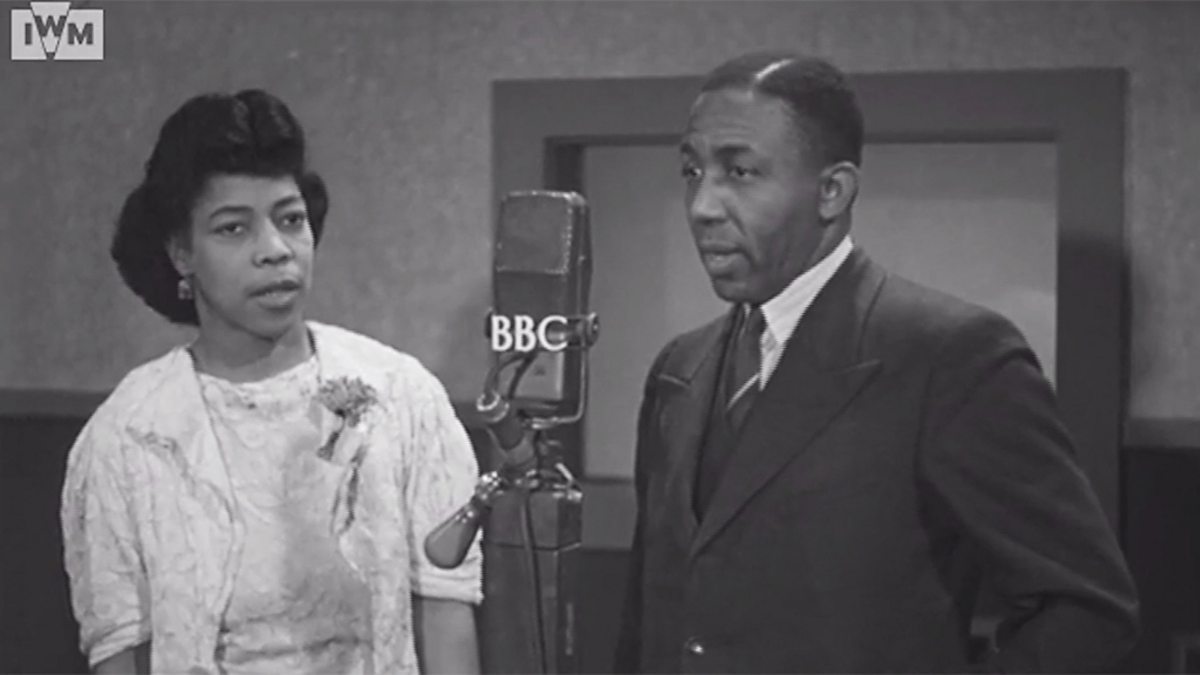
I never intended to write solely about film and television. Listening to my family’s memories of the impact of the London Blitz on their lives caught my imagination. Hence, my interest in the subject. Not the battlefields, but the home front. However, when I wrote Mother Country – Britain’s Black Community on the Home Front 1939-45 [2010], I featured a chapter called “Front-line Films” which included Paul Robeson in The Proud Valley, documentaries such as Welcome to Britain [1943] and West Indies Calling [1943] and the work of the Colonial Film Unit. I did something similar with Fighting Proud [2017], my book about gay men’s lives in the two world wars. There is a section on cinema and television.
We’re in a moment in which there’s a huge self-consciousness about cultural appropriation – who gets to tell whose stories – and writers are often pigeonholed in relation to their own perceived identities. As a white writer working on Black texts and stories, have you encountered any direct negative questioning of your work in this research area?
Surprisingly, as a white man, I have never encountered any negative questioning in the Black community of my Black British history work. In fact, I have had nothing but support and encouragement. Similarly, as a white member of the production team on Black and White in Colour, I felt completely accepted by my Black colleagues. In fact, looking back, my race was never questioned by them, at least not in my company. However, this was not always the case with some of the white, middle-class BFI “intellectuals” who were not friendly towards me. They begrudgingly accepted that I was the right person for the job, but they clearly had reservations about my skin colour. I do loathe terms such as “white ally” and, especially, “white saviour.” I have never been to America, and so I have often wondered if the situation would be different for me there.
I was surprised by the quite negative response to Steve McQueen’s Blitz last year. As a WWII scholar who has written about some of the historical figures featured in the film, what did you think of McQueen’s film?
I saw Blitz at the Genesis Cinema in Whitechapel. I had been invited to the screening by Priscilla Igwe and The New Black Film Collective who asked me to join a panel discussion afterwards. The screening was well attended and mostly included young Black people. During the discussion it was evident that they appreciated the film. I was impressed too. Within minutes, I found myself on an emotional rollercoaster, and shedding tears. This was triggered by McQueen’s brilliant recreation of an air raid on London. The sound and visual effects were outstanding and I understood the fear and chaos experienced by the characters on the screen, including the little boy, George, superbly played by Elliott Heffernan. I immediately recalled what my parents had told me about air raids. They had been young children at the time, about the same age as George. The memories they shared were vivid and unsettling but nothing had prepared me for this. I wept for my parents, and what they had lived through. I thought about how rarely the London Blitz or the home front has been depicted in British cinema. Certainly not on this scale. McQueen made this possible.
Did you have any reservations about the film?
Well, the looters portrayed by Stephen Graham and Kathy Burke were grotesque caricatures and, as such, were out of place in the film. But otherwise Blitz resonated with me on several levels, both personal and professional. I believe I’m the first historian of the Second World War to publish the photograph of the little mixed race evacuee, clutching his suitcase at a train station. McQueen said in interviews that it was this photograph that inspired him to make Blitz, though I have no idea if he is aware of my books. In any case, McQueen has shown the London Blitz in ways not seen on screen before. Women and children were there. Black Britons were there. They were all at risk of injury, death and trauma as much as the men who fought valiantly at the Battle of Britain and at the D-Day landings. However, British cinema has avoided showing this.
Looking back over your body of work today, which projects are you particularly proud of?
In 2017, Charles Thompson presented me with a Screen Nation Special Award for Lifetime Achievement, citing my work on Black British film and television history, which was a huge honour. I’m proud to have curated BFI’s first Black British film retrospective (in 1983); as well as their first Black British television retrospective (in 1992); and their first tribute to a Black woman Hollywood star: Ethel Waters (in 1993). From 1992 to 2001 I also curated Out of the Archives, a popular series of lesbian and gay television retrospectives. Amongst my books I would like to mention Brief Encounters, Black in the British Frame, Black Poppies, Fighting Proud and the most recent, Trailblazers of Black British Theatre.
Finally, what would be your advice to young writers interested in film and TV and starting out on their research journeys?
I would advise young writers to follow their hearts and to be inquisitive. Ask questions. Do not accept everything you are told. Find out for yourself. If it seems right to you, stay with it. Be diligent and professional. I would never want to dissuade any young person from entering the world of academia to study for a degree, but I would encourage them to appreciate that it is possible to be a researcher and writer without doing so.
Alex Ramon is a critic and programmer from London, who is currently based in Łódź, Poland. He contributes to Sight and Sound, BFI online, Cineaste, and Film International Online, among other outlets.
this is a very inspirational and insightful post by Mr Bourne, whom, I’ve had the opportunity of meeting on several occasions. I’m a huge fan of his books. His extensive knowledge, experience and extensive research of Black history is an amazing attribute . I always recommend his books.
We owe Stephen Bourne a debt of gratitude for his brave, honest, pioneering work. By nature a principled, fair-minded man, Stephen tells it as he sees it, and he always seeks to share the fruits of his research with the widest audience possible. I recommend that you read all of his excellent books. You’ll enjoy them and learn a lot!
Great article apart from the twice repeated ‘sad demise’ comment. African Odysseys was cancelled by the BFI against the wishes of 17,513 petitioners, against the advice of the all Black Steering Committee who the BFI refused to meet despite their 18 years of voluntary service and despite the fact that the BFI, in a face-to-face meeting with that Steering Committee agreed in writing to a 20 year anniversary celebration in 2026. The BFI has refused to answer 8 simple questions for more than a year and cancelled the only meeting with the committee 2 hours before it was due to start. These facts can be ascertained via the African Odysseys petition on http://www.change.org. They were also reported on 29 October 2025 in a My London Article by Ruby Gregory. The BFI staff member responsible for African Odysseys David Somerset nor myself, the Chair of African Odysseys committee, was ever approached for an interview by Sight and Sound magazine despite regularly filling the 450 seat cinema with fantastic Black films. Perhaps you could interview Somerset and myself as it was African Odysseys that brought Menelik Shabbaz in to the BFI after they spurned his work for years. We regularly brought Stephen in to share his expertise and many other under-used experts . Petition update here https://www.change.org/p/save-17-years-of-black-film-history-at-british-film-institute/u/34115403
Please note African Odysseys is still showing films all over London. next year is our 20th anniversary and we have plenty of stories to tell about institutional racism
An absolutely fantastic and fascinating interview. Thoughtful, intelligent and covering a lot of valuable ground. Incredible!