

By George Toles.
Expressive objects abound in the world of Ball of Fire. What makes an object cinematically expressive? Let us begin by thinking about a door [which] becomes more charged with significance if we are led to assume that the room behind it contains an armed criminal or a person to whom the character standing in front of it is romantically pursuing….”
In this essay I shall make a selection from the complex network of objects presented in Howard Hawks’s film, Ball of Fire (1941), and consider the ways in which their sudden bids for expression (and transfiguration) work as what I shall term incidents, within their own domain of things as well as the linked domain of character. Henry James has argued, in his essay “The Art of Fiction,” that anything that happens in a scene, however fleeting its duration, can count as an incident:
What is character but the determination of incident?…It is an incident for a woman to stand up with her hand resting on a table and look out at you in a certain way; or if it be not an incident I think it will be hard to say what it is. At the same time it is an expression of character.” (16)
I think it is appropriate to think of the objects in this romantic comedy as on adventures that intersect with the adventures of the characters. They leap into prominence and become activated by one or more characters’ feeling, perception, or pressing need. And the mute objects strive, comically and poignantly, to “speak” in their restricted fashion, about what is most important in the psychology of the characters. Psychology is the principal thrust of object expression. Objects also serve to rebalance situations when their human counterparts fail to know their hearts sufficiently. They serve, on numerous occasions, to restore a sense of proportion. My secondary aim in this analysis will be to juxtapose objects and their integrating and disruptive power with the film’s focused concern with slang in its relation to more stable, established modes of speech.
Expressive objects abound in the world of Ball of Fire. What makes an object cinematically expressive? Let us begin by thinking about a door. The presence of a door in a film setting does not immediately capture our attention or excite interest. If the door has an unusual design or size, we might find it noteworthy. It gains in conspicuousness if it happens to be squeaky or proves difficult to open or if the key that belongs to it is withheld or goes missing. The door becomes more charged with significance if we are led to assume that the room behind it contains an armed criminal or a person to whom the character standing in front of it is romantically pursuing. Further door enhancement might include an open transom which allows for eavesdropping, a light visible in the crack beneath it, an unexpected assault on its surface with an axe, or music playing behind it. If the door is designated as forbidden, and ripples with shadows, it magnetizes the apprehensive gaze. Editing back and forth between figures on either side of a closed door instantly translates the door into a barrier partaking of intimacy or rejection. The door, in other words, awaits the addition of one or more elements to create viewer involvement and heightened awareness. Finally, to return to a consequential door in a hotel bungalow featured in Ball of Fire, a door can acquire magical or supernatural properties if its actual room number, 9, designated by a small piece of metal attached to the door, suddenly inverts, due to a missing nail, and becomes a “6.” I will return to this door later, for fuller investigation.
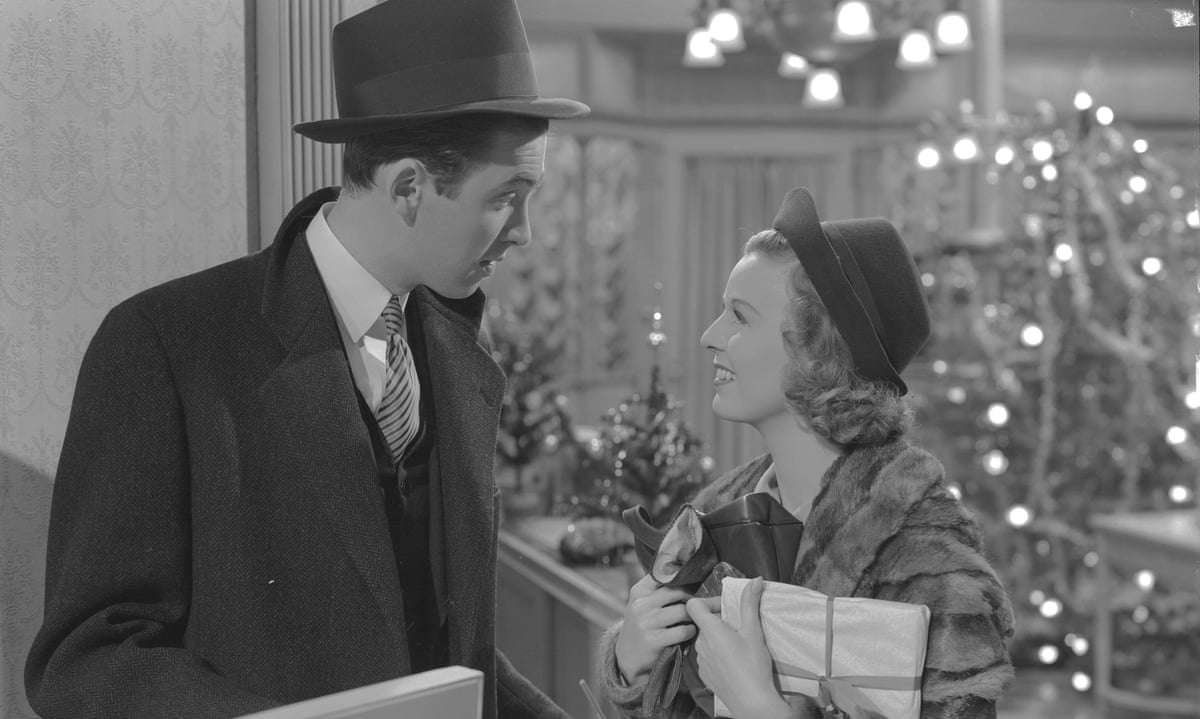
Early in Ernst Lubitsch’s romantic comedy, The Shop Around the Corner (1940), attention is directed to a product in a leather goods store by characters debating its likely saleabilty. The object is a musical cigarette box that plays the overly familiar Russian melody, “Ochi Chemye,” whenever it is opened. The prop sustains our attention because of the diverse opinions about its potential appeal offered by several of the film’s principal characters. Mr. Matuschek (Frank Morgan), the shop owner, lets it be known that in his view the cigarette box would probably be highly popular. He asks his employees to give him their “honest opinion” about its merits, and it is immediately apparent that he is looking for confirmation of his own superior judgment. His top salesman, Alfred Kralik (James Stewart) dares to take issue with him, claiming that smokers would surely become sick of the tinkling tune once they had heard it multiple times, and that the product is further hampered by its cheap materials and bad design. Clara Novak (Margaret Sullavan), a woman who is seeking employment at the shop, and who will soon enter into a habitually quarrelsome love-hate relationship with Kralik, tries to gain favor with Matuschek by agreeing that the box would be a delight to own. After he discovers that she is a job seeker rather than an impartial customer, he quickly dismisses her from consideration. Clara manages, however, to regain his approval and secure a job by pretending to be a saleswoman and persuading a female customer to purchase one of the boxes. She rechristens it a musical candy box, and tells her that the irksome repeated tune will function as a gentle warning not to overindulge her craving. In the process of this extended object-centered discussion, the initially nondescript item acquires a variety of additional attributes that give it lustre and something approximating life, as well as focusing aspects of conflicting characters’ psychology. It reveals Mr. Matuschek’s insecure authority, Kralik’s proud ambition, and Klara’s wiliness. The music box is granted one last appearance in the film, a forlorn (but amusing) epitaph. In a short, wordless scene, a quantity of them are shown in in the shop window, drastically marked down for quick clearance. Kralik’s initial skepticism is shown to be correct. I have chosen this Lubitsch prop for preliminary commentary because it effectively demonstrates how objects can be transfigured onscreen by characters’ differing perceptions of them and attempts to endow the object with a meaning tied to their immediate needs. The expressive object in film often achieves its dramatic power by being imaginatively and emotionally transfigured, either for a brief interval or in a manner that endures. The dramatic action in which they participate elevates them by means of defamiliarization and a kind of feeling embroidery. As they are pulled away from their confinement in ordinary associations, they not only acquire an unanticipated fresh layer of meaning, but also make a bid for sentience, as though they mysteriously know what they are communicating.
Maria Vargas Llosa, in his great account of his obsession with a literary masterpiece, The Perpetual Orgy: Flaubert & Madame Bovary (1975), provides a beautiful, compact description of the ways in which objects in fiction are humanized.
Why is it that certain objects of the fictional reality linger in one’s memory as clearly, as suggestively, as real persons in the flesh? Because they have been uprooted from the dead world of the inert and raised to a higher dignity, endowed with unsuspected qualities, such as, for example, a hidden psychology, an ability to communicate messages and awaken emotions, which, despite their immobile, rocklike, blind, mute bodies, make them beings possessed of a profound animation, a secret life. (128)

He singles out for special consideration Charles Bovary’s fervently ugly cap, introduced with the character in the novel’s opening chapter, which is somehow more palpably expressive than its putative owner, and which conveys more evocatively the core of Charles’s stifled, ingrown personhood and his foreordained suffering than Charles’s words and acts. The hat achieves quickly, and unforgettably, many of the prerogatives and the eruptive vitality that we are accustomed to regard as reserved for characters. It is enviably easy for objects in film to achieve an expressive parity with their human companions and manipulators because of the camera’s ability to draw so close to them and strengthen their aura and what I am tempted to call their intentions. The close-up of a face is not automatically bigger or more emotionally intimate than a close up of a shoe, a notepad, a ring, or an apple on a plate. In the hierarchy of significance, the way in which anything is framed, approached, enlarged or diminished can keep the values of all the competing visual and sound elements of a scene in flux.
It must be acknowledged that the crucial function of objects in almost every scene and important character interaction in Ball of Fire is not so heavily underscored that viewers are obliged to reckon with it. I have taught the film many times in undergraduate film courses. In my introduction to the screening, I urge my students to pay attention to how the director and screenwriters (Charles Brackett and Billy Wilder) employ objects to focus meaning and tell the story. To put it simply, the objects are a continual mediating presence that increase our ability to see what is going on. In our subsequent discussion class, I ask which objects made an especially strong impression on them, and why. Very few items are singled out for mention, and their contributions are not evaluated in much detail, in spite of the fact that the students claim to have enjoyed Ball of Fire immensely. They are genuinely surprised when I read a list of more than fifty objects that have meaning-making tasks to perform. Some of the tasks, of course, are more obvious than others, and many objects are given only a single turn to shine and do not become recurring motifs. The published criticism that I have read on Ball of Fire seems equally unconcerned with the inanimate players in the narrative, and how they connive to stay close to center stage. It is striking—not only here but in our experience of so many film and literary narratives—how much that is germane to our understanding eludes the attentive gaze. I would also claim that many dimensions of film that are concerned with metamorphosis are regularly hidden in plain sight. Cinematic images, here and everywhere, perform an act of magic in elaborating a dream world that has only the outward appearance of the real world. As Richard Stamelman has put it, the image is equipped with a tantalizing, but also suspect power “to transform the ephemerality of vision into the permanence of fact” (Bonnefoy, 193). The story of Ball of Fire is determined to keep one foot in the realm of reshaping vision and the other in the realm of fact at all times, and remains equally allied to both. Characters and spectators are permitted to have both dream and trustworthy matter, without a final demand to choose between them. Sugarpuss O’Shea (Barbara Stanwyck) ultimately chooses her love relationship with Bertram Potts over her prior emotional attachment to gangster Joe Lilac (Dana Andrews) but it comes as a result of her close observation of Lilac’s coldness and cruelty—becoming more conversant with the inalterable facts of his nature and world.
So many elements in Ball of Fire, in addition to objects, seem caught up in the game of transformation, which operates in an unusual back and forth fashion. An increased openness to vision, play, and looseness, and the desire to surrender to dream world dictates, does not in this film threaten characters’ attachment to prior real-world commitments. Consider the case of the professors engaged in long-term work on an unfinished encyclopedia. Seven of them are elderly, and respond with immediate, agog captivation when Sugarpuss invades their Foundation citadel. Like the dwarves in Disney’s Snow White and the Seven Dwarfs, which strongly influenced their creation, they reclaim many of the attributes of childhood in her presence, giddy at the prospect of diversion, untried forms of fun, and the curious promptings of a long deactivated libido. But their willingness to relax their discipline temporarily does not result in a belief that their previous activity was folly. The film honors their hunger to be free of fixity, to be lured out into the world, to be bewildered by and grateful for novel stimulations. It applauds their excess and their willingness to exchange rambunctious silliness for propriety. At the same time, however, their dedication to their work project retains undiminished merit. They will persist with their research, which winningly combines knowledge and reverie. The calm application to study in the company of beloved, loyal colleagues, the unruffled pursuit of quaint and curious lore, the ensconcement (not at all an entombment) in a wonderland of books have as much manifest value in the film as the professors’ break out from habitual moderation. Sugarpuss’s arrival in their life might be described as a stone flung into a mirror, but the mirror proves resilient. It wobbles, but doesn’t shatter. In the face of such pleasurable abundance of things slipping free from their customary moorings and then commendably reattaching, object incidents involving kindred awakenings to new life may sometimes be hard to spot.
I intend to establish links between object incidents and the film’s preoccupation with slang as a mischievous, unruly partner to traditional language and its rules of conduct. The printed prologue to the film, after announcing with its “Once upon a time” phrase that the film aspires to some sort of fairy tale affiliation, mentions the encyclopedia project that eight men in New York have embarked on writing. We are told that the men were so wise that they knew everything—except for “one thing about which they knew very little—as you shall see…” The coyly withheld word is sex, but it has an intimate relation with another “S” word in the book of knowledge, Slang, whose instability and ceaseless underground proliferation requires one of the eight professors, Bertram Potts (Gary Cooper), to leave his sedate fortress of knowledge and travel the streets of New York in order to acquire slang expertise. He admits his total ignorance of 1941 slang, but feels he must master it in order to compose an acceptable encyclopedia entry. Early in the film, a garbage man wanders into the scholarly sanctum seeking help for a radio quiz. In the course of his brief visit, he releases a slew of colloquialisms that are incomprehensible to Bertram and his much older colleagues. Bertam immediately decides that the 23 page article on slang that he has just finished, compiled from a dozen reference books and citing 800 examples, is outdated and completely useless. It should be thrown into the wastebasket. As he denounces his composition, he holds the neatly bound article in his hands—one of the film’s first highlighted objects, ripe for demolition. Bertram is unaware that the judgment he has leveled on his slang essay has implications for the entire eight year undertaking of encyclopedia writing. (The screenplay clearly takes note of these implications, but affirms the worthwhileness of encyclopedia creation anyway.) The potentially significant facts relevant for any encyclopedia topic are steadily expanding, and do not easily submit to summary treatment. How much encyclopedia space does any subject deserve, and how much damage is inadvertently done by the inevitable omissions? How does one know how to properly frame and abridge a subject? Moreover, facts do not elucidate themselves. They require a perspective and an interpreter, and in interpreting one is always prone to fallibility. What leads any encyclopedia scribe to suppose that any research topic is willing to stand still, draped in an arbitrary covering of current information? Slang is the subject which reminds Bertram of knowledge’s capacity to disperse, to run free of control.
Slang is also a means for Hawks and his screenwriters to challenge the clearly formulated language and protocols of the rigidly enforced Production Code. The Code is predicated on the belief that the intention of spoken language in film can be governed, that what is said can be rendered straightforward and clear, purged of distasteful, unseemly ingredients. But slang insists that language is slippery, ever-evolving, and untamable. It is constantly rejuvenating and replenishing standard methods of communication, and also subverting them with its penchant for hiddenness. The hiddenness is the dimension that perhaps chiefly fascinates Hawks and his writers. Slang operates in Ball of Fire as the rough, bawdy underside of language, the energy pushing up against confining, neatly pressed formulations. It is the unconscious of refined, stable speech, and requires a decoding not too far removed from Freud’s dream interpretation. (One might begin with the heroine’s nickname, Sugarpuss.) One of Freud’s observations in his Introductory Lectures on Psychoanalysis (1916-1917) has a direct bearing on what might be termed language incidents in this film. “Words and magic were in the beginning one and the same thing, and even today words retain much of their magical power.” The twists and curves of slang expressions as well as poetic eloquence are passed back and forth among the characters, often only partially grasped, and involves the same sort of “lighting up” that occurs with objects. I deem both slang and objects to be susceptible, throughout Ball of Fire (a title metaphor that moves in multiple directions) to transfiguring elevation—let us say an epiphany of presence. But slang has corrupting potential as well, the danger of too much downgrading of open, respectful communication. The world of the film contains numerous, unromanticized gangsters who have affinities with the Nazi aggression fully unleashed in Europe by the date of the film’s release, shortly before Pearl Harbor. They are at home in slang utterance, but their use of it is impoverished: cold, reductive, mean-spirited, unwarmed by any comprehension of unmanipulative fellowship.
Let us circle back now to Sugarpuss’s bungalow door at the motel, containing the metal number that converts, in pixillated fashion, from “9” to “6”. It is an extremely brief incident, completed in just a few seconds, but it has major dramatic functions and emotional as well as moral consequences. This occurrence will reward extended scrutiny. I consider it the central object incident in Ball of Fire, but it is closely flanked on either temporal side by a remarkable variety of other expressive objects which further complicate what is at issue. The transforming number possesses object agency in a manner that is unusual for this film. Its operation feels less accidental than providential. The object, without human aid, creates a magical atmosphere, predicated on beneficial confusion, that allows for intimate self-revelation from Bertram and a decisive change of heart in Sugarpuss. Shortly before the number switch, we observe Sugarpuss bidding what she assumes is a final farewell to the group of professors in a Tap Room across the way from her bungalow with visible regret and a degree of contriteness that she is unable to verbalize. She has used her fake wedding trip (unbeknownst to Bertram and his colleagues) as a means to avoid police interrogation and to meet up with her actual fiancé, Joe Lilac, across the state line. The professors who have taken her on this road trip supposedly to meet Sugarpuss’s relatives and attend Bertram’s wedding to her have, in fact, been callously used as “protective coloration.” From Sugarpuss’s initial late-at-night arrival at the professors’ Foundation, early in the narrative, she has steadily manipulated and deceived all of them, albeit with immense charm and good humor, never revealing either her true situation or intentions. She has lied to Bertram both in accepting his marriage proposal and in letting him believe that she reciprocates his love for her. To use a fitting slang expression, in the guise of open, bountiful, trustworthy friendship, she has taken the entire group for a self-serving “buggy ride.” At the point when Sugarpuss parts company with her easily exploited dupes, who are seated around a large table at the Tap Room celebrating a “bachelor dinner” before the next day’s planned nuptials, she has just contacted Joe Lilac by phone to inform him where she can be picked up. Lilac and his henchmen are only a short distance away and we see them setting out for the motel. The time before the truth of the scheme is revealed, along with the extent of Sugarpuss’s complicity in the betrayal, is near at hand. We watch Sugarpuss walking determinedly across the road separating the Tap Room from her bungalow. We view her crossing from a distance. Her movement supplies no access to her feelings. Behind her is a Stop sign which she fails to notice, but that the viewer might catch sight of. The sign is not highlighted in the frame but it is placed directly beside a blinking sign advertising the Poplar Grove motel. The blinking light in juxtaposition with the Stop sign uninsistently suggest hesitation and some form of internal debate. Sugarpuss climbs the four brick steps leading to her bungalow door, and just before opening it she briefly pauses, casting one, rapid, regretful backward glance at the room where the men she has affectionately described as “squirrely cherubs” are gathered, lighthearted and unknowing. As she moves quickly through the door and closes it sharply, indicating a belief on her part that she is severed from this community for good, the number swings down, alters its meaning, and reactivates (though not in ways the viewer can yet grasp) possibility. The mood of her departure has been heavy and paralyzing. It is not clear how such sustained, collaborative treachery can be swiftly atoned for, mitigated, or undone. But the back and forth, almost sentient movement of the newly hatched “6” suggests that the impasse is not complete; benign energy and reversal are at work.
Bertram and his celebrating professors believe that tomorrow morning their damaged vehicle will be repaired and they can proceed to the wedding. Bertram has joked that their ancient car will probably hold together until it reaches its destination. The vehicle has become an emblem of everything in this unlikely dream of group felicity in love that can’t hold together. In fact, the journey destination is a mirage and the relationship between Bertram and Sugarpuss, based on false assumptions, has already fallen apart. The time of reckoning is close. The group will be shaken out of its sky-high hopes and naïve confidence. Nothing that presently animates them will be left standing. The gangsters will arrive with their ghastly burden of proof at any moment. Marvelously, the threat of time contracting is mysteriously counterbalanced at this point by the sudden arrival of a stretch of timeless ease, reminiscence and deepened fellowship. The inverted nine has created a new pace of time unfolding. Recall how its movement resembled a clock pendulum. Mistaken identity has been an unresolved problem since Bertram and Sugarpuss’s first meeting at the nightclub. Now, a further case of mistaken identity allows for a temporary reprieve, a breakthrough into a previously blocked depth of intimacy. The narrative has reached a place of inescapable darkness. And yet, behind the door with the inverted number the literal darkness becomes a space of enchantment and regeneration.
It is worth winding the plot back to the point where Sugarpuss makes her furtive phone call to Joe, and sets the wheels in motion for disaster. How do the objects revealed at this juncture speak about the forces in play? There is much commotion evident after the rented car driven by Professor Gurkakoff (Oscar Homolka) whose driver’s license hasn’t been renewed since 1903, propels the entire wedding party of nine into a metal signpost. After the moment of the crash is visualized, we cut immediately to a phone agitatedly ring unanswered at the Institute while customarily prim Miss Bragg (Kathleen Howard) smashes through the bedroom closet door in which Sugarpuss had locked her up, and screams for the police as she runs toward the stairway. Joe Lilac’s gang members, lolling about in a cramped hotel room, are ordered into action after Sugarpuss contacts Lilac by phone. After he berates her for causing a delay to his plans (“We’re not down here to enjoy ourselves. This is a wedding.”) he insists that they will arrive at the Poplar Grove motel in 40 minutes to pick her up, and will make no attempt to spare the professors’ humiliation.
None of the onscreen tension carries over into the reintroduction of Bertram and his colleagues. As a troubled Sugarpuss walks down a hallway after hanging up the payphone, we hear Professor Gurkakoff’s voice offscreen amicably explaining that according to the law of relativity he did not run into the sign, but the sign ran into him. Note how the signpost is reincorporated into a later scene as an item craving interpretation, and how Gurkakoff jokingly endows it with both sentience and an inexorable intention. Everything pertaining to the potentially injurious accident has been converted into humor and conviviality. Sugarpuss’s brief walk down the hallway has not only led to an extreme shift in the narrative mood, but moved us into a entirely different realm, one seemingly impervious to harshness and ill-will. As we enter the public room we are introduced to a table around which all the professors, including Bertram, are comfortably seated. The table is the perfect size for the group. Everyone fits there without any awkwardness or squeezing. It accommodates them with unemphasized grace by keeping them near to one another. Group exchange is easy. No one has difficulty hearing or joining in. There is not a hint of isolation or exclusion. Even the bartender standing in the background behind a counter seems integrated into the foreground party. It struck me in a recent viewing that not only here but in every scene of Ball of Fire there is no suggestion of spatial alienation in the settings, which can be called storyscapes. The feeling of fear—even when Joe Lilac is present doing his best to intimidate and belittle—does not enter into the spaces themselves. Space engenders calm acceptance, wherever we happen to be. It resists, and strives to correct, any imbalance or excess that the characters’ attitudes or behavior inaugurate. It does not ever become an Expressionistic mirror of internal havoc. The tabletop in the public room is crowded with glassware ( bottles, wineglasses) and coffee cups, and the profusion creates reflections and gleams on the table surface. The men all begin to stand up as Sugarpuss enters, but she politely gets them to stop before completing the gesture. As Adrian Martin noted in an audiovisual essay (co-authored by Cristina Alvarez Lopez) on this segment of Hawks’s film, without any closeups to guide us we are nonetheless prompted to pay attention to what Barbara Stanwyck’s hands are doing throughout her interaction with the group. Though she declines the men’s invitation to join their celebration due (she falsely claims) to tiredness, her hands continually assert, without her conscious awareness, her strong desire to maintain her ties with the group. One of her hands tightly grips the rim of Professor Jerome’s (Henry Travers) chair while her other hand strokes Professor Oddly’s (Richard Haydn) hair and then stretches fondly around his shoulder. She declares she doesn’t “belong here” because the gentlemen are holding the equivalent of a bachelor’s party (with of course the underlying suggestion that she has forfeited belonging because the impending exposure of her perfidy is about to make further connection unthinkable.) But her body does what it can to extend the sensations of attachment. She expresses her desire for a drink and takes a small wineglass from Professor Oddly. Her voice remains casually light and joking but her fingertips express her discomfort, drumming against the glass as the time of their planned morning departure for the wedding is discussed. She knows that the figure they foresee in their joyful midst is a phantom; she feels that she is already gone for good. So much of what follows depends on our discovery and varied emotional responses to smallness. If the drumming of Stanwyck’s fingertips against the wineglass were highlighted in a separate shot, the action would be less delicate, one might say forcefully conspicuous. It would convey the impression that Sugarpuss was impatient (knowingly so), and in control of her calculated behavior. But she is playing double, without registering consciously the full weight of her feelings for what she is giving up. She refers to the men twice as “kids” in her farewell, ratifying the viewers’ sense that the professors possess a doubleness of their own, which contains neither falsehood nor objectionable strain. They have the dignity , restraint, and acquiescence that old age sometimes confers, combined with a child’s ebullience, excitement and readiness to exceed normal limits. In both camps they exhibit a talent for making a little count for a lot.
Sugarpuss proposes a toast which causes all the men to rise to honor her. When she says “Here’s to you,” a note of plaintive, unwitting discord is introduced when one of the men warmly amends the tribute: “Here’s to all of us.” The framing of the toast places Sugarpuss in a central position, flanked on both sides by a line of her admirers. The smallness of the wineglass Sugarpuss holds, echoed by the similarly small glasses held by the others, is telling. The men think the drink commemorates a beginning, a promise of abundance in a marriage that magically offers a place for all of them. Sugarpuss regards the toast as an ending, an emptying of something that will soon be revealed to have been pathetically slight, in relation to their hopes, and that the honor is misplaced. Behind her during the toast we see a single dark cup dangling from a hook above the bartender’s modest enclosure. Sugarpuss takes barely a sip from her glass before setting it down, as though that might somehow mitigate the finalized treachery. She then turns her attention to Bertram while continuing to joke with the men about “warning” Bertram about what he’s getting into. She barely makes eye contact with him, but her hands once again tell a different story. As she addresses the group, her hands maintain contact with his lapels and coat, touching, tapping and gripping the fabric by turn and allowing her body to closely press against his for a few moments. Her hands declare her love for Bertram, but her mind continues to find it ungraspable. Ralph Waldo Emerson writes in his essay, “Experience”: “Sleep lingers all our lifetime about our eyes, as night hovers all day in the boughs of a fir tree.” (Quoted in Hirshfield, 93) Sugarpuss is at once sharp-eyed and blind to what is transpiring. As Jane Hirshfield memorably comments in Ten Windows: How Great Poems Transform the World, “Subjectivity’s perimeters, not the objective world, create the unknown” (94). As she nears the end of her farewell to the group, her hands but not eyes including Bertram, she comments that she’d like to “keep them all in a locket, always.” In effect, she is confessing that the moment of achieved togetherness will soon be only a memory, and she thinks of an object suitably small as its repository, a locket to hold whatever tiny bits of closeness that haven’t been defiled. The bartender watches from the background; we catch sight of him in a narrow space that opens up between Sugarpuss and Professor Robinson (Tully Marshall). As the bartender observes Sugarpuss say her goodbyes he is wiping a cup clean with a cloth, which he then places beneath the counter, out of sight.

The locket will be reincorporated shortly during Professor Oddly’s reminiscence about his marriage to Genevieve, who has been dead for 24 years. He holds up a lock of her hair that he has preserved inside his pocket watch, and declares wistfully that “it used to shine a great deal.” Sugarpuss believes that she is recomposing the psychic being that has crept into existence during her short time at the Institute. She is letting Bertram and his colleagues go and thinking at the same time how they, with more distress, incomprehension, and likely fury, must soon let go of the image of her that they have guilelessly cherished. What she cannot help but see as the men stand in two lines for their toast is that for them appearance and identity are astonishingly the same. She had taken pride in the fact that she was a person who had no difficulty “being herself” but that talent has somehow grown twisted in her time of being “taken in” by the encyclopedia collective. The phrase “taken in” reverberates. She was instantly made welcome, inundated with a trusting hospitality and an accompanying, unqualified admiration. From the outset, they were “taken in” by several, linked ruses that she felt under pressure to perform without disclosing. She saw the ruses as justified in part by the different kind of language she spoke. But she was herself “taken in” in this second deceiving way by real feelings that she confused with imaginary ones.
Throughout the film there is a steady dialogue between large and small objects, sometimes playful, sometimes laden with tension, sometimes moving. Recall the contrast between drum sticks and match sticks explicitly made during the two versions of the “Drum Boogie” number during Sugarpuss’s first appearance in the film. This pairing sets up the employment of numerous other contrasting pairs—a leading example, Sugarpuss’s large and small engagement rings—at later stages of the plot. The “Drum Boogie” sequence also establishes Sugarpuss’s proclivity and frank enjoyment of doubleness in self-presentation. As the character introduction begins– a whirling series of object incidents–Bertram is seated at the rear of a vast, crowded nightclub, with his pencil and notebook in hand, ready to copy down any unfamiliar slang words or phrases to which he might be exposed. Gene Krupa’s orchestra is getting underway with its swinging blues arrangement of a song which will feature Sugarpuss O’Shea as vocalist. (Martha Tilton dubbed Stanwyck’s singing for the performance.) Sugarpuss is initially viewed as a hand and a sparkling sleeve, holding a theatre curtain, waiting for her entrance cue. One finger taps out the rhythm, in a manner that resembles her later restless tapping at the hotel as she tries to find an undeceitful way of saying goodbye.
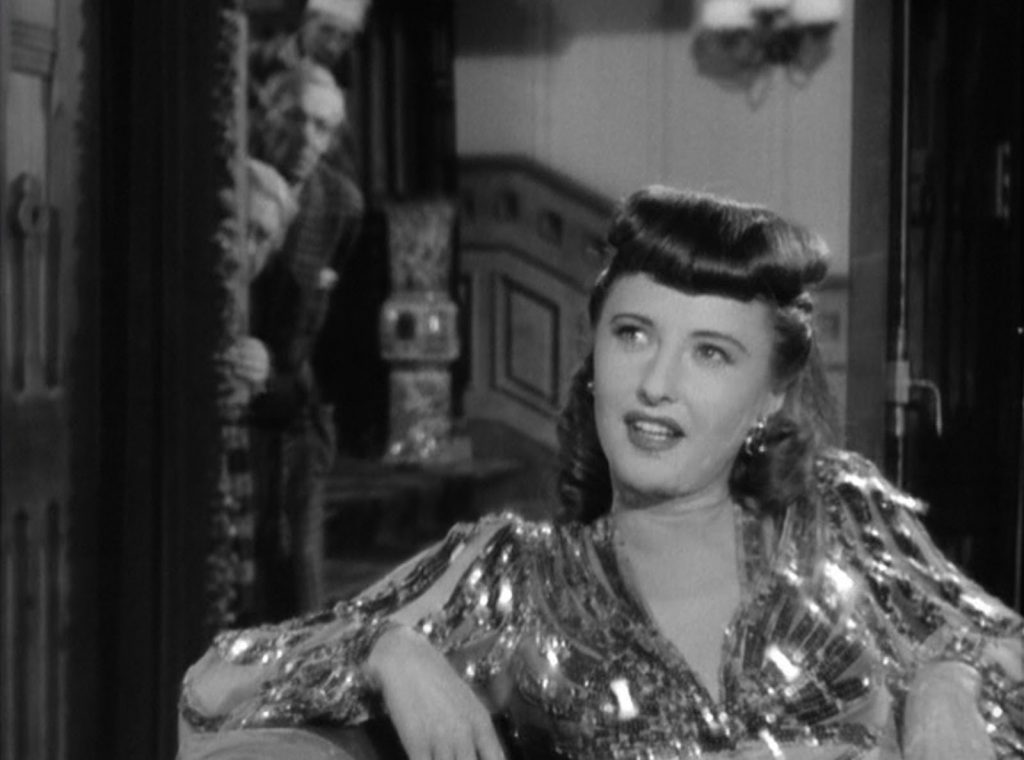
Sugarpuss’s arrival onstage is an explosion of glittering fire, immediately establishing her as the keeper of the flame in the film’s title. Sugarpuss’s dress, designed by Edith Head, is aglow with sequins which catch and play with the light. Her midriff is bare and the lower half of her costume is slit top to bottom in several places to permit maximum freedom of movement. Sugarpuss exudes confidence, a joyous self-command mingled with a sense of mischief. The slang word “boogie”, which is repeated constantly in the song’s lyric, conjoins orthodox and naughty meanings. It refers to boogie-woogie jazz, with its driving blues rhythm, and also (still innocently) dancing. “You hear the rhythm rompin’, You see the drummer stompin’.” But since the late 1920s, boogie made subterranean reference to sexual intercourse. Sugarpuss gleefully waves the banner of sex as she bounces and struts through her performance, but manages to sidestep tawdriness and vulgarity. The smiling musicians’ faces, as they take up the word and call it out, could be parents cheering on their children at a Little League game. The only source of raw, unveiled sexual energy is Gene Krupa’s drum solos, which grow progressively more unhinged and libidinal as the number nears its climax. The countdown—Sugarpuss, with band member assistance, counts from 3 to 14– for his final run at the drums (“Now mister, can’t keep on a drivin”) signals a “how long can he last?” progression to the release of orgasm. We cut briefly to Bertram’s reactions at a few points in the performance (he writes down “Drum Boogie” and “Killer Diller”). In our final view of him observing he becomes conscious of his involuntarily bouncing hands on the table top. He discreetly removes them from sight below the table. When the number has concluded– brash, expertly controlled, and thumbing its nose at the Production Code, which can’t quite catch Sugarpuss and Krupa in outright lasciviousness—Sugarpuss leaves the stage to rapturous applause, passing through the side curtain, and then, somewhat surprisingly, quickly reappears for an encore.
None of the commentators on this sequence in the film that I have read raise the questions “Why is this encore dramatically necessary?” and “What does it accomplish?” The nightclub audience makes it clear that they’re not interested in a different number, but more of the same. In the spirit of improvisation, Sugarpuss decides, with Krupa’s consent, to “mix it up a little” and offer a much more subdued, intimate variation of the song which she terms “Match boogie.” She clears everything off one of the nightclub tables, and moves it closer to the audience, urging the technician to reduce the illumination. She revels in the chance to erase the customary boundary between performing space and spectators. She invites anyone in the audience who cares to join into the new take on the music to draw close to the table where she and Krupa are seated. Krupa has replaced his aggressive, impudently phallic drumsticks with two tiny matches and a small, rectangular matchbox containing a phosphorus strip for a striking surface. It is a wonderful instance of object defamiliarization and transfiguration. Bertram is part of the crowd of spectators encircling the table in rows, but he is positioned near the back. The group of collaborators for the reprise is framed and lit as though they were a spontaneously formed community. This episode contains two extended close-up shots of Sugarpuss’s face, reflected on the table top as she repeats the words of “Drum Boogie,” like an incantation. The images of her reflection are wavering and dark, akin to a face mirrored in a stream. We are prompted to think of this seemingly “open to inspection” performer in terms of doubleness, possibly unrecognized and unresolved. Sugarpuss sheds her onstage moxie. She now appears to be a warmly encouraging den mother. The song in this round is performed slowly and at low volume, approaching a whisper. The assembled group, which prefigures Sugarpuss’ s relation with the Foundation professors, who typically crowd around her in similar fashion, is assigned the task of repeating drum boogie as well as humming along between repetitions. Bertram makes but a single effort to verbalize the ambiguous phrase, from his place in the background, but does so off the beat. Meanwhile, Krupa is quietly keeping time with his newly acquired match “drumsticks.” He has abandoned all his alpha male flourishes and showiness. His present objective is to lightly but rhythmically brush the matchsticks along the striking surface, but without sufficient force to ignite them. The suspense of his activity comes from the possibility that the matches will light up accidentally at any time. The song has engendered, in its replay, a world with a different ambience and relation to sexual declaration. The matches converse subtly and sweetly about yearning and the hidden onset of desire, laying the groundwork for Bertram and Sugarpuss’s circling, often “in the dark” discovery of how they feel about each other. As the song comes to an end, both of Krupa’s matches flare up simultaneously and with a cheerful expulsion of his breath both of the newborn lights vanish. There is much playful emphasis here on fragility and ephemerality.

As we consider the two variations of “Drum Boogie” and their markedly different emotional environments and object incidents, we might try to superimpose them. The French poet Paul Eluard has written memorably about material and immaterial dimensions in our ever-mystifying life experience, and how they borrow each other’s attributes: “There is another world but it is in this one” (986). To quote Jane Hirshfield once again from her discussion of “Poetry and the Hidden,” “the essence of treasure is that it is sequestered” and at least half-secret. (106) The large, opening version of “Drum Boogie” has so many more moving parts than its follow-up, and seems in its glowing spectacle to provide more to see. But, in fact, in the small, “sequestered,” made up on the spot second version, with unignited matches as the focal point, the “less” we are given to see permits us to see more.
Bertram and Sugarpuss’s first meeting is delayed a bit. It occurs after the show in her dressing room–4 is the number on the dressing room door, with her name transiently inscribed in chalk, for easy replacement. As I noted earlier, there is a double mistaken identity component in their encounter. Sugarpuss at first is led to assume he is a policeman, part of the group involved in the investigation of a murder case, in which Joe Lilac is a primary suspect. Bertram makes the more intriguing mistake. He seems unconscious of his depth of attraction to her performance in “Drum Boogie.” What he imagines he beholds in her is a sluicegate of exotic slang, and every word she utters increases his rapture over her value to him as an ideal language specimen, in need of complete, delectable translation. Further, nothing in her salvo of working class argot reduces her sparkling performer status in his eyes. As her song decisively demonstrated, she is clearly a queen in her domain. The dressing room door forms an interesting third party in their opening dialogue. As her nervous suspicion gives way to confusion and then apparent indifference, Sugarpuss attempts to close the door on him, but it wavers insinuatingly during their back-and-forth, creating a suggestion of stirring, unresolved sensations. Bertram manages to persuade her to accept his professional card before the door is finally pushed shut. The card is another small, seemingly negligible item that proves, through a stroke of propitious timing, the lynchpin for the entire plotted action. Sugarpuss appears to have put the meeting with Bertram entirely out of her mind, but as she sits in a taxicab with two of Lilac’s henchmen attempting to come up with a hideaway where the police will not think to look for her, she finds the forgotten card tucked away in the sheer fabric of her scarf. The card contains both Bertram’s name and the Foundation address. The translucent female covering of the Professor’s credentials when it receives a close-up at the moment of discovery gives this nondescript business card a hint of mystery, and even a sprig of sex appeal. It is worth noting that she was unconscious of having taken the card with her. And yet it somehow found a way to entangle itself in a piece of her intimate apparel. Bertram is concurrently out of her thoughts, and also teasingly, obliquely inside them. But as she takes the card in hand, she instantly knows where she is going.
Let us return now to the Tap Room where all the professors remain gathered after Sugarpuss retires to her bungalow. The scene we’re considering occurs immediately after the providential inversion of the number 9 when Sugarpuss shuts the door on what she no doubt regards as a momentous, unfathomable digression in her life. The focus of the episode is for the most part Professor Oddly and his recollections of his beatific marriage, that ended with his wife Genevieve’s death a quarter of a century ago. The object incidents presented or referred to here all provide further illustration of the large-small dynamic. For much of the scene’s length Oddly is backed by a wooden storage cabinet displaying rows of plates, facing outward. We can readily observe the contrast between large and small plates, set side by side. Oddly gently rebukes the group for glibly assuming they know something about marriage, when he is the sole person at the Foundation with any experience. He proceeds to tell the story of his honeymoon, which might well strike any attentive listener, as woefully undernourished by sexual passion. (“No hanky panky,” Billy Wilder might say.) Oddly’s reminiscence is filled with specific references to objects, all of them endowed by Oddly with a poetic aura. The honeymoon week in the Catskills, in his view, more than fulfilled its great promise since his bride Genevieve was able to complete fourteen excellent watercolors before their return home. Oddly’s spectacles have a thin metal chain attached to one side that quivers in sympathy as he recounts a few aspects of the marital glory held and lost. He declares, with a botanist’s fervor, that a woman’s heart offers an astonishing parallel to a beautiful, delicate wind flower, the anemone nemerosa, which belongs to the buttercup family. He removes his handkerchief from his coat pocket to illustrate how this flower waits amidst the warm sunshine and soft winds before it discreetly unfolds its petals. He sees only the flower as he bends back the handkerchief’s corners, but the viewer is nudged gently in the direction of labia. Oddly acknowledges the danger that a rough, impetuous bee would pose for this flower, unsuited for violent incursion. Oddly also pays tribute to the flight of swallows Genevieve sketched on the strip of wallpaper close to the ceiing while Oddly was away at a conference. He concludes by invoking her small, lovely hand which opened for him on numerous occasions for what he deems desire’s ultimate attainment, a bold palm kiss.
Obviously, Oddly’s account of his sacred union is rendered amusing because of its absolute sublimation of assertive physicality. But I would argue that more is at stake here than ridicule of Oddly’s naivete and deprivation. His unqualified profession of devoted gratitude to this lost Divinity is unexpectedly moving. Oddly has no sense of having missed out on anything that could have brought him greater satisfaction. He regards the bounty of his brief time with Genevieve as large, by any reasonable standard of measure. The flower’s sheltered opening, the honeymoon watercolors, the airborne swallows on the wallpaper, the palm opening for the tribute of his moist lips are amplified, in our listening, by the unmistakable sense that they have brought him fulfillment, with no residual sense of something vital left out. We cannot know, of course, what Genevieve’s own assessment of her marriage might have been, but it is not inconceivable that she found much of what she sought and needed in Oddly’s care.
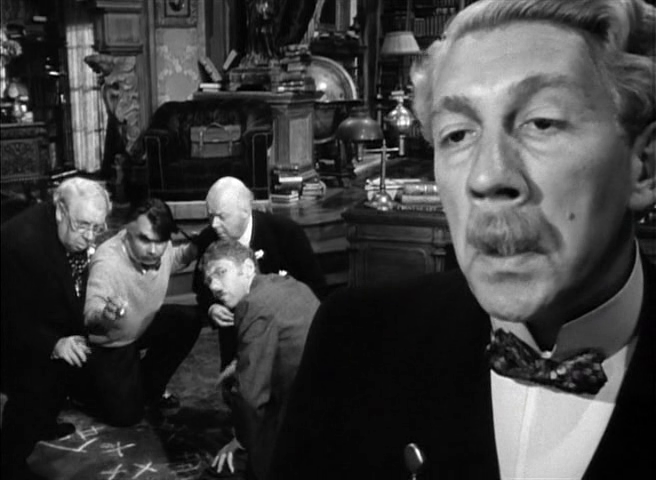
I think of Oddly’s introduction in the film, when we see him out for his constitutional morning walk with his colleagues on Columbus Circle. He is the first to be drawn away from his fellows, establishing him as individual in his orientation. What pierces his attention, and leads to a gesture of quiet independence, is the sight of an easy to overlook flower, the golden bell or forsythia. He studies the bell blossom fondly, and clips a tiny sample to take with him. Hawks juxtaposes this sweet, meaningful noticing and physical touching with the monument that appears in Ball of Fire’s opening shot. Columbus Circle contains a 75-foot column topped by a marble statue, honoring the “discoverer,” Christopher Columbus. The monument is massive, and conspicuously phallic. Columbus is elevated to a position high above the encyclopedia adventurers who modestly follow in his wake. But Hawks invites us to acknowledge, at the very outset, the easily bypassed beauty of natural forms, often diminutive, profusely spread out at ground level. Columbus’s marble gaze, by contrast, is set apart from anything intimate and ordinary. He mimics, in his inanimate majesty, contemplation of high buildings and empty sky. Oddly tells one of his colleagues during their walk that the scarlet tanager flies fifteen hundred miles to make contact with the golden bell.
Back in the Tap Room, as Bertram listens to Oddly’s description of contentment in a nearly asexual relationship, he appears vexed and disapproving. Naturally, the viewer is led to prefer the value of a joyously unfettered physical relationship to the tranquil passivity Oddly advocates. But the unstinting, worshipful poetry of Oddly’s tribute to his dead wife poignantly complicates the atmosphere in the room. The scripting of this scene establishes a tension between the “muchness” that Oddly is sure he once possessed and sadly lost, and the recognition that he is blind to the possibilities that exceeded his temperament and power to imagine. He mourns what is gone past recapture, but what has been taken away can seem, to others’ eyes, pitifully small. So the smallness of the few key memory objects Oddly singles out for veneration both radiates and grows dim. He continues to see the frail, sheltered wind flower of his marriage as a vast, luxurious garden. Yet demonstrable smallness, as we have seen elsewhere, has ways of securing legitimately commanding presence.
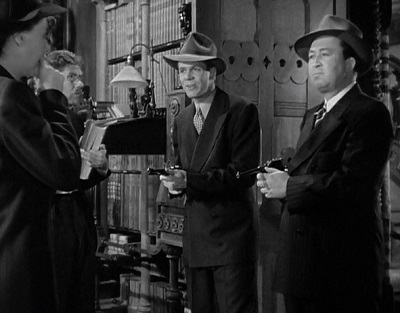
In the climactic battle with the gangsters who invade the Foundation and hold the professors at gunpoint, Professor Oddly distracts the trigger-happy thug in charge (Dan Duryea) by suggesting that he prove his prowess by shooting a tiny dime Oddly raises up between two fingers at a distance of twenty feet. His unforced proposal, which may cost him a limb (or his life) buys precious time for his colleagues. They coordinate their own small devices (a microscope reflecting mirror, a focused beam of light, a strand of rope whose burning will cause a painting attached to it to drop propitiously on a gunman’s head) to outmaneuver their enemy and reclaim their precious library workspace, after many acts of wanton destruction. Oddly’s offer of himself for target practice as he raises the gleaming dime to a shooter who regards him as expendable is the most heroic gesture any character performs in the film. Moreover, in the scene we have been analyzing Oddly issues a request of the group after finishing his reverie in the Tap Room that leads to perhaps the most moving segment in Ball of Fire. He recalls the song, “Genevieve, Sweet Genevieve,” which “everyone used to sing” at the time of his marriage. He requests his friends to sing it for him because he has never been able to “carry a tune.” The group softly enters into the deep sentiment of the song’s chorus, and in so doing “carry” the music collectively for their grieving friend, in effect bringing the past back for him, and for themselves. Professor Gorkakoff, with his soup-strainer mustache, conducts the group’s impromptu performance with his pipe stem, doubling as a baton. “Genevieve, sweet Genevieve,/The days may come, the days may go,/ But still the hands of memory weave/The blissful dreams of long ago.” Hawks has assembled an extraordinary cast of Hollywood character actors to play the team of encyclopedia writers. They all possess remarkably distinctive faces and voices as well as varied, well-honed approaches to comedy and sentiment. As Hawks celebrates their long-term fellowship, in which they have now gracefully arrived at old age (with a much younger Gary Cooper the odd man out), the director manages as I have noted to balance their dignity with frequent outbreaks of childlike ebullience and vivacity. Their manner generally evokes an unworldly innocence, but at certain times—especially in the dream-suffused choral scene—they are shown to be well-acquainted with loss, regret, and the fact of waning powers. What the 1909 “Genevieve” song and its follow-up choice, the academic anthem “Gaudeamus Igitur,” composed in 1247, convey most strongly is a solidarity and mutual respect that is as present in times of tribulation as in joy. The professors know each other in a fashion that somehow eludes the claws of envy, disappointment, and tedium. They have a group sense of humor that is as enlivened by old, highly familiar jokes as new ones. I have previously mentioned the screenplay’s deliberate parallels with Walt Disney’s first animated feature, Snow White and the Seven Dwarves (1937). The dwarves in the earlier film are first revealed to us laboring in a diamond mine teeming with light. They effortlessly bring to the surface diamonds and rubies of different shapes, colors and sizes but the workers seem untainted by any awareness of wealth or dreams of glory. They labor contentedly for a specified number of hours, then sing “Heigh Ho” as they return with exactly the same level of contentment to their cottage home in the forest clearing. The encyclopedia venture operates in exactly the same spirit as the diamond mine, in which knowledge is pursued blithely, dreamily, with no expectation of advancement or professional reward.
It is striking how much of the romantic feeling in Ball of Fire depends on the spreading of the emotional wealth to the encircling elder “family” members, and the agreeable fantasy of inclusiveness without strain. The energy of Sugarpuss’s slang-permeated revelations becomes a veritable Fountain of Youth for the entire Foundation, with the exception of the competitive mother surrogate, the housekeeper Miss Bragg.
The professors’ ever-increasing jubilation at all of Sugarpuss’s antics and fond attention seem to reduce our own sense of any serious, irremediable culpability in her deception….”
The professors’ ever-increasing jubilation at all of Sugarpuss’s antics and fond attention seem to reduce our own sense of any serious, irremediable culpability in her deception. That is, until the proposed car trip for the wedding that will never happen, when a surprising weight of pain, dislocation and retribution accumulates with rapidity at the hotel where the wedding party is delayed by an accident. I feel that the film brilliantly creates a moral buffer zone with the decision to present the professors’ self-aware, melancholy-tinged, but community affirming singing with full seriousness and then to follow it with an equally moving breakthrough in both Bertram’s and Sugarpuss’s sense of what they might feasibly offer each other, once the clouds of performer manipulation and professor daydream haziness have been removed. Two moving scenes in counterpoint, then—both attesting to love’s power to ameliorate and dissolve substantial barriers—take place almost concurrently before the fearfully anticipated, veil-tearing, truth-dispensing showdown with the gangsters commences. I imagine most first-time viewers are somewhat shocked by the degree of harsh, demeaning, bare knuckle realism that accumulates (again swiftly) in the wake of Joe Lilac’s takeover of the motel premises.
Let us return to the speech of objects. As Oddly declares himself overcome with feeling after the singing of “Genevieve,” he thanks the group for their kind gift and expresses his need to retire. He then pulls out his handkerchief for the second time, after his earlier use of it to demonstrate how the windflower’s petals unfold, and blows his nose, while his eyes are rimmed with tears. The noise is loud and birdlike, and tilts the moment in the direction of comedy. Laughter siphons off here, as it does so often, some of the pressure bestowed on sentiment. Oddly’s heartache cannot avoid earthbound messiness. The handkerchief undergoes (through rhyming) two noteworthy transfigurations in scenes happening shortly after this one. It becomes a washcloth for Sugarpuss to wet her neck with after kissing Bertram in the darkness of her bedroom. Bertram had confessed to Sugarpuss when she was a houseguest at the Foundation that the sight of her body in motion produced a disquieting effect on him, and that he needed to run a wet cloth over the back of his neck to reduce his excitement. Not long afterward, once she has initiated a “yum yum” kissing lesson to further his education, we witness Bertram race to the bathroom to apply the neck wetting remedy. Sugarpuss resorting to the same method in her bungalow succinctly indicates that her own reciprocal attraction has reached an identical depth.
When Joe Lilac meets Bertram for the first time in the hotel Tap Room, he quickly suspects that Bertram’s cheek bears traces of Sugarpuss’s lipstick. He finds the sight of it extremely disturbing, and seeks a means to remove the evidence of romantic contact without lowering his status. It is as though rubbing off the lipstick will make the possibility of a rival intimacy vanish. He grabs the handkerchief visible in Bertram’s upper coat pocket and uses that to aggressively obliterate the mocking red smear. Then to counteract the impression of “ladylike” squeamishness, he slaps Bertram’s face twice, handkerchief in hand, with exceptional force, and then completes his demonstration of superiority by punching Bertram in the stomach. It is fascinating that Bertram, with the wind knocked out of him and falling into a chair, makes no effort to retaliate. Instead we see him gathering his wits, processing Lilac’s intentions, without the slightest impression of being intimidated or cowardly. Lilac’s other defining object in this meeting is his cigarette. Professor Peagram (Aubrey Mather) explains to Bertram, translating Lilac’s soulless slang put-downs, that Lilac is saying that the “wedding trip was nothing but a vast lie.” Lilac removes the cigarette from his lips as he repeats the phrase “vast lie,” advising Bertram not to believe it. There will, in fact, be a wedding, but Lilac is the mate that Sugarpuss has chosen. Lilac sarcastically expresses appreciation for the professors’ successful delivery of a “hot cargo” (his coarse epithet for his intended bride). Lilac gestures to himself cockily with the cigarette as he announces that he, not “wimpy” Bertram, is the bridegroom. As he finishes the phrase “hot cargo” he tosses his hot cigarette contemptuously to the table where Professor Robinson is seated. Robinson is distressed by Lilac’s account of the scheme, but without missing a beat he removes the burning cigarette from the table surface and deposits it in a coffee cup, where it will do no damage. This modest, instinctive action expresses something large: it snuffs out any lingering notion that Lilac’s power dominates the Professors’ minds.
In the previous scene in the darkened bungalow, slang proved to be Bertram’s ideal medium of expression in his announcement of his desire for an intensely sexual marital relationship with Sugarpuss. Slang functions there as a vehicle of joyous upending and liberation. In marked contrast, the slang that Lilac and his gunmen bring with them to the Tap Room has a slithering, merciless chill: it poisons the air in the room, making all considerateness sound like a sucker’s game and all communication a drive to humiliate. Slang becomes temporarily a negative manifestation of smallness. I shall reverse course here and take the action back to the bungalow, before the precipitous fall of Bertram’s romantic faith and of slang’s power to achieve vital connection. It is worth stressing that for first time viewers it is impossible to predict why Bertram decides to visit Professor Oddly in his bungalow. We know that Sugarpuss occupies the bedroom Bertram will mistakenly enter, but we could not possibly predict what they will have to talk about when he discovers her there. We are not able to see in advance the slippery, shape-shifting power of darkness being readied, and its largesse.
Bertram enters the bungalow without knocking and requests that Oddly not turn on the light because of the “extremely personal” nature of what he has to discuss. Bertram has not come to argue with Oddly. He expresses respect for the “beauty and delicacy” of the relationship his friend described with Genevieve. Instead, he needs to “get something off my chest” and to discover whether Oddly is able to fathom and accept what he brings to light within this protective screen of dark. The bungalow contains windows, all of them curtained. A double window behind Bertram is lighted up from the exterior courtyard, but the light almost converts him into a silhouette. The blaze of light rhymes with Bertram’s need to address the business of his heart, that allows him no rest. A third window, on the side wall of the room very close to the double window, remains in darkness. The effect it produces is of inviting restfulness. There appear to be plants set on its sill. The way the frilly, feminine curtains for this window are tied open reinforces the qualities that Sugarpuss’s darkened, listening form in the bed conveys: encouraging and receptive. The fact that this window lies in shadow invites us to connect it with Sugarpuss.
Before Bertram has crossed the courtyard to consult with Oddly, we have been given one view of Sugarpuss in the still lighted room holding a sheet of paper, and giving up the idea of writing a message to explain her behavior. She turns out the light on her bedstand in resignation. She will eventually produce this same paper to show Bertram when he has finished condemning her for her betrayal. She tells him that the paper contains all the excuses she could come up with: we see that it is incriminatingly blank. I am attempting to decipher her state of mind before Bertram’s wholly unanticipated visit. To what extent does the literal darkness of the room correspond to an immersion in guilt and self-reproach? When we first encounter her face in the dark, her eyes glowing like an animal’s, we can see evidence of guilty regret in the lower portion of her face, a desire to recede further into the blackness. We cut back to Sugarpuss in close-up a second time after Bertram divulges, ecstatically, that he is a man uncontrollably in love who longs to take his bride-to-be in his arms. There is remorse still visible in her expression—after all, her actions have rendered the acceptance of this proxy, escalated proposal impossible– but after lowering her eyes we see her raise them again and her gaze now strongly communicates both a fresh realization and an attendant hunger. Sugarpuss, who for better and for worse is a woman spectacularly well-suited for living in the present moment, seems to forget (briefly) that all her decisions since her arrival at the Foundation have taken terrible advantage of Bertram’s good will and have shackled her to Joe Lilac. She rashly imagines that she is free to take Bertram now at his unconditionally honest word, though she has at no point been honest (by the standards he lives by) with him. And yet, by the sleight of hand that is one of cinema’s everlasting wonders, because Sugarpuss unveils her identity to “Pottsy” in the dark and assents unreservedly to her newfound certainty in love, kissing him avidly several times and, using one of his “educated” words, telling him (honestly) that his impassioned confession has been “illuminating,” the viewer fully shares for the moment her confidence that she is free to take the avowal he has made: in more than one sense, made mistakenly. We, she, and he are caught together, in a reasserted moral darkness.
Bertram’s own progression in the scene is equally intriguing. As he climbs the steps to the bungalow, we continue to hear in the background his colleagues singing, in Latin, the rousing anthem “Gaudeamus Igitur.” The text of this ancient festive song, so often sung nostalgically by aging academics at reunions, is actually a spirited warning addressed to the young. The young are told to rejoice in their youth, to partake fully of the present moment, because loss and death are inevitable. “After a troublesome old age, death will have us.” Perhaps this counsel merges with a verse from the previous “”Genevieve” song that the professors don’t get around to, and likely fail to remember: “My waking thoughts are full of thee/ Thy glance is in the starry beam/That falls along the summer sea.” Bertram knows that he is filled to bursting with an unprecedented wild feeling, akin to chaos, and he is seeking assurance from a colleague who seems temperamentally in a different world altogether, that his extravagant yearning for a sexual tempest isn’t wrong. He is both certain and uncertain of where he stands. Bertram believes that humans belong to the landscape, mental, emotional, and physical, that they cultivate. Can his frenzied single-mindedness be harmonized with the quiet discipline of the research project he has been devoted to, or will it mean sensible banishment, exile? Is there a consensus among the older professors that, in spite of all their giddy backsliding, Professor Oddly’s adherence to gentleness and restraint is the correct course, austerely allied to truth and balance? Bertram might suppose that the dark bungalow cavern he has entered is a version of Plato’s cave, with all the light behind him, outside and beyond his reach. Of course, no rejoinder will issue from Oddly, who is absent, and who in fact has been assigned, providentially, to another room. The language necessary for a reasoned reply is, in any case, inaccessible to Oddly. Bertram doesn’t, in fact, seek dialogue. He communes with himself and arrives, unequivocally, at an affirmation of the meaningful availability of Sugarpuss and the ungovernable love she has awakened in him. The language he reaches for, as justification, is entirely hers, slang. It is slang looseness, excess and unpredictable reversal with which he wishes to harmonize. Any other claim of harmony must be placed behind it. He stammeringly reports, with no hint of doubt or worry: “I have forgotten all my tenses. I’ve gone goofy, bim-buggy, slap-happy.” A solid momentary victory. Yet within minutes he will have to contend directly with Joe Lilac, who lives thoughtlessly and with no belief in harmony, in a flagrantly opportunisitic present tense. He is utterly indifferent to others’ welfare and satisfaction, possibly even to his own, no matter how tightly he guards them. Unlike Oddly’s Anemone nemerosa, Lilac is all hard edges. He closes his eyes to consequence, and has no feeling for what he leaves behind. Sugarpuss is by no means Joe’s equal in tough self-interest, but clearly there are qualities in his sensibility she is drawn to. She speaks Joe’s language with complete comprehension, albeit with a more generous, kindhearted inflection. I think of her answer to Bertram’s baffled and enraged accusation of her regarding and treating all of the professors as suckers—in that respect, their expert teacher. He says, reviving the issue of smallness, “It was a very small tuition fee” she charged them for their education. She considers what she had imagined would be the result of this cruel deception, and weakly replies, “I didn’t want you to get it this way. Not right in the face.” Which way, then? In a manner which would not require him to see with such measured clarity?
The speed, intensity and emotional impact of Bertram’s movement from certainty that he has gained everything worth having in Sugarpuss’s ardent acceptance of him (a certainty that the viewer perhaps momentarily believes is warranted, and deserved) to an equal certainty that he has never had anything at all from her that was real is startling. It is a demolition of comic elasticity larger than the narrative has led us to anticipate. Between these cancelling certainties is a noteworthy object incident built on uncertainty which occurs as Bertram crosses the courtyard to bungalow 6 a second time, en route to informing Sugarpuss that he has learned about her “vast lie.” A vehicle that rhymes with the rented car that the group traveled in to New Jersey drives up, containing policemen and Miss Bragg. It is a well-timed, auspicious arrival that might reverse the tide of negative events and possibly result in the apprehension of the gangsters and Sugarpuss. Bertram stands close to the car as Miss Bragg and a policeman express concern for his safety and begin to ask the obvious questions. At this point the camera shifts perspective to the double window inside the bungalow. Sugarpuss, who has no direct knowledge of what took place during the meeting between Bertram and Joe Lilac, observes from inside her room the pantomime of Bertram’s reply to the policeman’s inquiry about what happened. Since the viewer shares her point-of-view and inability to hear what is being said, for a short interval we share her uncertainty as well. We soon infer, in tandem with Sugarpuss, that Bertram has misdirected the police, in effect collaborating with the criminals, telling them that the entire group has already gone, and pointing out (erroneously) the direction in which they have escaped. But there is a lingering uncertainty about why Bertram, profoundly humiliated and boiling with anger, has spared his persecutors. In this decision we may detect a small remnant of unextinguished love, as tiny as the now pitiful engagement ring Bertram gave to her.
The insufficient rescue vehicle that offers (in vain) Bertram assistance here morphs, in Ball of Fire’s finale, into a more capacious, triumphant conveyance, a garbage truck piloted by the garbage man who launched the quest for slang with his arrival at the beginning of the film. The garbage truck’s mission is to rescue Sugarpuss from a wedding to Joe Lilac which she has now spurned. The truck provides a literal joyride for a large assortment of the film’s characters, and provides a space where all tensions, class divisions, and sense of hierarchy affectingly dissolve. Hawks additionally plays with the contrast between ordinary, unassuming trash and the sort of malignant waste that the crew of gangsters embody.
When Bertram and his dispirited wedding party return to the Foundation after his confrontation scene with Sugarpuss, he seems not only listless but visibly aged. He appears to be on the verge of surrendering all further aspirations to a youthful spirit. Let the slide to resignation and entombment commence! The first shot inside the Foundation reveals Miss Bragg setting things to rights. She is wiping away the chalked dance steps the professors had drawn on the library carpet to help them learn how to do the Conga. She also eagerly removes the victrola from a table of books, hoping to banish all its associations with infectious swing music. As she picks up the machine, however, she accidentally jostles it to life and Sugarpuss’s music is teasingly released, supplying a rousing beat to her hasty exit. Hawks does not make it easy for us to imagine how the rupture in relations between professor and “moll” will be repaired. The separation is not based on an easily corrected misunderstanding. Sugarpuss has indeed done precisely what Bertram imagines she has done, and for crass reasons. We impute to him a fixed idea of betrayal and abiding hurt, which makes further romantic initiative an impossibility. We are not eager for scenes of recrimination and amplified distrust, since we are already aware of Sugarpuss’s authentic change of heart in the motel bungalow. What the narrative desperately needs is a persuasive catapult, which can obviate the prolongation of melancholy “wheel spinning.” And before we have time to predict what it might be, a salutary object materializes to cut the Gordian knot and restore momentum. The object is Joe Lilac’s large, expensive engagement ring for Sugarpuss, selected by one of his thugs dispatched to a jewelry store, and which proved to be the wrong size for her ring finger. She had initially been overjoyed to receive it, since it constituted proof that his feelings for her were “serious.” What Sugarpuss has done with the ring is return it to Bertram by mail, as though it were his own small ring given back in penitence for her underhanded treatment of him. Professor Gurkakoff takes it upon himself to explain to Bertram what this seeming mix-up actually signifies. Invoking Freud, he confidently interprets the accident of the costly jewel’s having been forwarded as no accident at all. Sugarpuss discarded the ring provided to her by the man she didn’t want, and retained the ring chosen by the man she truly loved. She may not have seen what she was doing, but her action “illuminated” her heart, nonetheless.
Were it not for the plenitude of objects that have found such diverse ways of speaking in this film, the unriddling of the engagement ring’s veiled purport would be unlikely to have such persuasive force. It is interesting to recall how often solutions to impasse in stories are achieved too facilely, and feel disappointingly random and weightless. The artful, compelling key which allows a consequential barrier to be fittingly overcome must be formed out of material steadily employed in a film’s image patterns, its ways of seeing and making meaning from the outset. Gurkakoff’s divination is tied to objects’ touching need throughout Ball of Fire to reach beyond themselves, to be entangled with half-clear human intentions. Gurkakoff respects the ground of Bertram’s painful certainty, yet at the same time counsels him to imagine this gaudy trinket of Lilac’s supplanted by something smaller. In smallness, as the film so often implies, there can be a finer tone, a matchstick’s flare of truth. Bertram is stirred momentarily, but less convinced than the viewer is prone to be. He perhaps has shifted his stance from refusal of any compensating light to uncertainty. After all, uncertainty has become ingrained in him throughout the film’s plot, dictating his every romantic move, and leading him again and again to surrender without a struggle what had formerly felt like a sound position. Bertram requires something more to bend strongly in the direction of pixillated faith. The ratification of the ring’s entreating message comes when he discovers (happily, in a matter of moments) that Sugarpuss has not completed Joe Lilac’s wedding trip trajectory. Something has intervened. She is still unwed.
Bertram had spoken in the motel bungalow darkness of how he had acquired a discombobulating need for boldness in love. An internal chaos, lacking in harmful ingredients, has emancipated him. Once he receives the news of Sugarpuss’s hesitation about giving herself to Lilac, he is ready to transform the wagers of chance into fact, and boldly seize the newly hatched certainty. The wrong ring has become an engine of upheaval and consolidated motion. Bertram once again has a direction, which he pursues with intertwined emotional, moral and physical resolve for the balance of the film. The professors as well as the viewers partake of this unwavering directedness along with him; it is wonderfully contagious. The dramatic realization of what they accomplish , releasing themselves more completely than they release Sugarpuss, who can always take care of herself, is at once comically invigorating and moving. We are misled into thinking that the professors’ final communal expedition of rescue is about significant transformation. In fact, it is about constancy, of keeping faith with fellowship and the small things that sustain them, as well as their long term, faintly absurd encyclopedia project.
The remainder of my discussion will be centered on Bertram’s engagement ring, whose recurring significance arguably renders it the film’s most versatile, emotionally charged object. I will concentrate on its emergence in the film’s initial, indeterminate proposal scene. It comes into meaningful contact with a cluster of other supporting objects in the course of the episode. What becomes of the ring in Sugarpuss’s bedroom (another borrowed space like her perplexing possession of the motel bungalow) as Bertram and Sugarpuss nervously circumnavigate its magnitude will also enable us to understand more fully the dynamic of their onscreen way of being together. That is, what makes Bertram’s “in the dark” relationship with a duplicitous, unaccountable Sugarpuss both surprisingly balanced and tenable.
Bertram has impetuously decided to propose to Sugarpuss after a single, volatile occasion of exchanged kisses and acknowledgments of mutual strong attraction. The viewer is not prepared for this instant forward leap to binding commitment, nor for a cyclist arriving at the Foundation bearing a side car of cut-rate Jewelry. (“Credit with a Smile. 20% Off for Cash). Bertram meets the delivery boy rider bearing a package on the street. Bertram appears in a hurry (emphasizing his overall hurry to “lock” the romance in), expressing agitation about the delay in the package’s arrival. He seeks confirmation that the requested engraving has been done correctly, then pays what he likely regards as the princely sum of $39.85 to a visibly bored courier, who is rewarded with a fifteen cent tip. No sooner is Bertram back indoors than he is surrounded by all seven of his colleagues who appear as excited as he is by his planned engagement, and express no worries about his haste. Professor Peagram asks whether Bertram is sure the ring’s setting is solid gold. Reassuring him that cutting corners on such an acquisition would be unthinkable, Bertram reveals that he had looked at a ring that was $5 cheaper, but not nearly so “handsome.” The decision to wed is rendered less rash and self-serving by the group consensus of equally naïve colleagues who feel that Bertram’s headstrong action is not only acceptable, but inevitable.
Miss Bragg appears with a tray prepared for Sugarpuss’s breakfast, admitting that she has not followed through on her threat to quit if Sugarpuss was permitted to stay. She assumes a still lordly, unyielding attitude to Sugarpuss’s sudden ascension to power in the Foundation. “If I were the cream for that woman’s coffee, I’d curdle.” Before Bertram takes the food tray upstairs to serve Sugarpuss breakfast in bed, we see Oddly place a single flower in a bud vase on the tray, and in so doing makes us feel that the entire group is somehow granted presence on the tray, and is symbolically incorporated in Bertram’s grand exploit. Bertram half trips as he moves up the stairway and the professors enjoin him, in the widest possible sense, to “Be careful.” We cut to Bertram in the upstairs hallway studying himself in the mirror and straightening his tie. The major reason for this pause is his inspiration to hide the tiny box with the ring under the ceramic cover for his intended’s toast. With this small adjustment the tray has been converted into an agreeable conspiracy of objects, with a hidden, secret prize at the center. Two old volumes, one on top of the other, lie next to the breakfast tray on the desk beneath the mirror, setting up a tension between Bertram’s accustomed sphere of knowledge and the modern, teasing experiment with the protocol of “plighting one’s troth.” We are possibly also reminded of Sugarpuss stacking similar volumes onto the floor in a prior scene in order to gain sufficient height to kiss Bertram.
Romantic music plays softly as Bertram carries the breakfast tray into Sugarpuss’s room without mishap. His confident agility is displayed as he extends a leg behind him to efficiently close the door.. Nervousness has momentarily been routed. In front of the bedroom wall next to the doorway is an antique free-standing clothes closet, dusty and elaborately patterned, which betrays its age. Sugarpuss is not immediately visible, but she greets Bertram with his new nickname “Pottsy” as he travels to her bedside, where we are granted another explosive variant of the prismatic Sugarpuss. She is aglow in a feathery white satin nightgown, which is in striking contrast to the pair of oversized old man’s pajamas she wore the last time we saw her in the bedroom. Sugarpuss invites Pottsy to set the tray on her “snooze stand,” which Bertram understands is her lap, and requests “just jav, no cow” for her coffee, whose meaning is also quickly grasped. No sooner have these points been gained than there is a hilarious series of blocked attempts to get Sugarpuss to raise the cover to her toast dish. She has several slang substitutes for the word “No” as Bertram coaxes her to have some toast. “Nah.” “Uh uh.” “Mm-mmm.” “Not one bite?” (If she says “No” so emphatically to toast, what about Bertram?) Instead of eating toast she tells him “to get a load of his feet” and sit down as she tells him she now knows what a “pleonasm” is. “Saying the same thing twice…as in rich millionaire,” which is perhaps a glancing reference to her desire to marry rich. More pertinently, after making a grammar mistake in her speech the previous day (“on account of because”) she proudly admits to having spent two hours reading grammar books that she found in her bedroom. There is a large, uninviting tome still open on her night table. This minor revelation deftly insinuates that she has made a deliberate, uncalculated, and unnecessary attempt to draw closer to his realm, acknowledging (without prevarication) its value. Bertram reveals that he has had a similar difficulty getting to sleep, and that he has taken an all-night walk in a city park “to gather my thoughts, analyze my impulses, and clarify our relationship.” As Bertram describes his thinking about his life thus far, in which he gives himself a low rating, in spite of his many outward attainments, Sugarpuss uses the coffee cup and saucer she holds to express doubt and bewildered amazement when she figures out how seriously he regards their extremely brief time together. The first time the word relationship is mentioned, she halts the movement of the cup, and cynically fends the word off: “Have we got one of those”?
Bertram grasps the fingers of one of his hands with the other, unwittingly converting it to Sugarpuss’s hand, which he has not yet touched. He tells her that the book of his life so far has amounted to no more than “a Preface, an empty Foreward.” Sugarpuss, he tenderly adds, constitutes the unwritten first chapter. Sugarpuss has an intuition where this conversation is headed, but asks him to talk a bit plainer, as though his metaphor, in its poetic efficacy, were not plain enough. He decides to insist, without further subterfuge, that she look under the lid, and let the ring be the vehicle of expression. He backs away from her bashfully as she complies with his request, walking across the room to the window, and stands with his back to her while she discovers the ring. At first she mistakes the boxed bit of jewelry for a less decisive gift than an engagement ring , or pretends to. As he talks about measurements and other particulars, we see her reverting to a superficial stance of polite, smiling appraisal, placing the small ring on the same finger that Lilac’s extravagant specimen already occupies, before turning Lilac’s away, underneath the finger, to conceal it. She seems happy enough with Pottsy’s kind gesture, but can’t imagine that such a thin, barely adorned trifle could carry the weight of a proposal. To grant it such status would make it, in Sugarpuss’s ingrained mindset, an unintended slight or insult. She has been educated, in her world, to expect better things. She is visibly shocked when Bertram identifies its meaning. A face caught in genuine surprise, as Barbara Stanwyck’s is here, is one of the unsung glories of cinema; it seems always beyond the reach of an actor’s plan. She asks, as a thoughtless, futile delaying tactic, “What am I supposed to say?”, a crucial question in a film so preoccupied with speech and all its puzzlements, inversions, and contradictions. “Just say yes.” For Bertram engagement is not a reckless intensification but the only logical step to take when feelings have been openly declared. He poignantly confesses that he has been a kind of intellectual freak, who has been hemmed in by his feats of book learning from an early age. Living has been swept aside. “People like that…well, you see, dust piles up on their hearts. And it took you to blow it away.” She replies by gently taking up his image, and working with it to bring him back to earth from his dream tower. “I didn’t mean to blow it [the dust] smack into your eyes.” Again, this is an honest rendering of her intentions. He invites her then to look inside the ring. It contains an engraved reference to lines from Shakespeare’s play, Richard III. Act 1, scene 2, 222-224. “Look how my ring encompasseth thy finger; even so thy breast encloseth my poor heart. Wear both of them, for both of them are thine.” Sitting by Sugarpuss’s bedside, Bertram recites the words from memory in a highly affecting, unhistrionic manner, and as he does so the humble ring imaginatively expands, achieving a greater reach of being. Bertram displays in his recitation a beautiful, dominant attunement to the idea that all the gain will be his, if she deigns to accept him. Even though the ring is never shown again onscreen in its “thingliness,” when Professor Gorkakoff alludes to it later in his argument about Sugarpuss’s change of heart, it rises up from apparent oblivion to ratify his intuition. It has acquired staying power in the film’s memory field, due to its eloquent hidden plea and assurance. For the viewer, as for Sugarpuss, the gift initially regarded as expendable shines belatedly in the mind’s eye. But the ring has still more to say, in another language, given its original context in Shakespeare’s Richard III.
When Sugarpuss tries to read the message engraved in the ring, she misconstrues the engraved name as Richard ill. And Richard is indeed ill, driven to murder and relentless scheming by his bottomless sense of deserving more than he has yet received. The lines Bertram innocently borrows from the play are spoken by Richard, Duke of Gloucester, in his attempt to woo Lady Anne, with appalling (and also comic) haste, during her slain husband’s funeral procession. Anne is well aware that Richard is himself responsible for the killing, and convincingly professes hatred for him, but allows herself to be wooed anyway. The lines Richard speaks while attempting to take Anne captive with ring and rhetoric encompass more than the seemingly straightforward avowal of enduring devotion. Joe Lilac and Sugarpuss as well as Bertram are scrambled together in the ambiguous enclosure of the tribute. Lilac and Sugarpuss are both actively dissembling, as the malignant, ambitious Richard is; Lilac is guilty of murder that he claims not to be involved in while attempting to enchain Sugarpuss in a forced union so she can’t legally work against him; Bertram’s wild haste to gain Sugarpuss’s assent resembles Richard’s impossible challenge of turning Anne’s affection in a different direction during her husband’s funeral, though Bertram knows nothing of Sugarpuss’s rival commitment. Bertram resorting to elevated Shakespearean language to convey transparently his adoration of Sugarpuss encourages us to imagine an ideal speech realm exempt from slang’s impurity. But the lines have as much subterranean murk and double import as the slang Bertram is seeking to “marry” with his professorial style. Nonetheless, Bertram successfully redeems Richard’s wily discourse by his way of speaking it, and the limited sense of its intention that he attends to. The words weave their spell and bring the ring away from the double-minded perils swirling in Bertram’s vicinity.
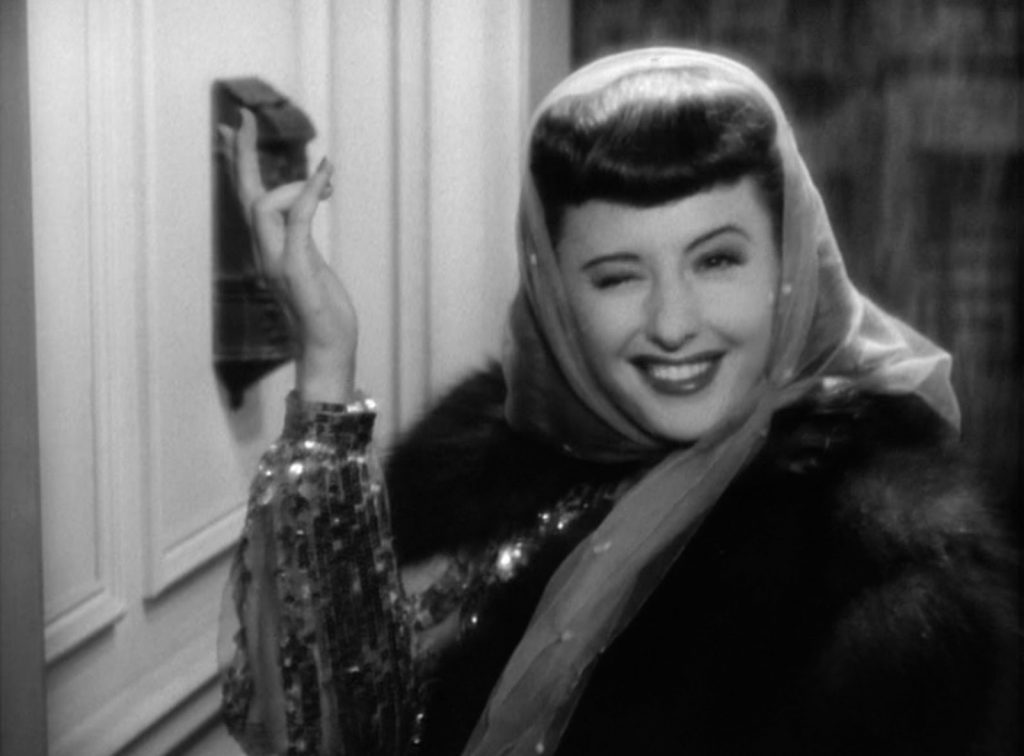
Sugarpuss appears forced by Bertram’s wide-open sincerity and lack of self-protection to give his proposal a “letting him down gently” refusal, or at the very least a plausible reason for delay. When Bertram expresses the worry that his poetry quote is too “corny” Sugarpuss shows every intention of softly quelling his hopes. She is interrupted by the entire troupe of professors, hanging on pins and needles in the hallway, reporting that someone calling himself “Daddy” is on the phone and wishes to speak to her. We have been entirely sure that the mistimed push for an engagement has no chance of a favorable outcome. Astonishingly the phone intervention by this masquerading Daddy Joe (who could more accurately be designated a Sugar Daddy) will result in the firming up of the unthinkable engagement that Sugarpuss sought to back away from. It is Lilac who persuades Sugarpuss during the phone call to keep alive the fiction of an engagement because it will enable her to be respectably transported, without detection, across the New Jersey state line for her fake wedding, with “Daddy” in attendance. Hawks makes the entire phone session (which painfully involves Bertram) seem frigidly distant and remote from any humane impulse. When addressing Bertram in the guise of Sugarpuss’s father, he subtly smears Bertram’s courtesy and vulnerability with veiled, mocking ugliness. The phone’s deadness as an instrument of real communication is underscored by the fact that three phones are brought into play (by Lilac’s directive) to make his “connection” with Sugarpuss untraceable.
The fact that the professors are so overwhelmingly enthused and relieved by the betrothal announcement intriguingly leads the viewer to lessen her own resistance to the rushed engagement, which had minutes ago seemed so quixotic and foolhardy. There is a moving interval when all seven of Bertram’s colleagues get a chance to hug their cherished houseguest individually and express their happiness and fond hopes as she joins their community. The forced amplification of the central pair’s intimacy, despite the equal enlargement of deception, is an appealingly dicey, stake raising line of development. If an unrealistic, overly pushy bid for full commitment from Bertram felt like a gauche misstep when he was solely responsible for it, when the pressure for an even more heedless urgency is instigated by Lilac, with Sugarpuss’s reluctant cooperation, we can become swift converts to the enticement of speedy arrangements. A haphazard road trip heightens the likelihood of accidents, and accidents in film typically advance the progress of love. Sugarpuss is spared the requirement to distance herself after a refusal of Bertram’s proposal, and she is given valuable extra time to appraise the substance of his declared devotion.
What then does this central plot segment, with its more fragile depiction of love’s uncertainties show us about Bertram and Sugarpuss’s affinities? We watch them play more seriously in an atmosphere not free of repercussions. Two conditions of mind are brought into stronger reality focus, and we attend to their attractive, feasible jostling. Until this scene at the Foundation, Sugarpuss has been moving from one form of pleasurable play to another at a gallop. One marvels at her ability to take all the little things she notices and find ways to engagingly and profitably speed them up. She is able to extract fun immediately and continuously from her situation of confinement. As Philip Larkin phrases it in his poem “High Windows,” every obstacle that confronts her presents no check on “going down the long slide/ To happiness….Bonds and gestures pushed to one side” (17). What she has chiefly learned from her interactions with the professors is that they are utterly unschooled in taking advantage of others or hiding what they feel. They are in no sense “operators.” From Bertram she has discovered, without his saying it, that she has been speaking poetry all her life, and that the words you employ with others are worth looking into. Bertram, for his part, comes to realize that Sugarpuss, in her unself-conscious freedom of movement and expression, inhabits a territory of vital largeness about which he knows nothing. He regresses to the child-baffling stirrings he somehow failed to attend to in his youth. His heart counsels him to gallop as Sugarpuss does, if he aspires to catch up with her. He feels he has taken off a lifelong blindfold, and that all the ground opening up before him is new ground which he can beneficially break, without leaving any meaningful endeavors behind. To quote another poetic line applicable to his new standing, from Wislawa Szymborska’s mostly glacial “Some People”: “mirrors in which fire now preens” (262). Bertram searches for any signs of Sugarpuss’s “preening fire” in his own dignified looking glass. Bertram’s hope in the proposal scene is to proclaim a swerve from all his prior misdirected emotional thriftiness and caution, that with Sugarpuss’s aid will become a lasting metamorphosis. He is convinced that integrity and wildness can harmonize, as they seem to in the activities of his beloved. She has pointed him to the right window for rekindled vision. The proposal scene unfolds in a much slower pace than the scenes leading up to it. It is a scene that probes more delicately the advantages and liabilities of speed. It reminds us that time in film has both a rhythm and, if one wishes to cultivate it, a grammar that accommodates both feeling and morality. Bertram believes he has absorbed a proper understanding of speed from his experiences with Sugarpuss, and that love and speed, given his blissfully overwhelmed state, are not at variance.
Impressively, the scene contains a subtle turnabout. Sugarpuss is suddenly obliged to become a rational spokesperson for the wisdom of taking things slow, in matters of the heart. She does not yet realize the extent to which Bertram’s qualities have taken hold of her. What he demonstrates to her in his self-appraisal and declaration of love is the possibility of giving what one has to another in a wholehearted fashion, without protection, impediment, or a need to play the angles. The viewer is led to side with her cautiousness, and not only because we know that her feelings for him are inchoate and unresolved. She sensibly advises him to “take a few more trips around the park” to clarify the fact that they are both, in so many respects, unknown quantities. The circle of the ring that he hopes to induce her to take on in this conversation is more beholden to time than he imagines. Yet Sugarpuss, perhaps, can only see ring encirclement as a trap, or as a means of gaining extra leverage. This is the first situation in the film where Sugarpuss is given pause. Up to now she has leapt from moment to moment without any need for sober reflection. She finds herself all at once away from her insulating performance playgrounds, and her intentions must alter. Bertram’s mirroring high spirits, in combination with a daring leap in romantic faith, oblige her to consider the problem of intentions more sharply. Returning to Bertram’s poetic, heartbreaking image of Sugarpuss blowing away the dust heaped up on his soul, and her displacement of the released dust in her rejoinder, highlighting its power to blind, I cannot avoid the thought of human creatures as vulnerable, transient vessels of dust. To cite Jane Hirshfield one more time, she observes that a good poem [or a film] “of love’s fulfillment carries somewhere within it, however lightly, the shadow of time and death” (194). The place of insertion is often tricky to find, like a modest, hope-embossed ring slipped beneath a dish cover intended to keep toast warm.
Works Cited
Auster, Paul. Burning Boy: The Life and Work of Stephen Crane, Toronto: McClelland & Stewart, 2021.
Bonnefoy, Yves. The Lure and the Truth of Painting: Selected Essays on Art, edited and with an Introduction and Afterword by Richard Stamelman, Chicago: University of Chicago Press, 1995.
Eluard, Paul. Ouevres completes, Volume 1, Paris: Galliamard, 1968.
Hirshfield, Jane. Ten Windows: How Great Poems Transform the World, New York: Alred K. Knopf, 2017.
James, Henry. On Writers and Writing, edited and with an introduction by Michael Gorra, New York: New York Review Books, 2025.
Larkin, Philip. High Windows, New York: Farrar, Straus and Giroux, 1974.
Llosa, Mario Vargas. The Perpetual Orgy: Flaubert & Madame Bovary, translated by Helen Lane, New York: Farrar, Straus and Giroux, 1987.
Lopez, Cristina Alvarez and Martin, Adrian. “Between Two Plot Points,” The Thinking Machine 13, an audiovisual essay on a segment of Howard Hawks’s Ball of Fire, 2017, at www. filmkrant.nl.
Sikov, Ed. On Sunset Boulevard: The Life and Times of Billy Wilder, New York: Hyperion, 1998.
Szymborska, Wislawa. Poems: New and Collected, transalted by Stanislaw Baraniczak and Clare Cavenagh, New York: Harcourt, Inc., 1998.
Wood, Robin. Howard Hawks, Garden City: Doubleday & Company, 1968.
George Toles is Distinguished Professor of Film and Literature at the University of Manitoba. He is the author of A House Made of Light: Essays on the Art of Film, Paul Thomas Anderson, and Curtains of Light: Theatrical Space in Film. Toles has written or co-written the screenplays for numerous feature films made by Canadian director, Guy Maddin. These include Archangel, Careful, Twilight of the Ice Nymphs, The Saddest Music in the World, Brand Upon the Brain, My Winnipeg, and Keyhole. He also wrote the story and original screenplay for Canada’s first stop-motion animated feature film, Edison and Leo. His Status Update (At Bay Press, 2021), illustrated by Cliff Eyland and edited by Thomas Toles, collects the mini-narratives that the author has been posting on Facebook every day since 2009. A second collection, entitled All the People in My Head, is forthcoming from At Bay Press.