

A Book Review Essay by André Seewood.
Unique and vital contribution to children’s screen studies….”
Children’s Screen Studies is a discipline that is growing exponentially every day. As scholars all over the globe turn their attention to the child on screen and the media created for children it becomes increasingly clear that the child and its representation are both the object and the subject of great ideological instruction, scrutiny, and criticism. Indeed, as authoritarianism is on the rise in nations all over the world and democratic ideals, laws, and institutions seem to be crumbling, the edicts of authoritarian power draw ever tighter around the ideals and prejudices about childhood.[1]

In America, all the turmoil and aggrievement against what the extreme Right has called, “wokeism,” has manifested itself as a hysterical concern over what children are taught, how they are taught, and how the simultaneously sordid, triumphal, and tragic history of America and/or global colonialism is taught to children. History must be sanitized it is said to protect the feelings of children, but it is really to protect the sensibilities and prejudices of their parents. For it is under the cloak of children’s innocence that we find the most deceptive machinations of adult power and control. Between authoritarianism and anti-wokeism, to be labeled ‘radical’ has negative connotations and is seen as dangerous to conservatives in their attempt to censor what children can see and hear on screen. No book better illustrates and analyzes the vexed position and potentiality of the child on screen and audiences of children as a political and ideological tool than Radical Children’s Film and Television, edited by Noel Brown (Edinburgh University Press, 2025). This book examines the notion of what is ‘radical’ in films and television made primarily for child audiences and it brings clarity and progressive nuance to the ongoing argument sustained by authors like Kathryn Bond Stockton (The Queer Child, Or Growing Sideways in the Twentieth Century), Rebekah Sheldon (The Child to Come: Life After the Human Catastrophe) and others about how what is ‘radical’ can actually be helpful to children as they negotiate their way into adulthood.
This comprehensive collection of 21 short, but insightful, essays are separated into five parts with each examining Brown’s introductory claim that, “radical practices are a constant in the histories of children’s film and television” (1). In the opening chapter, “Is a Radical Children’s Film and Television Possible,” Brown also gives a generative definition of the culture of radical children’s film and television by asserting that the concept of radical, “falls into three overlapping categories: (1) content that is politically subversive; (2) content that is aesthetically radical; and (3) appropriation for radical purposes by audiences, fans, political groups, creative practitioners , and other communities” (11). From these three categories of children’s film and television Brown has curated chapters by a wide variety of authors (many well -known in the field and others who have come from different academic disciplines) who all share perspectives that both clarify and complexify the concept of “radical” in the content, form, and reception of films made for child audiences.
By far, it is the category of radical appropriation that is the most overt and subversive radical act defined primarily by the reinterpretations of seemingly innocuous content. From tele-evangelist Jerry Farwell’s suspicions about ‘Twinky-Winky’ of the original Teletubbies (1997 – 2001) to questions surrounding the couples of SpongeBob and Patrick and Bert and Ernie, as Brown explains, “Queering is just one of the many ways in which (oppressed) communities colonize mainstream media content,” (20) even though the content itself was never intentionally designed to be radical. Although it must be stressed here that such radical appropriation takes the kernels of radical potential in children’s film and television and uses it as fuel for transformative social practices. The great irony is that the more innocuous and anodyne adults try to make children’s film and television programs, the greater the radical potential such programs can have as fuel for transformative social practices.

What is most surprising and useful throughout this work is that each chapter is constructed in ways that can appeal to both the busy scholar and the curious lay person alike. The authors provide provocative contexts that make deep scholarly concepts accessible through an eclectic filmography that includes programs from Sesame Street (1969 – present) and Bluey (2018 – present) to Jean Vigo’s Zero de Conduit (1933) and Norwegian experimental animation filmmaker Anita Killi. While I cannot, for reasons of space, discuss each and every chapter in this book, a brief highlighting of specific chapters in each of the constituent parts of the book will have to suffice.
Part One: Questions of Theory and Practice, takes a broad global approach in its examination of children’s film and television in its transnational contexts. But the chapter on Theodor Seuss Geisel’s cult classic film, The 5000 Fingers of Dr. T (1953) by Adrian Schober presents the three types of address that are characteristic of children’s films. Simple Address: the film is directly addressed to child audiences; double address: films that attempt to address both child and adult audiences alternately; and undifferentiated address which are films that are typically called family films. Schober attributes the commercial and critical failure and the later critical interest in The 5000 Fingers of Dr. T to its use of double address, making this chapter an insightful examination of one of the most perplexing children’s films ever made in Hollywood.
Part Two: Subversive Social Commentary, examines how certain children’s television programs can be radically appropriated for child and adult audiences. For example, noted child film scholar Ian Wojcik-Andrews discusses the film WALL-E (2008) and its ecological post-humanist point-of-view in his chapter, “Children’s Films and Cosmology.” Wojcik-Andrews examines how certain children’s films can parse two different seemingly irreconcilable cosmological discourses: 1) Biblical creationism and 2) Scientific cosmology. Given the uncensored expressions of White Christian Nationalism at the center of the I.C.E. deportation raids as yet another example of American authoritarianism, Wojcik-Andrews’ chapter allows one to better comprehend what is at stake in the production of children’s film through the lens of adult ideological conceits. Whether examining the radical nature of British children’s television through Bakhtin’s concept of ‘carnival’ or examining Albanian children’s film and its use of children as spies protecting the socialist state of Albania (1944–91) in the films made in the late 60s and 70s, part two extends the global perspective on radical children’s film through a deeper historical context.

Part three,” Manifestos For Change,” discusses the use of animation to address either a child audience or an adult audience as well as conceptions of childhood at the putative end of the Anthropocene era. In chapter twelve, “ (Re) orientation for Living with Toxicity in Nausicaa of the Valley of the Wind,” by authors Teresa Humphrey and Cory Cobb, the authors put forth the claim that, “Children today are tasked with becoming who they are in relation with the effects of a degraded and warming planet – accelerating global temperatures, rising sea-levels, out-of-control wildfires, leaking radiation and an accumulating waste crisis” (175), in their examination of Hayao Migazaho’s 1984 animated feature, Nausicaa of the Valley of the Wind (see top image). Here, the authors use childhood as a means of thinking about life in a toxic world. Framing their discussion of the film through the minimal ethics of Joanna Zylinkhka by looking at minor moments in the film that,“ unsettle the human as the most important form of life” (176).
By contrast, chapter eleven, “How Far Would You Go: Conceptualizing Extremist Youth Activism in International Screen Adaptations of the Third Wave Social Experiment,” by Carla Plieth, looks not at children attempting to survive in a toxic world, but instead at how easily adolescent children can be guided into authoritarianism and support fascist ideology. Plieth makes comparisons and contrasts of three film adaptations of Ron Jones’ 1967 social experiment known as, ‘The Third Wave’. It was a social experiment that revealed how easily, even after the horrors of Nazism were exposed, adolescent children could be swept up in fascism under the specific conditions of in-group acceptance, the comfort of authority, and slogans with rules enforced by other children acting as “secret police” and spying on each other’s behaviors and allegiances.
In the context of today’s growing right-wing authoritarianism, Plieth’s work goes a long way towards helping one comprehend how otherwise freedom loving, intelligent, and morally grounded people can so easily accept the oppression, degradation, and hatred of others as scapegoats to their perceived grievances through the projection of a charismatic ‘strongman’ leader. It is the innocence that we so dearly protect in children that can be used as both a cloak and a dagger for what theorist Fritz Breithaupt has called, “the dark side of empathy,” otherwise known as the punishments, violence, and cruelty that can be tolerated and meted out to those we believe deserve it.[2]
In the context of today’s growing right-wing authoritarianism, Plieth’s work goes a long way towards helping one comprehend how otherwise freedom loving, intelligent, and morally grounded people can so easily accept the oppression, degradation, and hatred of others as scapegoats….”
Part Four, “Radical Experiments,” looks specifically at films and television programs whose formal structure is just as unconventional as the controversial subject matter it presents to child audiences. For example, in chapter fifteen, “Animated Traumas: The Films of Anita Killi,” by Ole Christopher Haga distinctly reveals the generative potentiality of radical form and radical content when both are used to address child audiences. Anita Killi uses mixed media animation to create films that deal with themes that are as Haga claims, “usually avoided in children’s films, such as war, child depression, alcoholic parents, and child abuse” (218). Three of her works examined in this chapter: The Hedge of Thorns (Tornehekken, 2001), Angry Man (Sinna Mann, 2001) and Mother Didn’t Know (Mor visste ingenting, 2020) are all distinguished by their innovative animation techniques (e.g., the use of multiplane stop motion and textual cut outs) and traumatic subject matter (e.g., abuse, alcoholism, depression, and war).
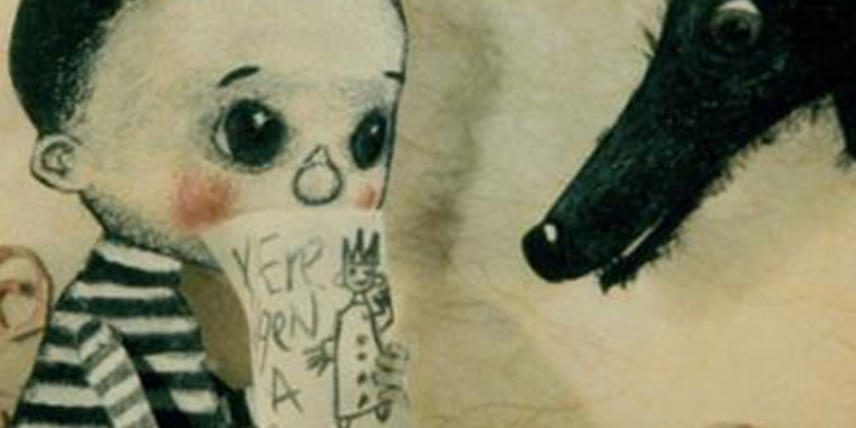
Killi describes her intentions with her novel techniques and subject matter when she claims, “the sooner children can understand that they are being exposed to something unfair… the greater the chance that things can change, and they can establish a good life” (220). In Haga’s examination of Killi’s films one discovers that the use of radical form and content in films addressed to child audiences can be helpful to children who have suffered trauma and those children who are friends with children who have suffered trauma. Her work breaches the cloak of innocence so often used by adults to keep children from articulating or comprehending the trauma that adults so often cause them.
Part 5, Audiences, Participation, and Appropriation, deals specifically with the appropriation of children’s film and television for radical purposes by audiences and political agents not involved in the production of such works. The centerpiece chapter in this part is, “F is for Friends, G is for Gay: Bert, Ernie and the Radical Potential of Childhood’s Queer Friendships,” by Ryan Bunch. In this chapter the author argues that the relationship between the famous Sesame Street puppets, Bert and Ernie, “can serve as a radically queer model for children’s friendships- not just because they can be interpretated as a gay couple, but because they are inherently queer, with the relationship challenging normative constructs of friendship and sexuality” (285). But Bunch immediately acknowledges the danger the LGBTQ+ representation in children’s film and television presents. He subsequently states that, “Queer representation in children’s media and literature leads to accusations of ‘sexualizing’ supposedly innocent children, a charge that implicitly denies not only the existence of queer children but also the existence of child sexuality altogether” (287). This assertation and this chapter as a whole addresses implicit questions that are sustained throughout this entire thought-provoking book: Are children really the tabula rasas that we adults believe they are? Where beyond the binary of
nature v. nurture is the queerness of acceptance?
At the core of what Elisabeth Young-Bruehl has defined as childism, that is the, “prejudicial assumption that children are possessions of adults and thus do not have rights,”[3] is also the notion that children are blank pieces of clay that can and must be molded by adults in their own image; that no child can know anything unless they are taught by an adult. Nowhere is childism more readily apparent than in the realm of child sexuality and sexual orientation. It is here in these arguments, debates, and policy that innocence itself is more of a judgment than it is a state of being. However, the queerification of the relationship between the puppets of Bert and Ernie in Bunch’s argument is not centered on sexual pleasure so much as it is upon the vexed nature of puppetry itself. Bunch argues, “Puppets have historically been associated with radical and anarchic potential, as they destabilise the boundaries between the human and the non-human, the innocent and subversive” (288).

Yet the great take away in Bunch’s examination of this familiar controversy regarding the queerness of Bert and Ernie that has been vehemently denied by many of the show’s creators and producers is that, “the power of Bert and Ernie’s queer friendship lies in its refusal to conform to conventional notions of straight, gay or platonic relationships, confounding everyone’s assumptions and forcing reckonings with the norms of childhood, friendship and sexuality… Bert and Ernie’s queer friendship has the potential to resist heteronormative expectations while emphasizing mutual care” (286). Who knows? Now that the Trump administration and the White Christian Nationalists who support it have cancelled funding for The Corporation for Public Broadcasting where Sesame Street was produced for over 50 years, the show has moved to the streaming platform of Netflix where hopefully the queer relationship between Bert and Ernie may no longer be thought of as a threat to masculinity, but instead as a strength of it.
Perhaps the only glaring omission from this otherwise stellar collection is any examination of race and radical children’s film and television. The omission of race is particularly striking because in this collection there are so many contributing authors and such a broad range of subject matter and critical approaches that the absence of race seems as if it could be a deliberate strategy to avoid the label of ‘wokeism’ and the censorship it beckons. Or perhaps because racial inequities are so often thought of as a power struggle that concerns adults, it is too easy to overlook the significance of race in children’s screen studies. In my own work, I have found that race and child screen representation are quite generative in post-Anthropocene films like Beasts of the Southern Wild (2012) and The Girl with All the Gifts (2016), science-fiction films like The Creator (2023), and gender fluid films like Celine Sciamma’s Tomboy (2011).[4] One can only wonder what a chapter on the television show The Adventures of Fat Albert and the Cosby Kids (1972 – 1985) or on Franklin, the sole Black character in Charles M. Schulz’s Peanuts television programs who was introduced in 1968, would have done to expand the boundaries of what is ‘radical’ in the context of this work.
The book Radical Children’s Film and Television is a unique and vital contribution to children’s screen studies in part because it sharpens and clarifies the concepts of radical form, content, and appropriation in the ongoing discussion of media made for child audiences. In an era where authoritarianism’s cruelty is made most visible upon the dead or the maimed and emaciated bodies of children from Gaza to the Sudan, Radical Children’s Film and Television demonstrates through its historical depth and global contexts that the radical potentiality of children’s media cannot be stifled by the closed fists of authoritarian brute force and that innocence is but a weapon too often wielded in the hands of guilty adults.
Notes
[1] See: Democracy in the Shadow of the Global Rise in Authoritarian Populism by Alexandra Gilliard. https://www.hks.harvard.edu/centers/carr-ryan/our-work/carr-ryan-commentary/democracy-shadow-global-rise-authoritarian-populism
See Also: The Global Resurgence of Authoritarianism and Its Existential Threats to Education: Implications for Scholarship in Comparative and International Education by Florin D. Salajan and Tavis D. Jules, Comparative Education Review 2024 68:3, 319-344
[2] See: The Dark Sides of Empathy by Fritz Breithaupt. Ithaca: Cornell University Press, 2019.
[3] Pg. 10, Childism: Confronting Prejudice Against Children by Elisabeth Young-Bruehl. New Haven: Yale University Press, 2012.
[4] See: The Drama of the Subaltern Child in Film: Innocence, Hypocrisy, and Critique by Andre Seewood, 2023. Indiana University–Bloomington, PhD Dissertation.ProQuest Dissertations and Theses.
André Seewood is a writer, filmmaker, and musician. He is the author of two books, Slave Cinema: The Crisis of the African American in Film and Screenwriting Into Film: Forgotten Methods and New Possibilities. His award-winning film, TimeSphere: Le chrononaut et la sphère du temps, can be viewed on Vimeo, and his work in music, Adventures in the Black Imaginary, is available on all streaming platforms under his stage name Drayali. He earned a Ph.D. in Media Arts and Sciences from Indiana University.